Choosing a cosmetic dentist in Melbourne is not just about finding someone who offers veneers, whitening or clear aligners. It is about finding a registered dental practitioner who listens carefully, assesses your oral health first, explains your options clearly and helps you make a considered decision based on your individual needs.
A good cosmetic dental consultation should leave you with more clarity, not pressure. You should understand what may be possible, what the limitations are, what the risks and maintenance requirements may involve, and whether a more conservative option could also suit your goals.
What does a cosmetic dentist in Melbourne actually do?
In everyday language, a cosmetic dentist is a dentist who provides treatments that may improve the appearance of teeth and smiles. This can include tooth whitening, composite bonding, porcelain veneers, crowns, clear aligners and, in some cases, implant-related or full-mouth restorative treatment where appearance and function are both considered.
It is important to know that in Australia, cosmetic dentistry is not a separate specialist category in the same way as orthodontics, periodontics or oral surgery. The Dental Board of Australia provides information about recognised specialist registration categories, and you can check a dentist’s registration through the Ahpra national public register.
This does not mean a general dentist cannot provide cosmetic dental treatment. It simply means patients should look beyond titles and marketing language. The quality of your decision often depends on the assessment process, communication, treatment planning and whether the dentist is open about benefits, risks and alternatives.
Start with registration, communication and clinical assessment
Before comparing photos, pricing or treatment types, check the basics. Your dentist should be registered to practise in Australia, communicate in a way you can understand and complete a proper clinical assessment before recommending treatment.
A cosmetic dental assessment may include a review of your teeth, gums, bite, jaw function, existing fillings or crowns, oral hygiene, medical history and any symptoms such as sensitivity, grinding or jaw discomfort. In some cases, X-rays, photographs, scans or models may be recommended to help plan treatment.
Be cautious if a treatment is suggested before your oral health has been properly assessed. Cosmetic dental work is often most successful when the foundation is healthy. Active decay, gum disease, unstable bite issues or untreated infections may need attention before cosmetic treatment is considered.
Look for a dentist who explains more than one option
Cosmetic dentistry is rarely a one-size-fits-all decision. Two people may have similar concerns but need very different treatment plans because of tooth position, enamel thickness, bite forces, gum health, previous dental work or personal preferences.
For example, a chipped front tooth might be managed with smoothing, composite bonding, a veneer or a crown, depending on the amount of tooth structure remaining and the forces placed on the tooth. Mild tooth discolouration may respond to whitening, while internal staining or existing restorations may need a different discussion.
A balanced dentist should explain reasonable alternatives, including the option of no treatment. They should also be willing to discuss conservative approaches where appropriate. If you are still exploring the broader range of treatment pathways, Creative Smiles has a helpful overview of cosmetic dentistry smile makeover options that explains common choices in a Melbourne context.
Compare cosmetic treatment options carefully
The treatment that suits one person may not suit another. A useful consultation should connect your goals with your oral health and explain the trade-offs involved.
| Concern or goal | Options your dentist may discuss | Important questions to ask |
|---|---|---|
| Tooth colour | Professional whitening, replacing old restorations, veneers in selected cases | Will whitening affect my existing fillings, crowns or veneers? |
| Small chips or uneven edges | Smoothing, composite bonding, veneers or crowns depending on the case | How much natural tooth structure would need to be changed? |
| Gaps or minor shape concerns | Bonding, veneers or orthodontic treatment | Is there a conservative option, and how long might it last? |
| Crowded or rotated teeth | Clear aligners, braces, restorative treatment in selected cases | Would moving the teeth be safer or more appropriate than covering them? |
| Missing or heavily damaged teeth | Crowns, bridges, dentures, implants or All-on-4 in selected cases | What are the surgical, maintenance and cost considerations? |
| Worn teeth | Bite assessment, night guard, bonding, crowns or a wider restorative plan | Is grinding or bite wear affecting the treatment plan? |
If you are comparing materials for front teeth, it may be useful to understand the differences between veneers and bonding, as these options can vary in preparation, durability, repairability, appearance and maintenance.
Ask about benefits, risks and limitations
All dental procedures carry potential benefits and risks. A responsible cosmetic dentist should discuss both, in language that makes sense to you.
Possible limitations can vary depending on the treatment. Whitening may cause temporary sensitivity and does not lighten crowns, veneers or fillings. Composite bonding can chip or stain over time. Porcelain veneers usually involve some level of tooth preparation and may need replacement in the future. Crowns involve more tooth reduction than some other options. Aligners require consistent wear and may not be suitable for every bite concern. Implant treatment involves surgery and healing, and suitability depends on bone, gum health, medical history and other factors.
None of this means these treatments are unsuitable. It means the decision should be made with realistic expectations and an understanding of maintenance. A dentist who takes time to explain limitations is helping you make a more informed choice.
Review fees, payment options and what is included
Cost is one of the most common reasons people compare cosmetic dentists in Melbourne. Fees can vary because treatment plans vary. The number of teeth involved, material choice, laboratory work, scans or X-rays, complexity, gum or bite considerations and the need for staged care can all affect the final quote.
A useful quote should be clear about what is included and what may be separate. For example, ask whether the fee includes planning appointments, temporary restorations, review visits, retainers, whitening trays or maintenance appliances where relevant.
It is reasonable to ask about payment timing and whether payment plans are available. However, cost should not be the only factor. A very low fee may not reflect the same planning, materials, appointment time or follow-up arrangements. A higher fee also does not automatically mean a treatment is more suitable. The key is to understand what is being proposed and why.
For a deeper explanation of why fees vary, this article on whether cosmetic dentistry is expensive in Melbourne may help you compare quotes more thoughtfully.
What should happen at a cosmetic dental consultation?
A consultation is not only about choosing a treatment. It is also an opportunity to understand the cause of your concern and whether treatment is appropriate for your oral health.
A thorough cosmetic consultation may involve:
- A discussion about what you would like to change and what matters most to you
- An examination of your teeth, gums, bite and existing dental work
- Clinical photographs, X-rays or scans if needed for assessment and planning
- A discussion of treatment options, including conservative alternatives where suitable
- An explanation of likely maintenance, risks, limitations and possible complications
- A written quote or treatment plan where appropriate
- Time to ask questions before making a decision
You should not feel rushed into treatment. It is reasonable to take time to think, seek clarification or obtain another opinion if you feel unsure.
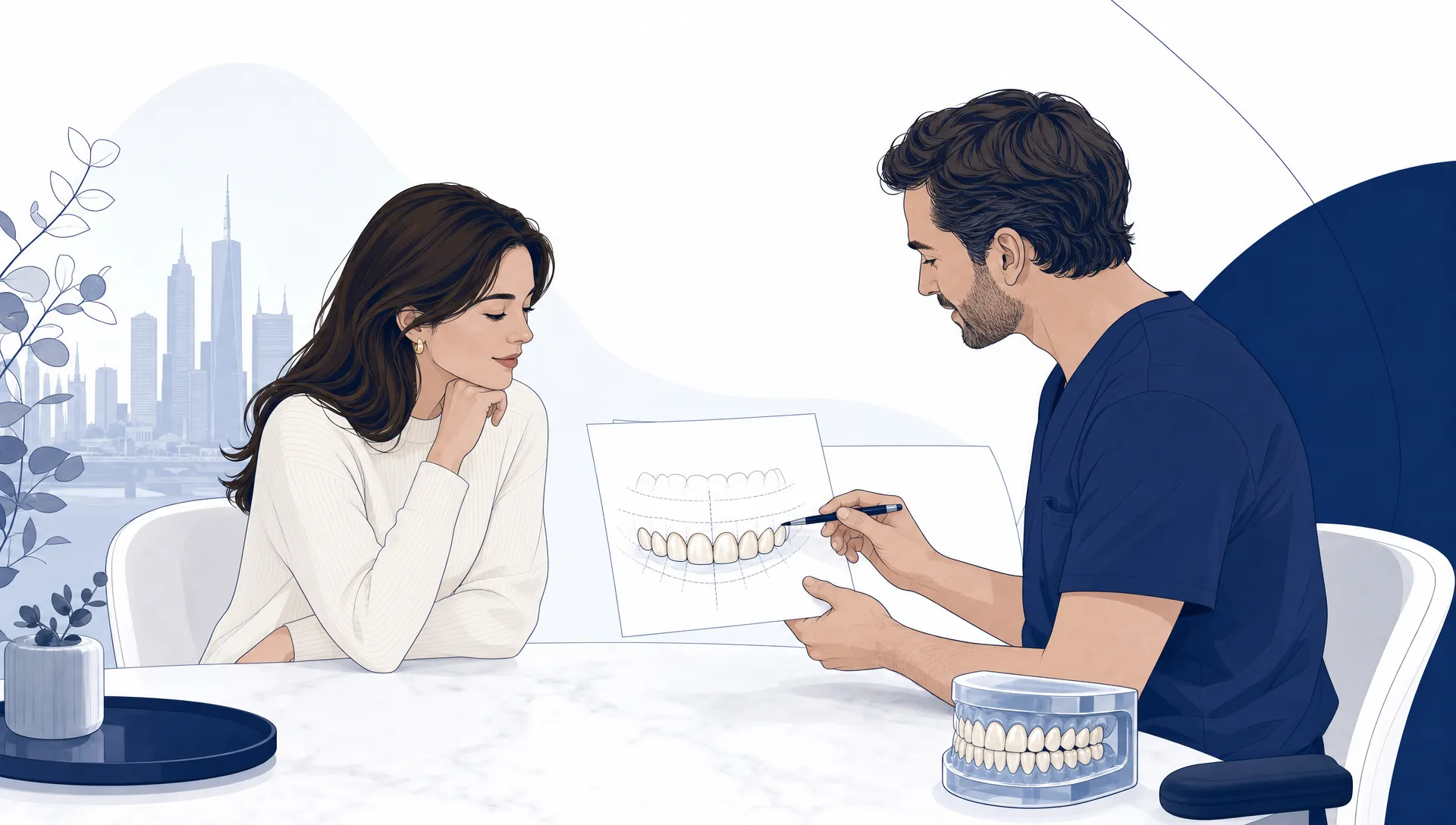
Consider the planning process, not just the final appearance
Cosmetic dentistry should consider how teeth look and how they function. A natural-looking result is influenced by tooth shape, gum levels, bite, speech, facial proportions and the way the teeth meet when you chew.
For treatments such as veneers, crowns, clear aligners or full-mouth restorative work, planning may include photographs, smile design records, bite analysis, mock-ups or temporary restorations. Not every patient needs every planning step, but your dentist should be able to explain how they are planning the result and how they will reduce avoidable risks.
Ask whether you will have a chance to preview or discuss proposed changes before irreversible treatment begins. This may be particularly important if several front teeth are involved, or if your treatment includes changes to tooth shape, length or bite.
Think about location and appointment practicalities
Cosmetic dental care can involve several visits, especially when treatment includes planning, trial smiles, aligners, veneers, crowns, implants or reviews. Choosing a dentist in a practical location can make attendance easier and reduce the chance of delaying important review appointments.
If you live or work near Armadale or surrounding areas of Melbourne, it may be useful to choose a practice you can attend comfortably for consultations, treatment visits and maintenance appointments. Practical matters such as appointment availability, transport, parking, communication style and payment arrangements can all affect your overall experience.
The right practice is not necessarily the one closest to home. It is the one that combines practical access with clear communication, appropriate planning and a treatment philosophy that matches your preferences.
Questions to ask before choosing a cosmetic dentist
You do not need to know dental terminology before attending a consultation. Clear questions can help you understand whether a proposed plan is right for you.
Consider asking:
- What are the possible causes of my concern?
- Are there any oral health issues that should be treated first?
- What are my treatment options, including conservative options?
- What would happen if I chose to do nothing for now?
- What are the likely benefits, risks and limitations of each option?
- How much natural tooth structure would be changed?
- How long might the treatment take, and how many appointments may be involved?
- What maintenance will I need after treatment?
- What costs are included, and what costs may be separate?
- What should I expect if something chips, wears, stains or needs replacement later?
A dentist who welcomes questions is more likely to support a calm, informed decision. If the answers feel unclear, ask for them to be explained again in simpler language.
When should cosmetic treatment wait?
Sometimes the most appropriate advice is to delay cosmetic treatment until another issue has been assessed or stabilised. This is not a setback. It can be an important part of protecting your long-term oral health.
Cosmetic treatment may need to wait if you have active decay, gum disease, dental infection, unresolved pain, unstable bite problems, significant grinding or oral health habits that could reduce the durability of treatment. Your medical history, pregnancy, medications or healing capacity may also influence timing for some procedures.
If you have swelling, dental trauma, severe pain, spreading infection, fever or difficulty swallowing or breathing, seek prompt professional care. These symptoms are not cosmetic concerns and may require urgent assessment.
How Creative Smiles approaches cosmetic dental decisions
Creative Smiles in Armadale provides cosmetic and general dental services for patients considering options such as Invisalign, teeth whitening, veneers, crowns, implants and All-on-4. The right option depends on your oral health, treatment goals and individual circumstances.
An appointment can help clarify what is possible, what may be suitable and what alternatives you may wish to consider. Treatment planning should be based on a clinical assessment rather than assumptions from photos or general online information.
Frequently Asked Questions
Is cosmetic dentistry a dental specialty in Australia? Cosmetic dentistry is commonly used to describe dental treatment focused on appearance, but it is not a separate specialist registration category in Australia. Some dentists have additional training or experience in cosmetic procedures, but patients should assess the quality of communication, planning and informed consent rather than relying on titles alone.
Should I choose veneers, bonding or whitening? The suitable option depends on your tooth colour, enamel, bite, existing restorations, oral health and goals. Whitening may suit some types of discolouration, bonding may suit minor chips or shape changes, and veneers may be considered for selected cases. A dentist can assess which options may be appropriate.
Is it okay to get a second opinion before cosmetic dental treatment? Yes. If you are unsure about a treatment plan, cost, material choice or level of tooth preparation, seeking another opinion can help you feel better informed. This can be especially useful for irreversible or higher-cost treatment.
What should I bring to a cosmetic dental consultation? Bring any questions you have, details of previous dental treatment if available and examples of concerns you would like to discuss. You do not need to know which treatment you want before attending. The consultation is designed to assess your oral health and explain suitable options.
Considering cosmetic dental care in Armadale?
If you are comparing cosmetic dentists in Melbourne, an individual assessment can help you understand your options more clearly. The team at Creative Smiles in Armadale can assess your oral health, discuss potential benefits, risks and alternatives, and explain which treatments may be suitable for your circumstances.
To discuss your concerns, you can arrange an appointment with Creative Smiles in Armadale and ask any questions before deciding whether to proceed with treatment.