Full-arch dental implant treatment in Melbourne

All-on-4 uses four implants to support a fixed replacement arch of teeth for suitable patients. Creative Smiles provides assessment and treatment planning at our Armadale clinic for patients across greater Melbourne.
Planning considers remaining teeth, bone support, gum health, medical history and alternatives. Treatment involves surgery, recovery and ongoing maintenance. Your dentist will explain the proposed implant system, replacement teeth, risks and itemised costs before you decide.
All-on-4 treatment timing and provisional teeth
Some suitable patients receive provisional fixed teeth within days of implant surgery. This does not mean healing is complete or normal eating can resume. Bone healing and final treatment commonly take months. Timing depends on assessment, implant stability and recovery.
Your All-on-4 journey begins with a free consultation. We review your teeth, gums, jawbone and medical history and discuss treatment goals, alternatives, risks, recovery and costs. Any separate diagnostic or treatment fees will be explained before you agree.
A consultation does not oblige you to proceed. Ask about options for retaining treatable teeth, other implant arrangements or removable dentures, where appropriate.

Melbourne All-on-4® Pricing at Creative Smiles
Get Our Treatment Price Guide
Explore indicative pricing for our most popular dental treatments. Download our price guide and, if you’d like, a member of our team can help you understand your options and answer any questions.

Creative Smiles All-on-4® Melbourne
Your dentist assesses oral health, remaining teeth, bone support and medical history before discussing whether full-arch implant treatment is appropriate. Any separate diagnostic or treatment fees will be explained in advance. Your options may include retaining treatable teeth, other implant arrangements or removable dentures.
Appropriate scans and other records help plan implant positions and replacement teeth. Your dentist will discuss appearance, function, limitations, risks, anaesthesia, expected stages and an itemised quote. Digital plans and previews cannot guarantee the final result.
The surgical and anaesthetic plan is tailored to your circumstances. Any tooth removal is irreversible and will be discussed before consent. Additional procedures, including grafting, may be needed.
Some patients can receive provisional teeth soon after implant placement; others need a different staged approach. Pain, swelling and bruising can occur. Follow the individual instructions for medicines, cleaning, a modified diet and time away from work or exercise.
Final replacement teeth are planned after appropriate healing and review. Further visits, adjustments or treatment may be necessary. The timing and result are not guaranteed.
Fixed implant teeth need daily cleaning around the implants and underneath the bridge, using the technique and aids recommended by your dental team. They cannot be removed by the patient for cleaning.
Attend regular reviews and professional maintenance. Follow your prescribed diet while healing and return to firmer foods only when advised. Gum and bone disease, component wear, loosening or fracture can occur. Implants and replacement teeth may need further treatment or replacement; they are not guaranteed for life.
What is the All-on-4® Treatment Procedure?
All-On-4® implant-supported prosthetics are fixed in place and are not removable by the patient. Unlike traditional removable dentures, they do not rely on suction or adhesives, supporting a more stable everyday experience.
Check out this video of the All-On-4® procedure, courtesy of Nobel Biocare®.
Potential benefits and limitations of All-on-4
For suitable patients, a fixed implant bridge may improve stability compared with a removable denture and may support chewing and speech. Adaptation and function vary.
Treatment involves surgery and is not suitable for everyone. Recovery is not necessarily faster than other implant options, and grafting may still be needed. Daily cleaning, professional maintenance and possible future repairs are part of treatment.
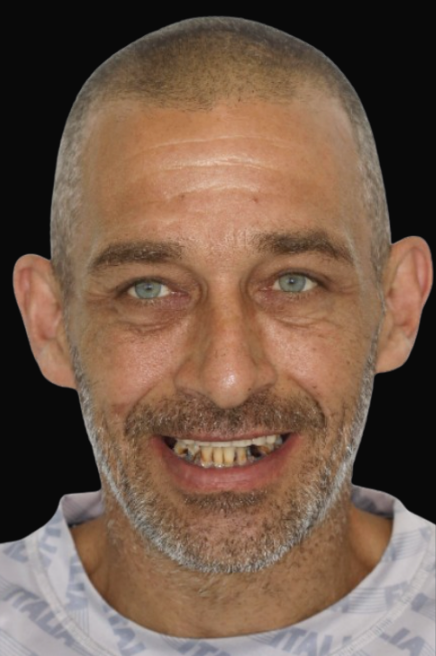
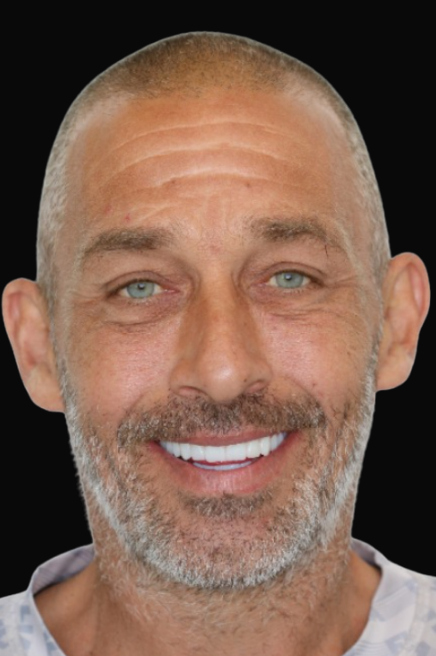
All-On-4 dental Implants treatment completed by Dr Reg De Sousa - DEN0001013154
Individual results vary. These images represent outcomes achieved by the treating practitioner and may not reflect typical results. Suitability for treatment is determined at a clinical consultation.
All-on-4® Dental Implants vs. Traditional Implants
Dental implants can support a single crown, a bridge or a full arch of replacement teeth. A separate implant is not always needed for every missing tooth.
All-on-4 is a full-arch approach using four implants. Other plans may use a different number or arrangement. Suitability, grafting requirements, recovery and costs depend on the individual assessment; fewer implants do not automatically mean faster recovery or a better result.
All-on-4® Dental Implants Suitability
Full-arch implant treatment may be considered when an entire arch is missing or remaining teeth cannot reasonably be retained. Assessment includes bone support, gum health, the condition of remaining teeth, medical history and the ability to maintain the bridge.
Bone loss or gum disease can affect suitability and may require additional treatment. All-on-4 does not guarantee eligibility for someone who has been advised against another implant option.
Discuss retaining treatable teeth, removable dentures and other implant arrangements before deciding. Your dentist will explain the expected dental benefits and limitations for your circumstances.
Frequently Asked Questions
Sedation or general anaesthesia may be considered following assessment. They are different techniques with different effects and risks. Your treating and anaesthetic clinicians will discuss the appropriate option, monitoring, preparation, fees and recovery instructions.
Anaesthesia is used to manage discomfort during surgery, but pain-free treatment or recovery cannot be guaranteed. Pain, swelling and bruising can occur afterwards and vary between patients. Follow your prescribed pain-management plan and contact the treating team for severe or worsening symptoms.
Wherever you consider treatment, ask about practitioner qualifications, the proposed implant system, risks, total costs and access to follow-up care. Full-arch implant treatment can need adjustments, repairs or management of complications. Consider how travel and distance could affect ongoing care; location alone does not guarantee an outcome.
No. Each arch is assessed separately. Retaining treatable natural teeth may be appropriate, and the same treatment is not automatically needed for both arches. Your dentist will explain suitable options and costs for your circumstances.
Some patients can have full-arch implant treatment without grafting; others need grafting or a different treatment plan. Scans and clinical assessment help determine the available bone and the relationship to nerves and sinuses. Grafting cannot be ruled out before assessment.
All-on-4 describes an approach using four implants per arch. Some patients are better suited to a different full-arch plan using more implants or another form of tooth replacement. The recommended number and arrangement depend on anatomy, bone support, bite and the proposed bridge.
Gum disease needs assessment and management as part of planning. A history of gum disease can increase the risk of disease around implants. Tooth removal and implant placement do not eliminate that risk. Daily cleaning and ongoing professional care are necessary, but cannot guarantee that complications will be prevented.
The lifespan of an acrylic bridge varies with its design, bite forces, cleaning and maintenance. The bridge, teeth, screws or other components may wear, loosen or fracture and need repair or replacement. Implants and replacement teeth are not guaranteed for life. Ask about likely maintenance and replacement costs.
Some suitable patients receive provisional fixed teeth within days of surgery. Planning, bone healing and final replacement teeth commonly involve several months and multiple appointments. Other patients need a longer or different sequence. Your dentist will explain your estimated stages and any restrictions on eating and activity.
The All-on-4 approach generally uses two front implants and two angled rear implants to support an arch. Exact positioning depends on your anatomy and plan. Early fitting of provisional teeth is possible only where clinical conditions allow; angulation does not guarantee that grafting can be avoided.
Four implants can support a full-arch bridge in appropriately selected patients. Function depends on implant stability, bone support, the bridge design, bite forces, healing and maintenance. Implants can fail and components can break or loosen. No implant arrangement guarantees a lifetime result.
Adequate bone support and a suitable implant plan are needed. Your dentist assesses bone quantity and quality, medical history and other risk factors using appropriate examinations and imaging. Bone loss may require grafting, a different implant approach or a non-implant alternative.
Fees are assessed for the proposed treatment and arch or arches involved. Treating one arch is not necessarily half the cost of treating both. Your itemised quote will identify extractions, implants, provisional and final teeth, anaesthesia, reviews, maintenance and any separate charges.
Humm and DentiCare arrangements may be available, subject to eligibility, approval where required and current terms. Review deposits, fees, repayment amounts and total costs before agreeing. Payment arrangements do not determine clinical suitability. Read about dental payment options.
Risks and recovery
Dental implant treatment involves surgery. Risks include pain, swelling, bleeding, infection, nerve or sinus injury, failure to integrate with bone and later implant failure. Replacement teeth and components can wear, loosen or break. Initial recovery may affect eating and normal activities; bone healing and staged treatment commonly take months. Cleaning, reviews and future maintenance are needed. Read about implant risks and recovery.