A smile transformation does not always mean dramatic dental work. Sometimes it is as simple as lifting stains, repairing a chipped edge, or aligning one tooth that has bothered you for years. In other cases, the best result comes from a carefully planned combination of treatments that improve colour, shape, bite, and function together.
Modern cosmetic dentistry is not about creating a one-size-fits-all “perfect” smile. The goal is to design a smile that suits your face, feels comfortable, supports long-term oral health, and gives you more confidence when you speak, laugh, and take photos.
Below, we explore the cosmetic dental procedures that can transform your smile, what each treatment is best suited for, and how to think about your options before starting.
What can cosmetic dental procedures improve?
Cosmetic dentistry focuses on the appearance of your teeth and smile, but the best treatment plans also consider strength, bite balance, gum health, and daily function. Before any aesthetic work begins, your dentist will usually assess your teeth, gums, jaw joints, existing dental work, and oral hygiene habits.
Depending on your needs, cosmetic dental procedures can help improve:
- Tooth colour, including yellowing, dullness, or staining
- Tooth shape, such as short, uneven, worn, or chipped teeth
- Tooth position, including crowding, gaps, or rotations
- Smile symmetry and tooth proportions
- Missing teeth or failing teeth
- Old fillings, crowns, or dental work that no longer blends naturally
- Overall confidence in how your smile looks
The right option depends on what you want to change, how much tooth structure is available, your oral health, and how long you want the result to last.
A quick comparison of popular smile-transforming treatments
| Cosmetic dental procedure | Best suited for | Typical smile improvement | Key consideration |
|---|---|---|---|
| Professional teeth whitening | Stained or yellow teeth | A brighter, fresher smile | Works best on natural tooth enamel, not crowns or veneers |
| Composite bonding | Small chips, gaps, or uneven edges | Fast reshaping and repair | Usually less durable and more stain-prone than porcelain |
| Porcelain veneers | Discolouration, worn edges, gaps, shape concerns | A highly customised smile change | Usually involves irreversible tooth preparation |
| Dental crowns | Weakened, cracked, heavily filled, or damaged teeth | Restores appearance and strength | More tooth coverage than veneers |
| Invisalign or clear aligners | Mild to moderate misalignment | Straighter teeth and better smile balance | Requires patient compliance with aligner wear |
| Dental implants | One or more missing teeth | Natural-looking tooth replacement | Needs adequate bone and healthy gums |
| All-On-4 | Full-arch tooth loss or failing teeth | Fixed full-arch smile restoration | Requires detailed planning and surgical suitability |
Professional teeth whitening for a brighter smile
Teeth whitening is one of the most conservative cosmetic dental procedures because it does not change the shape or structure of your teeth. It is often ideal for people whose teeth are healthy but look dull, yellow, or stained from coffee, tea, red wine, smoking, ageing, or certain foods.
Professional whitening can be performed in different ways, including in-chair treatments and take-home whitening systems supervised by a dentist. The advantage of dentist-guided whitening is that your teeth and gums can be assessed first, and the whitening approach can be tailored to reduce risks such as sensitivity or uneven colour.
Whitening is most effective on natural enamel. It will not whiten porcelain veneers, crowns, bonding, or tooth-coloured fillings. If you already have visible restorations, your dentist may recommend whitening first, then updating old restorations so they match your new shade.
The Australian Dental Association advises that whitening should be approached carefully, especially if you have sensitivity, gum disease, decay, or existing dental restorations. This is why a dental assessment before whitening is so important.
Composite bonding for chips, small gaps, and uneven edges
Composite bonding uses tooth-coloured resin to reshape or repair teeth. It can be a good option for minor cosmetic concerns, such as a chipped front tooth, a small gap, slight unevenness, or a tooth edge that looks worn.
The appeal of bonding is that it is usually relatively conservative. In many cases, little to no enamel needs to be removed. The resin is applied, shaped, hardened, and polished to blend with the surrounding teeth.
Bonding can make a noticeable difference quickly, but it has limitations. Composite resin is generally not as strong or stain-resistant as porcelain. It may need polishing, repair, or replacement over time, especially if you grind your teeth, bite your nails, chew hard objects, or drink a lot of staining beverages.
For someone deciding between bonding and veneers, the difference often comes down to the size of the change, the desired longevity, and how much control is needed over colour and shape. If you are comparing these two options, Creative Smiles has a helpful guide on the difference between veneers and bonding.
Porcelain veneers for a more dramatic smile transformation
Porcelain veneers are thin ceramic shells placed over the front surfaces of teeth. They are often chosen when someone wants to improve multiple cosmetic concerns at once, including tooth colour, shape, symmetry, minor spacing, and worn or uneven edges.
Veneers can create a significant transformation while still looking natural when they are designed thoughtfully. Factors such as tooth proportions, facial shape, lip movement, gum line, and shade selection all matter. A good veneer result should not simply look “white”; it should look harmonious.
Porcelain is more stain-resistant than composite resin and can offer excellent aesthetics. However, veneers are not a casual decision. Tooth preparation may be required, and this is usually irreversible. Your dentist also needs to check your bite, enamel, gum health, and habits such as grinding before recommending veneers.
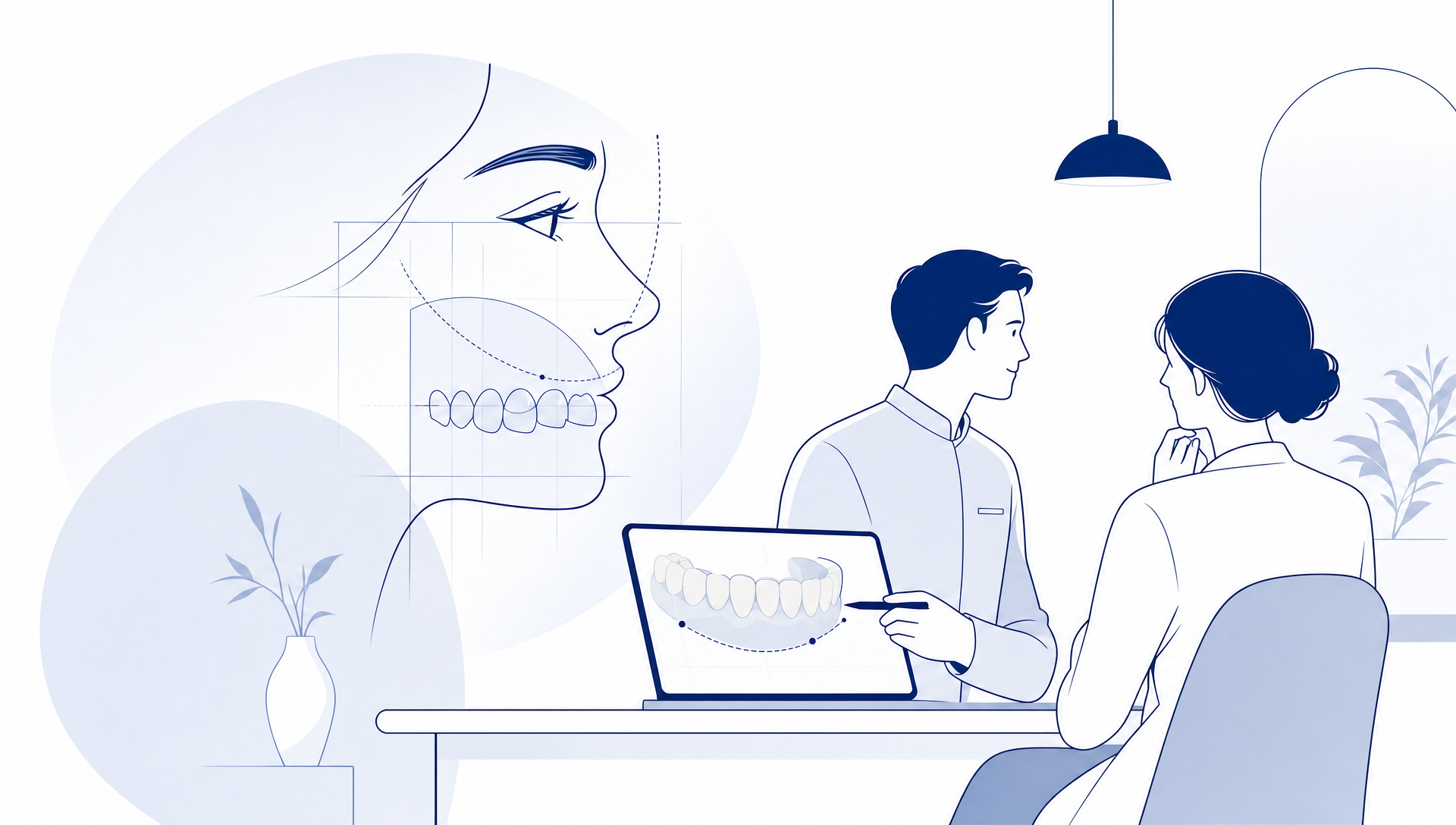
A well-planned veneer case may involve photographs, scans, mock-ups, shade discussions, and trial designs so you can understand the likely outcome before treatment progresses. For more detail on what the process can involve, read this veneers treatment guide.
Dental crowns for damaged or heavily restored teeth
Crowns are often discussed in restorative dentistry, but they can also play an important cosmetic role. A crown covers the visible part of a tooth and can improve its shape, colour, strength, and function.
Crowns may be recommended when a tooth is too weakened or heavily filled for a veneer or bonding to be suitable. For example, a tooth with a large old filling, cracks, severe wear, or previous root canal treatment may need the extra coverage and protection that a crown provides.
Cosmetically, crowns can be made to blend with neighbouring teeth or form part of a broader smile makeover. The key is to avoid treating crowns as purely aesthetic coverings. They should be designed with bite forces, gum health, and long-term maintenance in mind.
Invisalign and clear aligners for a straighter smile
Not every smile transformation requires changing the tooth surface. Sometimes, moving the teeth into better positions can create a cleaner, more balanced smile while preserving natural enamel.
Invisalign and other clear aligner systems can help with concerns such as crowding, spacing, mild rotations, and some bite issues. Straightening teeth may also make them easier to clean, which can support gum health and long-term maintenance.
Clear aligner treatment involves a sequence of removable aligners that gradually move teeth. Success depends heavily on wearing the aligners as instructed and attending review appointments. Some cases also require attachments, interproximal reduction, or refinements to achieve the planned result.
In some smile makeovers, aligners are used before whitening, bonding, or veneers. This can sometimes reduce the amount of tooth reshaping required, because the teeth are already in a better position before cosmetic finishing begins.
Dental implants for missing teeth
Missing teeth can affect far more than appearance. They can change how you chew, how neighbouring teeth move, how your bite feels, and how confident you are when smiling. Dental implants are one of the most popular long-term options for replacing missing teeth because they are designed to act like artificial tooth roots.
A dental implant is placed in the jawbone, then restored with a crown, bridge, or full-arch prosthesis depending on how many teeth are missing. When planned well, an implant crown can look and feel close to a natural tooth.
Implants are not suitable for everyone automatically. Your dentist needs to assess bone volume, gum health, medical history, smoking status, bite forces, and oral hygiene. Some patients may need additional procedures before implant placement, while others may be better suited to bridges or dentures.
If missing teeth are your main concern, this dental implants guide explains the treatment in more depth.
All-On-4 for full-arch smile restoration
For people with many missing, failing, or uncomfortable teeth, individual cosmetic fixes may not be enough. All-On-4 treatment is designed to replace a full arch of teeth using a fixed prosthesis supported by dental implants.
This can be life-changing for suitable patients because it addresses appearance, chewing function, and confidence together. Instead of relying on removable dentures, patients receive a fixed full-arch solution that is planned around their jaw, smile line, facial proportions, and functional needs.
All-On-4 is a major treatment and requires careful assessment. Your dentist will need to evaluate your bone, gums, bite, medical history, aesthetic goals, and expectations. It is also important to understand the maintenance requirements, review schedule, and long-term care involved.
For patients comparing options, the decision is not simply “implants or dentures.” It is about choosing a stable, maintainable solution that suits your health, lifestyle, budget, and desired outcome.
Smile makeovers: combining treatments for a complete result
Many smile transformations involve more than one procedure. For example, a patient may start with Invisalign to improve alignment, then whiten their teeth, then use bonding or veneers to refine the final shape. Another patient may need implants to replace missing teeth before crowns or veneers are designed for the visible front teeth.
A combined plan can often create a better result than treating one concern in isolation. It also allows your dentist to sequence care properly. Whitening is usually done before matching new restorations. Orthodontic movement may be done before veneers. Gum or bite issues may need to be managed before final cosmetic work.
A smile makeover plan may include:
- A full dental examination and gum health assessment
- Photographs, scans, X-rays, or digital records
- Discussion of your goals, concerns, and preferred level of change
- Shade, shape, and smile design planning
- A staged treatment plan with transparent costs and timing
- Maintenance advice to protect your result
This planning stage is where cosmetic dentistry becomes personal. Two patients may request “a brighter smile,” but one may need whitening only while another may need alignment, replacement of old restorations, and new veneers to achieve the outcome they have in mind.
Which procedure is right for your smile concern?
The best cosmetic dental procedure depends on the problem you are trying to solve. This table can help you start the conversation with your dentist.
| Your main concern | Procedures that may be discussed | Why they may help |
|---|---|---|
| Yellow or stained teeth | Whitening, veneers, replacement of old restorations | Improves shade and brightness |
| Chipped tooth edges | Bonding, veneers, crowns | Rebuilds shape and symmetry |
| Small gaps | Bonding, veneers, Invisalign | Closes or reduces spacing |
| Crowded or crooked teeth | Invisalign, veneers in selected cases | Improves alignment and smile balance |
| Short or worn teeth | Bonding, veneers, crowns, bite assessment | Restores tooth length and proportions |
| Missing teeth | Implants, bridges, dentures, All-On-4 | Replaces teeth and supports function |
| Old mismatched dental work | Crowns, veneers, bonding, whitening first | Creates a more consistent smile |
This is only a guide. A clinical assessment is essential because the treatment that looks simplest may not be the healthiest choice for your teeth.
Cost, timing, and payment considerations
Cosmetic dentistry costs vary because procedures differ in complexity, materials, laboratory work, planning time, and the number of teeth involved. Whitening is generally more accessible than veneers or implant treatment, while full-arch rehabilitation requires more advanced planning and surgical care.
The most helpful approach is to ask for a personalised treatment plan that explains your options, the pros and cons, the expected maintenance, and the staged costs. Sometimes treatment can be phased over time, beginning with health priorities before moving into cosmetic improvements.
Creative Smiles offers transparent pricing and flexible payment options, which can help patients plan treatment with more confidence. If you are researching fees locally, you may also find this article on whether cosmetic dentistry is expensive in Melbourne useful.
How to protect your new smile
Cosmetic dental work lasts longer when it is supported by good daily habits and regular dental care. Even the most beautiful veneers, crowns, implants, or whitening results need maintenance.
Important aftercare habits include brushing twice daily, cleaning between teeth, attending regular dental check-ups, and wearing a night guard if your dentist recommends one for grinding or clenching. It is also wise to avoid using teeth as tools, biting hard objects, and ignoring early signs of sensitivity, bleeding gums, or changes in your bite.
If you have whitening, you may need occasional top-ups. If you have bonding, you may need polishing or repair over time. If you have veneers, crowns, or implants, professional reviews help monitor the health of the teeth, gums, bite, and restorations.
Frequently Asked Questions
What is the most popular cosmetic dental procedure? Teeth whitening is one of the most common cosmetic dental procedures because it is conservative and can noticeably brighten a smile. Veneers, bonding, Invisalign, crowns, and implants are also popular depending on the concern being treated.
Are cosmetic dental procedures painful? Many cosmetic treatments are performed with minimal discomfort, and local anaesthetic can be used when needed. More complex procedures, such as implants or full-arch treatment, involve additional planning and recovery. Your dentist should explain what to expect before you begin.
How long do cosmetic dental results last? Longevity depends on the procedure, materials, bite forces, oral hygiene, diet, and maintenance. Whitening may need periodic top-ups, bonding may need repairs, and porcelain veneers or crowns can last many years with proper care.
Can I combine Invisalign with veneers or whitening? Yes, many smile makeovers combine treatments. Invisalign may be used first to improve tooth position, followed by whitening and then veneers or bonding if further refinements are needed.
Do I need a full smile makeover, or can I fix one tooth? You may only need one tooth repaired if the concern is isolated. A full smile makeover is usually considered when multiple teeth, alignment, colour, missing teeth, or old dental work need to be improved together.
Ready to explore your smile options?
The best smile transformation starts with a conversation, not a guess. Whether you are considering whitening, veneers, Invisalign, implants, All-On-4, or a complete smile restoration, a personalised assessment can help you understand what is realistic, healthy, and suited to your goals.
Creative Smiles in Armadale offers cosmetic and general dentistry, free consultations, payment plans, and before-and-after smile results to help you make an informed decision. If you are ready to explore what is possible for your smile, book a consultation with Creative Smiles.