If you are searching for a teeth whitening dentist Melbourne appointment, you are probably wondering what actually happens, whether it is suitable for your teeth and how to avoid unwanted sensitivity or uneven colour. A dentist-supervised whitening appointment is not just about applying whitening gel. It usually starts with checking your teeth and gums, understanding the type of staining you have and explaining realistic options before any treatment is recommended.
Teeth whitening may help lighten the shade of natural teeth, but results vary. It does not whiten crowns, veneers, fillings or dental bonding, and it may not be the right option if there is active decay, gum inflammation, cracks, significant sensitivity or certain internal stains. A dental assessment helps determine whether whitening is appropriate for your circumstances.
What professional teeth whitening can and cannot do
Teeth whitening uses whitening agents, commonly peroxide-based gels, to lighten discolouration within natural tooth structure. It is different from a scale and clean, which removes plaque, calculus and some surface staining but does not bleach the tooth itself.
Whitening may be considered for external stains linked with coffee, tea, red wine, tobacco, some foods or general ageing of the tooth shade. It may be less effective for deeper internal discolouration, stains linked with past trauma, certain medications taken during tooth development or colour differences caused by restorations.
The Better Health Channel explains that teeth whitening can have side effects such as tooth sensitivity and gum irritation, and that dental advice is important before treatment. This is one reason many patients choose to discuss whitening with a dentist rather than starting with an over-the-counter product without knowing the cause of the discolouration.
It is also worth knowing that whitening is cosmetic. It is not necessary for oral health, and it should not be presented as something everyone needs. For some patients, a professional clean, changes to home care or treating an underlying dental problem may be more appropriate than whitening.
Teeth whitening dentist Melbourne appointment: the main steps
A teeth whitening appointment in Melbourne will vary depending on the clinic, the whitening system used and your oral health. In general, you can expect a careful discussion and examination before treatment begins.
Your dentist will ask about your goals and dental history
The appointment usually starts with a conversation about what has prompted you to consider whitening. Your dentist may ask when you first noticed the staining, whether one tooth is darker than the others, whether you have sensitivity and whether you have had restorations such as crowns, veneers, bonding or fillings on visible teeth.
Your medical history can also matter. Some medications, pregnancy, breastfeeding, allergies, previous dental treatment and oral health conditions may influence whether whitening is recommended or whether it should be delayed.
This part of the visit is not about judging the colour of your teeth. It is about understanding what may be causing the shade change and whether whitening is likely to be a reasonable option.
Your teeth and gums will be examined
Before whitening, your dentist will usually check for issues that could make treatment uncomfortable or unsuitable. This may include looking for tooth decay, leaking fillings, cracks, gum recession, exposed root surfaces, enamel wear, gum inflammation and plaque or calculus build-up.
If there is active dental disease, it may need to be managed before whitening. Whitening gel can irritate unhealthy gums or increase sensitivity if there are untreated problems. A clean may also be recommended first if surface staining or calculus is affecting the appearance of the teeth.
Existing dental work will be checked
Crowns, veneers, bridges, fillings and composite bonding do not whiten in the same way natural teeth do. If a visible filling or veneer was matched to your current tooth shade, it may look darker or more noticeable after the natural teeth are whitened.
This does not mean whitening is always unsuitable, but it does mean planning matters. Your dentist can explain whether existing restorations may affect the final appearance and whether any future restorative work should be planned after the tooth shade has stabilised.
For patients comparing cosmetic options beyond whitening, it can be helpful to understand the difference between veneers and bonding, particularly when colour, shape or surface texture are part of the concern.
The whitening options your dentist may discuss
Dentist-supervised whitening may involve in-chair whitening, custom take-home trays or a combination approach. The most appropriate option depends on your teeth, staining pattern, sensitivity risk, budget, timing and preferences.
| Whitening option | What it usually involves | Why it may be considered | Points to discuss |
|---|---|---|---|
| In-chair whitening | Whitening gel is applied at the dental clinic with protective measures for the gums and soft tissues | May suit patients who prefer treatment performed in the clinic | Sensitivity risk, expected shade change and whether follow-up whitening is needed |
| Dentist-provided take-home trays | Custom trays are made to hold whitening gel against the teeth at home as directed | May suit patients who prefer gradual whitening with dentist guidance | Wearing schedule, gel strength, tray fit and how to manage sensitivity |
| Combination whitening | In-chair treatment and take-home trays are used as part of one plan | May suit some patients where staged treatment is appropriate | Total cost, maintenance and individual suitability |
| No whitening or delayed whitening | Whitening is postponed or not recommended | May be appropriate if dental disease, pregnancy, sensitivity or restorations need consideration first | Alternative options and timing after other dental care |
Your dentist should explain the potential benefits, limitations and risks of each option in plain language. Treatment should only proceed if you understand what is involved and it is clinically appropriate for you.
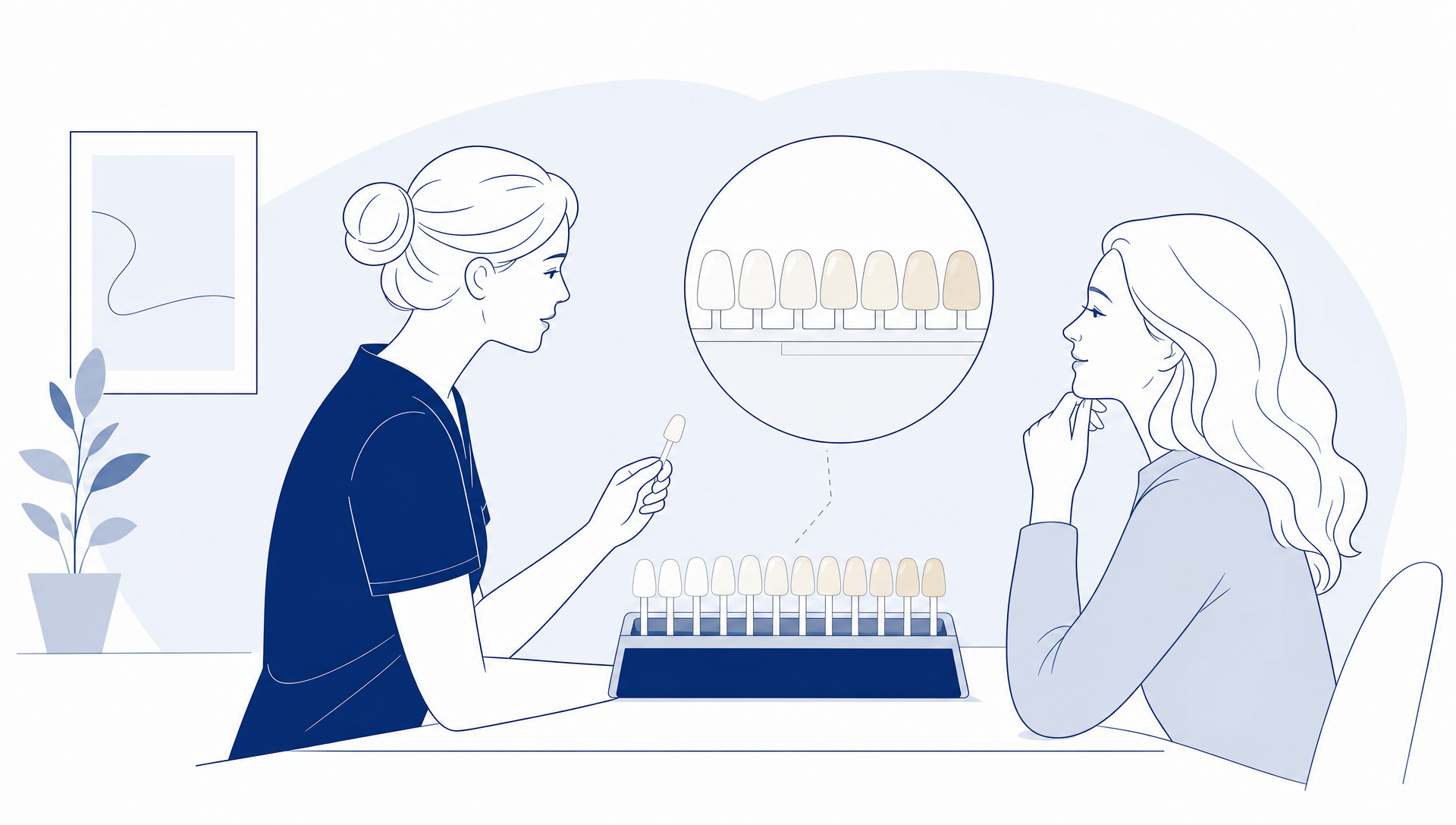
What happens during an in-chair whitening appointment
If in-chair whitening is suitable and you choose to proceed, the clinical appointment is usually structured and protective. The exact steps can differ between whitening systems, but the general process is similar.
Your dentist or dental team will usually record your starting shade, prepare your mouth and protect your gums, lips and cheeks from the whitening gel. A whitening gel is then placed on the teeth being treated. It may be applied in stages, with the teeth checked between applications.
During the appointment, you may feel temporary sensitivity, tingling or mild gum irritation. If discomfort occurs, you should let the dental team know so they can assess what is happening. Some patients have little sensitivity, while others are more prone to it, especially if they already have exposed root surfaces, enamel wear or sensitive teeth.
At the end of the appointment, the gel is removed and your mouth is rinsed. Your dentist may compare the shade again and provide aftercare instructions. The final appearance can continue to settle after treatment, so your dentist may advise waiting before making decisions about matching restorations or further cosmetic work.
What happens with dentist-provided take-home whitening trays
Take-home whitening through a dentist usually involves custom trays that fit closely around your teeth. These trays may be made after taking a mould or digital record of your teeth, depending on the practice and the system used.
Your dentist will explain how much gel to place in the trays, how long to wear them and what to do if sensitivity develops. This guidance matters because too much gel, poorly fitting trays or overuse can increase the chance of gum irritation and sensitivity.
Take-home whitening is usually more gradual than in-chair treatment. Some patients prefer this because they can monitor the shade change over time. Others prefer the structure of an in-clinic appointment. Neither approach is automatically better for everyone, and your dentist can assess which may suit your oral health and preferences.
How to prepare before your appointment
You do not need to do anything complicated before seeing a dentist about whitening. The most useful preparation is to think about your dental history and what you want to understand from the appointment.
Helpful questions to ask include:
- Is my staining likely to respond to whitening?
- Do I need a clean or other dental care before whitening?
- Will my fillings, crowns, veneers or bonding look different afterwards?
- What side effects should I watch for?
- How should I manage sensitivity if it occurs?
- What are the costs, inclusions and follow-up arrangements?
If you have a particular event coming up, mention it early. Your dentist can explain whether the timing is realistic and whether a staged approach would be more appropriate. It is better to allow time for assessment, any recommended preliminary care and shade settling rather than leaving whitening until the last moment.
Possible side effects, risks and limitations
All dental procedures and cosmetic dental treatments carry potential risks and benefits. With teeth whitening, the most common concerns are temporary tooth sensitivity and gum irritation. These effects are often short-term, but they can be uncomfortable and may require changes to the whitening plan.
Other limitations include uneven whitening, visible colour differences between natural teeth and restorations, or a result that is lighter but still not the shade the patient expected. Teeth with internal discolouration may not respond in the same way as teeth with surface or age-related staining.
Whitening may not be appropriate, or may need to be delayed, if you have untreated decay, gum disease, cracked teeth, significant sensitivity, exposed roots or certain medical or dental circumstances. Children and teenagers also require careful assessment, as whitening may not be suitable for younger patients depending on age, tooth development and individual needs.
The key point is that whitening should be planned around your oral health, not just tooth colour.
Dentist whitening compared with store-bought whitening products
Many patients ask whether dentist whitening is different from whitening strips, whitening toothpastes or products offered outside a dental setting. The main difference is the assessment and supervision that comes with dental care.
A dentist can check whether staining is caused by something that needs treatment, such as decay, enamel defects, a leaking restoration or trauma to a tooth. They can also consider whether whitening gel may irritate your gums or make sensitivity worse.
Store-bought products may help with some surface staining or mild shade changes for some people, but they are not tailored to your mouth. Whitening toothpastes generally work by removing surface stains rather than changing the internal tooth shade. Products used without dental advice may also be disappointing if the problem is not the type of stain that whitening can address.
This does not mean every patient needs in-chair whitening. It means that an assessment can help you make a more informed decision and avoid spending time or money on an option that may not suit your teeth.
Aftercare following teeth whitening
After whitening, your dentist will give instructions based on the treatment used and your sensitivity risk. General advice may include using a soft toothbrush, maintaining good oral hygiene, avoiding overuse of whitening products and contacting the clinic if sensitivity is significant or persistent.
Some dentists may suggest limiting strongly staining foods and drinks for a short period after treatment. This advice can vary, so it is best to follow the instructions given for your specific whitening system.
Longer term, tooth shade can be influenced by diet, smoking, oral hygiene, enamel wear and natural ageing. Whitening results are not permanent, and maintenance needs vary between patients. Your dentist can advise whether occasional maintenance whitening is appropriate and how often it should be done.
If whitening is part of a broader cosmetic plan
Teeth whitening is sometimes considered before other cosmetic dental treatment because it can help establish a lighter natural tooth shade before restorations are colour-matched. This may be relevant if you are also considering bonding, veneers, crowns or clear aligner treatment.
However, whitening alone only changes tooth colour. It does not change tooth position, shape, size, wear, spacing or the appearance of restorations. If your concerns involve several of these factors, your dentist may discuss a broader cosmetic treatment plan rather than whitening on its own.
For a wider overview of treatment planning, you can read about cosmetic dentistry smile makeover options and how different approaches may be considered depending on individual needs.
What about teeth whitening costs in Melbourne?
The cost of teeth whitening in Melbourne can vary depending on the whitening method, whether a dental examination or clean is required first, the type of trays or whitening system used and whether follow-up appointments are included. Fees should be explained before you decide whether to proceed.
Be cautious about comparing whitening prices without understanding what is included. A lower fee may not include an oral health assessment, custom trays, review appointments or sensitivity management advice. A higher fee does not automatically mean an option is more suitable either. The right question is whether the treatment is appropriate for your teeth, clearly explained and provided with suitable clinical oversight.
If you are comparing cosmetic dental fees more broadly, Creative Smiles has a separate guide on why cosmetic dentistry costs can vary in Melbourne.
When to speak with a dentist before whitening
It is sensible to speak with a dentist before whitening if you have tooth sensitivity, gum recession, tooth pain, visible cracks, worn enamel, bleeding gums, loose fillings or a tooth that has become darker than the surrounding teeth. You should also seek dental advice if you have had recent trauma to a tooth or if the discolouration affects only one tooth.
These signs do not necessarily mean something serious is happening, but they should be assessed before whitening. Whitening a tooth without understanding the cause of colour change can delay appropriate care or make symptoms worse.
Frequently asked questions
Is teeth whitening at the dentist suitable for everyone? No. Suitability depends on your oral health, dental history, tooth sensitivity, existing restorations and the type of staining present. A dentist can assess whether whitening may be appropriate or whether another option should be considered.
Will teeth whitening change the colour of crowns, veneers or fillings? No. Whitening works on natural tooth structure and does not lighten porcelain, ceramic, composite resin or other restorative materials. This can create shade differences, so planning is important if you have visible restorations.
Can teeth whitening cause sensitivity? Yes, some patients experience temporary sensitivity during or after whitening. Your dentist can discuss your risk factors and may suggest strategies such as changing the whitening schedule, using desensitising products or delaying treatment if sensitivity is already significant.
How white will my teeth get after whitening? Results vary between patients. The final shade depends on the starting tooth colour, type of staining, enamel characteristics, age, oral habits and the whitening method used. No dentist should guarantee a specific shade.
Should I have my teeth cleaned before whitening? Sometimes. If plaque, calculus or surface staining is present, a professional clean may be recommended before whitening. This helps your dentist assess the true tooth shade and may improve the consistency of the whitening process.
Can I whiten my teeth before Invisalign, veneers or bonding? It depends on your treatment plan. Whitening may be considered before shade-matched restorations, but timing matters. If you are also considering aligners, veneers or bonding, your dentist can explain the most appropriate sequence for your circumstances.
Considering teeth whitening in Armadale or Melbourne?
A dental examination can help determine the cause of tooth discolouration and whether whitening may be suitable for you. It also gives you the opportunity to ask about expected limitations, sensitivity, costs, maintenance and alternatives before deciding on treatment.
If you would like to discuss dentist-supervised teeth whitening, you can arrange an assessment with Creative Smiles in Armadale. The team can assess your oral health, explain relevant options and help you make an informed decision based on your individual needs.