A cosmetic dental treatment estimate should help you understand what is being proposed, what may be included and what questions to ask before you decide. If you have been searching for a smile dental price list, it is worth knowing that a list of fees can only tell part of the story. Cosmetic dentistry costs often depend on your teeth, gums, bite, medical history, treatment goals and the steps needed to carry out care safely.
This guide explains how to read an estimate in plain English, so you can compare options more fairly and speak with your dentist about costs without feeling rushed or unsure.
What a treatment estimate is, and what it is not
A dental treatment estimate is a written outline of proposed care and the expected fees attached to it. It may be called an estimate, quote, treatment plan or fee proposal. The wording matters, because an estimate may change if new clinical information becomes available or if the treatment plan changes after further assessment.
A cosmetic dental estimate should usually be based on a consultation, examination or records such as photos, X-rays, scans or impressions. For more complex treatment, a dentist may need additional planning before the final stages and costs can be confirmed.
An estimate is not a diagnosis you can apply to someone else, and it is not a guarantee of a particular result. All dental procedures carry potential benefits and risks, and treatment experiences vary between patients. Your dentist should explain why a treatment is being considered, what alternatives may be available and what could happen if you choose not to proceed.
What a smile dental price list can and cannot tell you
A fee guide can be a helpful starting point, especially when you are trying to understand the general difference between whitening, bonding, veneers, crowns, Invisalign treatment or dental implants. It can also help you prepare questions before a consultation.
The limitation is that cosmetic dental treatment is not usually a fixed retail item. This is different from choosing a finished product such as minimalist jewellery, where the item has already been made and the listed price usually applies to that exact piece. In dentistry, the “product” is a health service planned around your individual mouth.
A smile dental price list can show broad fee categories, but it cannot confirm whether a treatment is suitable or whether extra steps may be needed. For example, two people considering veneers may have different needs if one has healthy teeth and gums, and the other has old fillings, enamel wear or bite issues that need assessment first.
For more detail on comparing broader treatment plans rather than focusing only on headline fees, Creative Smiles has a separate guide on how to compare smile solution costs and treatment plans.
Start with the treatment goal and clinical reason
Before looking at the total fee, check whether the estimate explains the reason for treatment. A clear estimate should connect the proposed procedure to the concern being addressed, such as tooth colour, spacing, worn edges, missing teeth, crowding or a damaged restoration.
This matters because several treatments can sometimes address a similar concern in different ways. For example, discolouration may be discussed in relation to teeth whitening, veneers or replacement of old restorations, depending on the cause. Crowding or spacing may involve orthodontic treatment, restorative treatment or a combination.
When a smile dental price list is used on its own, it may not show this clinical reasoning. A proper estimate should help you understand not only what the treatment costs, but why that option has been proposed for your circumstances.
Check whether the estimate is itemised
An itemised estimate breaks down the treatment into separate components rather than showing only one total. This can make it easier to ask questions, compare plans and submit information to a private health insurer if relevant.
Dental estimates in Australia may include item numbers from the Australian Schedule of Dental Services and Glossary, although the way these are used can vary between practices and health funds. If you have private health insurance, item numbers can help your fund provide an estimate of any rebate, but the fund decides the rebate according to your policy.
A useful estimate may include:
- The treatment name in plain language
- Tooth numbers or areas being treated
- The number of appointments or stages
- Item numbers, where applicable
- Fees for each stage or procedure
- What is included in the quoted fee
- What may be separate or subject to change
If the estimate is not itemised, it is reasonable to ask for more detail before deciding.
The main sections to read line by line
A cosmetic dental estimate can look simple at first glance, but the details determine how meaningful the total really is. The table below outlines common sections and what to check.
| Estimate section | What it means | Questions to ask |
|---|---|---|
| Proposed treatment | The procedure or combination of procedures being considered | Why is this option being recommended for my situation? |
| Tooth or arch details | Which teeth, upper arch, lower arch or full mouth area is included | Does this cover all areas I am concerned about? |
| Records and planning | Photos, X-rays, scans, impressions or digital planning | Are these included in the total or billed separately? |
| Materials | The type of material or restoration proposed | Are there alternative materials, and why might one be suitable? |
| Laboratory fees | Work completed by an external dental laboratory | Are lab fees included in the listed amount? |
| Temporary stages | Temporary crowns, veneers or other interim steps | Will I need temporary restorations, and are they included? |
| Review visits | Follow-up appointments after treatment | How many reviews are included, if any? |
| Maintenance | Ongoing care after treatment | What maintenance may be needed over time? |
| Payment terms | When payments are due and whether plans are available | What are the total costs, fees and conditions? |
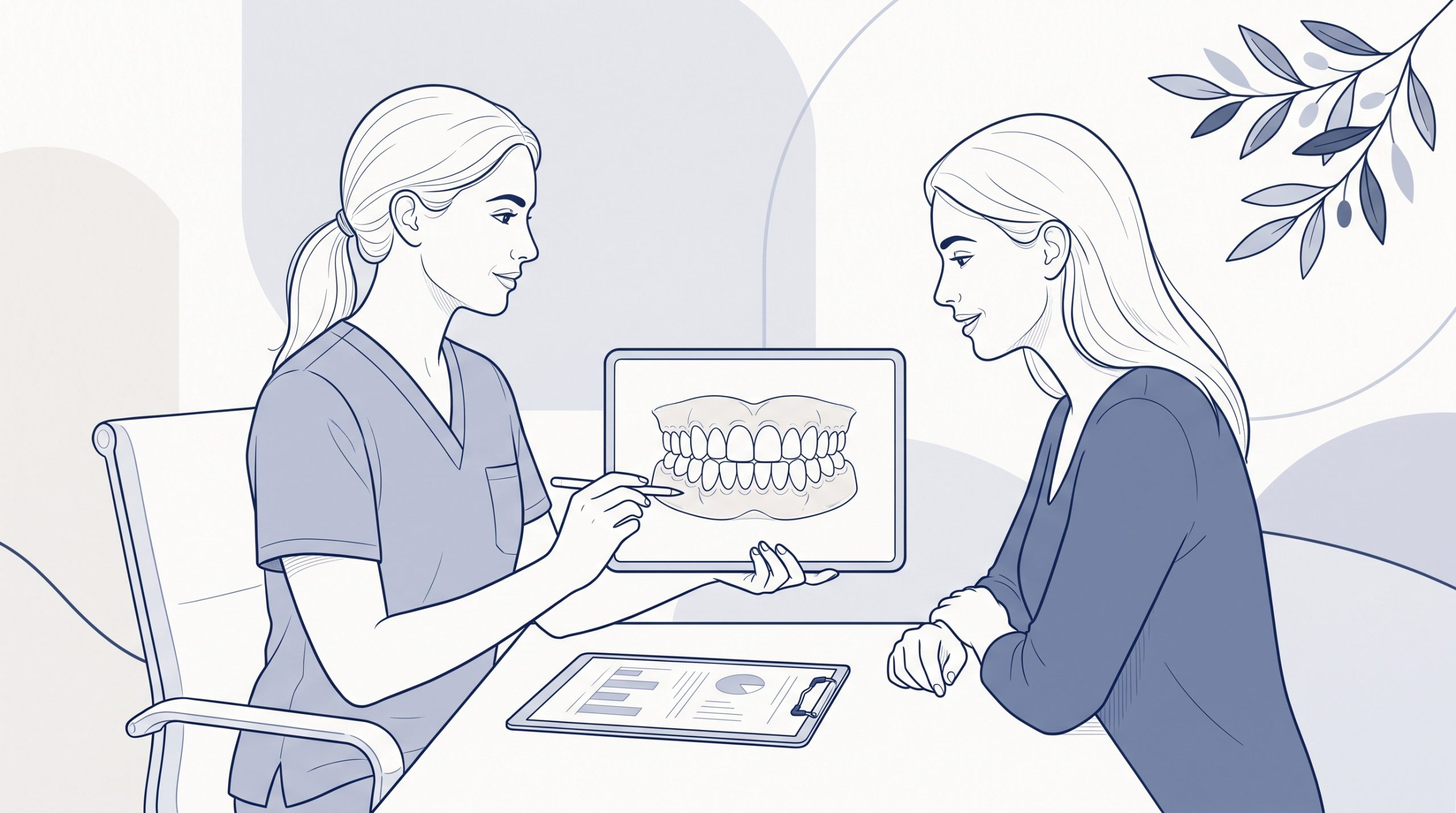
This type of breakdown can help you compare more than the final number. For example, one estimate may include planning, temporary restorations and review visits, while another may list those items separately.
Look for inclusions, exclusions and “if needed” items
The most common misunderstandings about cosmetic dental fees often come from assumptions about what is included. An estimate should make these points as clear as possible.
Ask whether the fee includes initial records, diagnostic wax-ups or digital planning, temporary restorations, anaesthetic, laboratory work, review appointments and retainers if orthodontic treatment is involved. If a treatment involves implants, ask whether the estimate includes the implant fixture, abutment, crown, surgical guide, scans and review care, as relevant to your plan.
A smile dental price list may not show these distinctions, which is why a lower total is not always directly comparable with a higher total. Sometimes the difference reflects a different treatment scope rather than a cheaper version of the same care.
Also check for conditional items. These may be listed as “if required” or discussed verbally. Examples may include additional X-rays, replacement of failing fillings, gum treatment before cosmetic care or changes needed if decay is found. These are not necessarily signs of a poor estimate, but they should be explained in a way you understand.
Understand the difference between cosmetic and health-related needs
Many people think of cosmetic dentistry as treatment that changes the appearance of teeth, but oral health still comes first. Your dentist may recommend addressing decay, gum inflammation, cracks, infection or bite concerns before cosmetic work is started.
This can affect the estimate. If your gums need treatment before veneers, or if an old crown has decay underneath, the cost and timing may change. In some cases, delaying cosmetic treatment until the mouth is stable may reduce the chance of avoidable complications.
For patients comparing options in Melbourne, it may also help to read about whether cosmetic dentistry is expensive in Melbourne and why fees can vary between treatment types and clinical situations.
Ask how materials and techniques affect the estimate
Materials can influence cost, appointment time and maintenance needs. For example, composite resin bonding, ceramic veneers and crowns are different types of treatment, each with its own considerations. None is automatically suitable for every patient.
A good estimate should make it clear what material is being proposed and why. If a term is unfamiliar, ask your dentist to explain it without jargon. For instance, “ceramic” refers to tooth-coloured dental materials often used for veneers and crowns, while “composite resin” is a tooth-coloured material often placed directly onto the tooth.
A smile dental price list may name the treatment but not explain these clinical differences. That is why the consultation discussion is just as important as the written figure.
Check the timing and stages of treatment
Cosmetic dental treatment may happen in one visit or over several stages, depending on what is being done. Whitening may involve a shorter sequence, while aligner treatment, veneers, crowns, implants or full-mouth rehabilitation usually require planning and review.
Your estimate should help you understand the order of appointments. It should also explain when fees are due, especially if treatment is staged over time. If you are considering a payment plan, ask for the total amount payable, any fees, the provider involved and what happens if the treatment plan changes.
Payment arrangements should support informed decision-making, not replace clinical suitability. If you are unsure whether to proceed, it is reasonable to ask for more time to consider the information.
Compare estimates fairly, not just by the total
If you have estimates from different providers, compare them carefully. A lower total may be appealing, but it may not include the same steps, materials, planning or follow-up. A higher total may include items that are listed separately elsewhere.
In Australia, regulated health service advertising must not be false, misleading or likely to create unreasonable expectations. The AHPRA advertising guidelines are a useful reminder that healthcare decisions should be based on balanced information, not pressure or exaggerated claims.
When comparing estimates, focus on:
- Whether the same teeth or areas are included
- Whether diagnostic records and planning are included
- Whether temporary stages, lab fees and reviews are included
- Whether risks, alternatives and limitations have been discussed
- Whether the dentist has assessed your oral health before recommending treatment
If one plan seems much cheaper or more expensive, ask what accounts for the difference.
Questions to ask before accepting an estimate
You do not need to understand every dental term before your appointment. A clear conversation with your dentist can help you make sense of the written estimate and decide whether you need more information.
Helpful questions include:
- What problem or concern is this treatment intended to address?
- Are there other suitable options, including doing nothing for now?
- What are the potential risks and limitations for my situation?
- What parts of the estimate are fixed, and what could change?
- Are any records, scans, temporary stages, lab fees or reviews separate?
- How will this treatment need to be maintained?
- What happens if the treatment plan changes after treatment starts?
- Can I take the estimate home before deciding?
If you are attending Creative Smiles in Armadale, a cosmetic consultation can be used to discuss your goals, possible options and likely next steps. You can also read what may be covered in a free cosmetic dental consultation before arranging a visit.
When to pause and ask for clarification
It is sensible to pause if the estimate is unclear, if you feel pressured to decide quickly or if the written plan does not match what you remember discussing. You can ask for the estimate to be updated in writing, particularly if the treatment scope changes.
You may also want clarification if an estimate uses broad terms such as “smile makeover” without listing the individual procedures. A smile dental price list is most useful when it leads to better questions, not when it replaces a personalised assessment.
For more involved care, some patients choose to seek another opinion. This is a normal part of healthcare decision-making. If you do, try to provide the same records and questions where possible so the comparison is more meaningful.
Frequently asked questions
Is a cosmetic dental estimate the same as a quote? Not always. Some practices use the terms interchangeably, but an estimate may change if new information is found or if your treatment plan changes. Ask whether the fee is fixed for a certain period and what circumstances could affect it.
Can I rely on a smile dental price list to choose treatment? A smile dental price list can help you understand general fee ranges, but it cannot confirm suitability. A dentist needs to assess your oral health, goals and individual circumstances before recommending treatment.
Why do two dental estimates for the same treatment look different? They may include different materials, tooth numbers, planning steps, lab work, temporary stages or review visits. One estimate may also include health-related treatment that another has not identified or has listed separately.
Should I ask for item numbers for my health fund? If you have private health insurance, item numbers may help your fund estimate any rebate. Your insurer determines rebates based on your policy, waiting periods, annual limits and other conditions.
What if I do not understand part of the estimate? Ask your dentist or the practice team to explain it in plain language and provide written clarification where needed. You should feel able to take time to consider the information before deciding.
Discussing a cosmetic dental estimate in Armadale
A written estimate is most helpful when it gives you a clear view of the proposed treatment, likely costs, inclusions, limitations and alternatives. It should support an informed conversation rather than pressure you into a decision.
If you would like to understand a cosmetic dental treatment estimate or discuss possible options, you can arrange an assessment with Creative Smiles in Armadale. Your dentist can assess your oral health, explain what may be suitable for your circumstances and outline the potential benefits, risks and alternatives before you decide whether to proceed.