The main difference is that cosmetic dental whitening changes the colour of natural tooth structure, while stain removal clears away discolouration sitting on the surface. A professional clean may make teeth look brighter without bleaching them. Whitening uses a bleaching agent, usually peroxide, to lighten colour within the tooth.
These approaches are not interchangeable, although some people may benefit from both. Understanding where the colour comes from helps your dentist assess whether cleaning, whitening or another approach is appropriate. Naturally darker teeth are not necessarily unhealthy and cosmetic treatment is optional.
Why teeth can look stained or darker
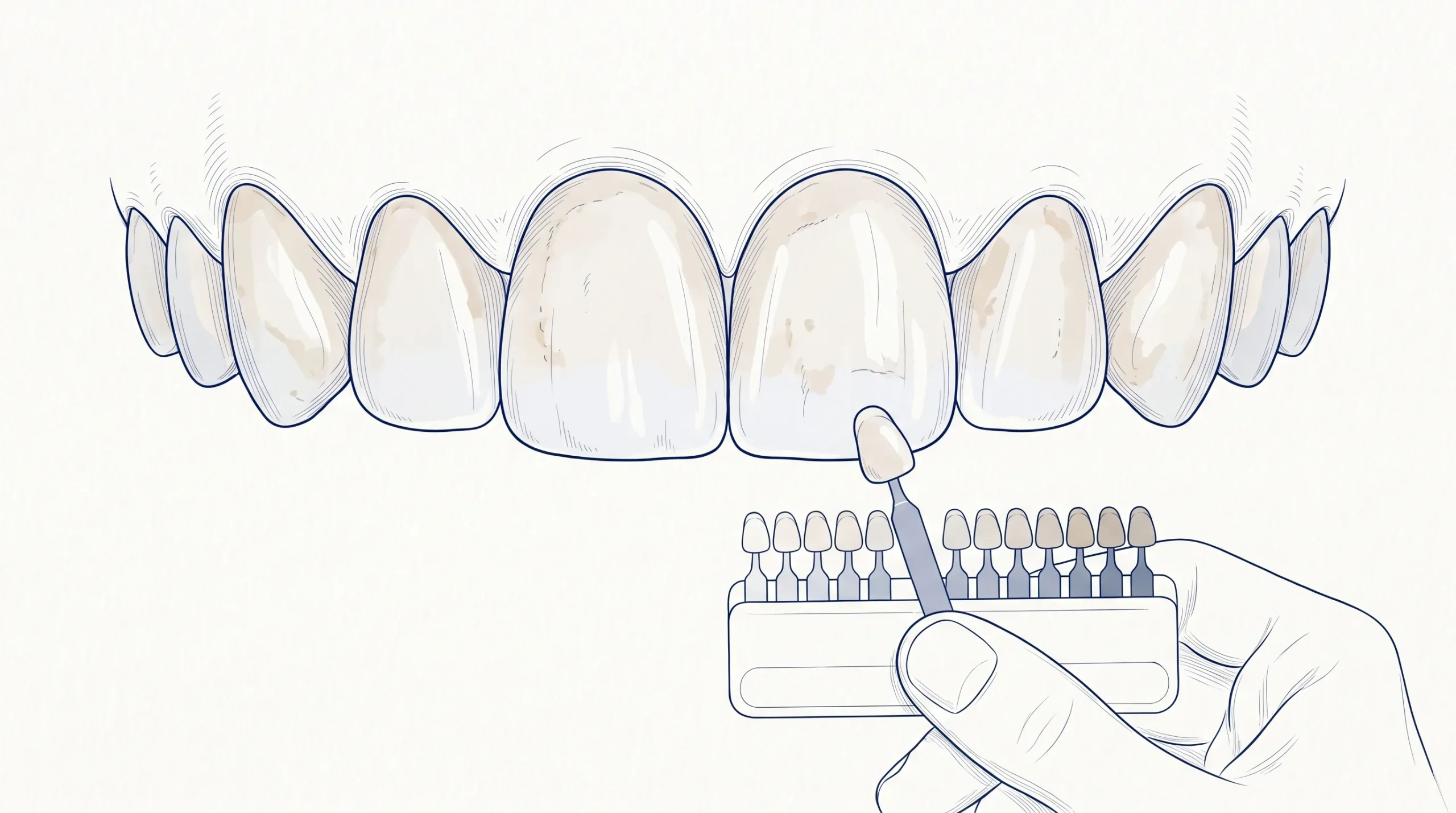
Tooth colour is influenced by surface deposits, the structure underneath and any dental restorations, such as fillings or crowns. More than one factor can be present at the same time.
Surface stains, sometimes called extrinsic stains, develop on the outside of teeth. Tea, coffee and tobacco can contribute to them. Plaque, the soft bacterial film that collects on teeth, and tartar, which is hardened plaque, can also affect their appearance.
Internal discolouration, also called intrinsic discolouration, comes from within the tooth. Dentine, the layer beneath enamel, naturally has a yellowish colour. Differences in enamel thickness and changes with age can influence how much of that colour shows through. Previous injury and some medicines taken while teeth were developing can also affect colour.
A brown mark is not automatically a removable stain. It could involve a filling, a change in the enamel or tooth decay. A single tooth that becomes noticeably darker, particularly after an injury, needs assessment rather than an assumption that bleaching is the answer.
How cosmetic dental whitening differs from stain removal
Professional stain removal usually forms part of dental cleaning. Depending on what is present, your dental professional may use scaling instruments to remove tartar and polishing to lift suitable surface stains. Cleaning exposes the tooth’s existing shade rather than chemically lightening it.
Whitening gels work differently. They commonly contain hydrogen peroxide or carbamide peroxide, which releases hydrogen peroxide. This acts on coloured molecules within natural tooth structure. The Australian Dental Association’s patient information on teeth whitening explains the treatment, its limitations and potential side effects.
| Question | Professional stain removal | Peroxide whitening |
|---|---|---|
| What does it target? | Surface stains and deposits | Colour within natural tooth structure |
| Does it remove tartar? | Scaling can remove tartar | No |
| Can it lighten the tooth’s underlying shade? | Not through bleaching | It may, depending on the cause of discolouration |
| Does it treat decay or gum disease? | Cleaning may be part of gum care, but other treatment may be needed | No |
| Does it whiten fillings or crowns? | It may remove some surface staining, depending on the material | It does not predictably lighten their underlying colour |
What a brighter appearance does, and does not, tell you
Teeth can look brighter after a clean because darker deposits have been removed. That does not mean their underlying shade has changed. If you are happy with the appearance after cleaning, there may be no reason to pursue bleaching.
Conversely, teeth that still look yellow after a thorough clean are not necessarily dirty. Their colour may reflect natural dentine showing through enamel. More polishing will not reliably change that internal colour and repeated attempts to scrub it away are not an appropriate substitute for assessment.
For suitable natural teeth, cosmetic dental whitening may lighten the remaining shade, but the response varies. Some types of discolouration respond less predictably and different teeth may not lighten evenly.
Colour is also not a reliable measure of oral health. A naturally darker tooth can be healthy, while a very white tooth can still have decay or gum problems. The aim of an examination is to separate appearance preferences from anything that needs clinical care.
What an assessment may involve
Your dentist will usually ask when you first noticed the colour, whether it has changed and whether one tooth or several are affected. Previous injuries, sensitivity, existing restorations and your medical history can influence the advice you receive.
The examination can help identify surface deposits, decay, gum inflammation, exposed root surfaces or changes within an individual tooth. X-rays or other tests may be recommended when clinically indicated, rather than automatically for every whitening enquiry.
The discussion should also establish what you hope to change. Removing a few coffee stains is a different goal from lightening the overall shade of otherwise healthy teeth. Before cosmetic dental whitening is recommended, your dentist should explain what is realistically achievable and what would remain unchanged.
If deposits are obscuring the tooth surface, cleaning may help clarify the starting shade. Our explanation of when a dental clean may be needed before whitening covers that decision in more detail. Cleaning is not a requirement to repeat unnecessarily when teeth are already clean and oral health is stable.
If dental sounds make appointments difficult
Scaling and polishing can involve sounds that some people find uncomfortable. Let the team know beforehand so you can discuss pauses and an agreed hand signal. Environmental measures such as soundproofing and room acoustic treatment address how sound travels within a space, rather than tooth sensitivity. Any available appointment adjustments should be discussed directly with the dental practice.
Risks and limitations to discuss before whitening
All dental procedures have potential benefits and risks. With peroxide whitening, the main concerns include tooth sensitivity and irritation of the gums or other soft tissues. These effects are often temporary, but their severity and duration vary. Existing sensitivity, exposed root surfaces and how the product is used can affect the experience.
Professional cleaning has different considerations. Teeth may feel temporarily sensitive afterwards, particularly where gums are inflamed or root surfaces are exposed. Tell your dental professional if you are uncomfortable rather than assuming you need to tolerate it.
Fillings, crowns and veneers do not bleach like natural teeth
One limitation of cosmetic dental whitening is that existing restorations do not predictably change colour with the surrounding natural teeth. This can make a previously subtle colour difference more noticeable.
Your dentist should discuss that possibility before treatment. Replacing a sound restoration solely to change its colour is a separate decision with its own costs and clinical implications, not an automatic next step.
Some circumstances call for postponement
Decay, active gum disease, unexplained pain or significant sensitivity may need attention before bleaching is considered. Because whitening is elective and safety evidence during pregnancy and breastfeeding is limited, discuss postponing it with your dentist.
If whitening causes significant pain, gum injury or symptoms that persist, stop using the product and seek dental advice before continuing.
Choosing an approach without over-treating teeth
If removable deposits are the main concern, cleaning alone may meet your needs. If the concern is the underlying shade of healthy natural teeth, bleaching may be an option after assessment. Where both are present, your dentist can explain whether a staged approach makes sense.
In-chair treatment and dentist-supervised take-home products are different ways of delivering peroxide whitening. Neither removes tartar or replaces routine dental care. Our overview of professional teeth whitening options in Melbourne explains those delivery methods without treating them as suitable for everyone.
Choosing cosmetic dental whitening should involve a discussion about likely improvement, sensitivity, existing restorations and the option of leaving the natural shade unchanged. Veneers and crowns are not simply stronger whitening treatments. They involve different procedures and may require irreversible changes to tooth structure.
Before agreeing to treatment, ask for an individualised estimate. Clarify whether it includes any necessary examination, cleaning, whitening materials and follow-up. A fee comparison is only useful when you understand which services are included and why they have been recommended.
Reducing new stains without aggressive cleaning
Routine care can help manage surface deposits, although it cannot prevent every colour change. Brush twice daily with fluoride toothpaste and clean between your teeth using a method suited to your mouth. Your dentist can advise on a check-up and cleaning schedule based on your needs.
Whitening toothpastes mainly work on surface staining. They should not be expected to produce the same change as a dentist-supervised bleaching treatment. Avoid scrubbing harder to chase a lighter shade, particularly if you already have sensitivity or gum recession.
Do not apply household bleach, lemon juice or improvised abrasive mixtures to teeth. Acidic or unsuitable products can damage tooth surfaces or irritate the mouth. If staining returns, ask what is causing it before increasing the frequency or strength of whitening products.
Frequently asked questions
Can a scale and polish make my teeth look whiter? Yes, it may make teeth look brighter when surface staining or deposits are present. It reveals the existing tooth shade rather than bleaching the natural tooth structure. The visible difference depends on how much removable staining there was initially.
Is cosmetic dental whitening permanent? No. Tooth colour can change again over time, including with ageing and exposure to staining substances. There is no single duration that applies to everyone. Any further whitening should be discussed with your dentist rather than repeated on a fixed schedule without review.
Does one dark tooth need the same whitening treatment as the others? Not necessarily. A single dark tooth may have a different cause from generalised staining, particularly if there has been an injury or previous root canal treatment. It needs assessment before a treatment approach is chosen.
Discuss the cause before choosing treatment
If you are unsure whether you are seeing surface stains or a change within your teeth, you can arrange an assessment with Creative Smiles in Armadale. The team can assess your oral health and explain the potential benefits, risks and alternatives relevant to your concerns. Cleaning alone, whitening or no cosmetic treatment may each be reasonable choices, depending on your circumstances.