If you have searched “composite bonding price near me”, you have probably noticed that Melbourne prices can vary widely between clinics. That does not always mean one quote is right and another is wrong. Composite bonding is usually calculated from several factors, including the number of teeth being treated, the amount of reshaping required, the condition of your teeth and gums, the time involved and the level of planning needed.
A dentist generally cannot give a reliable final fee without first examining your teeth, bite and oral health. Online prices can be useful for a rough starting point, but a personalised quote is the safer way to understand what is included and whether composite bonding may be suitable for you.
Why “composite bonding price near me” results vary in Melbourne
Composite bonding uses tooth-coloured composite resin to repair, reshape or add to the visible part of a tooth. It may be considered for small chips, uneven edges, minor gaps or changes to tooth shape. It is different from a simple filling, even though similar resin materials may be used, because cosmetic bonding often involves more detailed shade selection, shaping and polishing.
When you compare Melbourne dental prices, you are not only comparing the cost of the resin. You are comparing clinical assessment, treatment planning, chair time, material handling, finishing, review processes and the dentist’s judgement about what is appropriate for your teeth.
That is why a single headline fee can be misleading. The same principle applies in other customised technical fields: the scope of work shapes the quote, whether it is dental resin bonding or the staged design services offered by power electronics and embedded system specialists.
Composite bonding can be relatively conservative compared with some other cosmetic dental options, but it still needs careful planning. All dental procedures carry potential benefits and risks. Treatment outcomes and maintenance needs vary between patients.
What composite bonding usually involves
In many cases, composite bonding is placed directly onto the tooth in the dental chair. The dentist prepares the surface, applies an adhesive system, layers the composite resin, shapes it and polishes it so it blends with nearby teeth as closely as possible.
The process may sound simple, but small differences can change the time and complexity involved. For example, building up a tiny chipped edge is not the same as reshaping several front teeth, improving symmetry and managing a bite that places heavy pressure on the resin.
Your dentist may also need to consider whether other treatment should happen first. If there is active decay, gum inflammation, tooth grinding, unstable fillings or significant bite concerns, those issues may need to be managed before cosmetic bonding is recommended.
Main factors used to calculate composite bonding prices
Most composite bonding quotes are built around the amount of work required rather than a flat fee that applies to every patient. The following table outlines the common factors that can affect pricing.
| Pricing factor | How it may affect the quote |
|---|---|
| Number of teeth | Treating one small chip is usually less involved than bonding several visible teeth. |
| Tooth size and location | Front teeth often require careful shade matching and detailed finishing because they are highly visible. |
| Amount of resin needed | Small additions may take less material and time than more extensive reshaping. |
| Complexity of the bite | If upper and lower teeth meet in a way that places pressure on the bonding, planning may be more involved. |
| Existing oral health | Decay, gum disease, worn fillings or cracks may need assessment or treatment before bonding. |
| Aesthetic planning | Matching shade, shape, texture and tooth proportions can increase chair time. |
| Appointment time | Longer or multiple appointments may affect the overall fee. |
| Maintenance expectations | Some cases may need polishing, repairs or future replacement, which should be discussed before treatment. |
A transparent quote should explain what is included, what may cost extra and whether there are alternative options. If you are comparing several plans, Creative Smiles has a separate guide on how to compare smile solution costs and treatment plans without focusing only on the headline price.
Per-tooth pricing versus a full treatment plan
Some dental clinics price composite bonding per tooth. Others may provide a total fee for a planned group of teeth, especially where the work involves matching several teeth together. Neither approach is automatically better. What matters is whether the quote clearly reflects the proposed treatment.
A per-tooth price may be straightforward if the work is minor and limited to one or two teeth. A full treatment plan may be more useful if several teeth are being reshaped, because the dentist needs to consider the overall balance, the bite and how the teeth will look together.
When reviewing a quote, ask whether it includes the consultation, photographs or records if required, the bonding appointment, finishing and polishing, review appointments and possible adjustments. Ask also what is not included. For example, teeth whitening, hygiene appointments, replacement of old fillings or repairs later on may be separate.
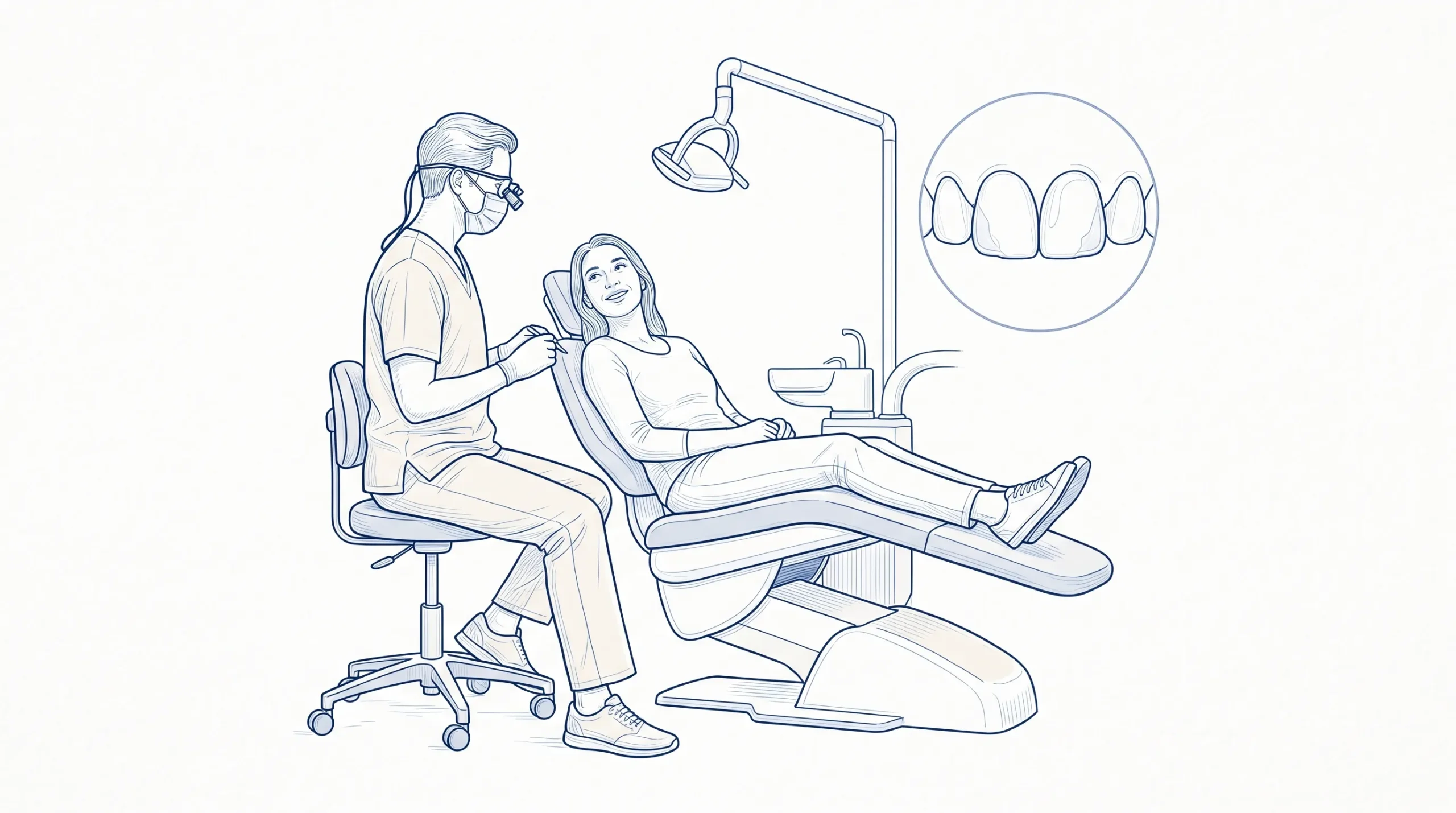
Why oral health can change the cost
Composite bonding is placed on existing tooth structure, so the health and stability of that tooth matters. If a tooth has untreated decay, gum problems or a large existing restoration, bonding over the top may not be appropriate.
In some cases, a dentist may recommend treating underlying problems before cosmetic work. This can change the total cost, but it is part of responsible care. Cosmetic treatment should not be planned in isolation from general dental health.
Bite forces also matter. Composite resin is not as strong or stain resistant as some ceramic materials. It can chip, wear, stain or need polishing over time. Patients who clench or grind their teeth may need additional assessment, and in some cases a protective splint may be discussed. Suitability depends on the individual situation.
How composite bonding compares with veneers and whitening
Composite bonding is one option among several cosmetic dental treatments. It may be considered when a patient wants to address small shape concerns, minor chips or localised unevenness. Veneers, crowns, orthodontic treatment and whitening may be discussed depending on the concern.
For example, if the main issue is tooth colour, professional whitening may be more appropriate than bonding. If the concern involves alignment, orthodontic treatment may be discussed. If more extensive changes to shape or colour are being considered, veneers may be one of the options reviewed.
Composite bonding often has a lower upfront cost than porcelain veneers, but it may require more maintenance over time. Porcelain veneers usually involve laboratory-made ceramic restorations and a different planning process. If you are deciding between the two, this guide to veneers and bonding differences explains the main practical distinctions.
No option is suitable for everyone. A dental assessment helps determine which choices may be appropriate for your teeth, goals, oral health and budget.
What a composite bonding consultation may include
At a cosmetic consultation, your dentist can assess the teeth you are concerned about and explain whether composite bonding is a reasonable option. Creative Smiles in Armadale offers free cosmetic consultations, which may be useful if you want to understand your options before committing to treatment.
A consultation may include a discussion about what you would like to change, an examination of your teeth and gums, assessment of your bite and review of any existing dental work. Your dentist may also discuss alternative treatments, maintenance needs, risks and expected limitations.
If composite bonding appears suitable, you can ask for a written quote. A clear quote should describe the number of teeth involved, the proposed treatment, what is included, payment options if available and any factors that could change the final cost.
Questions to ask before comparing composite bonding prices
Price comparison is easier when each clinic has explained the same level of detail. Before you decide, it may help to ask practical questions such as:
- Is composite bonding suitable for my teeth, or should other options be considered?
- How many teeth are included in this quote?
- Does the quote include finishing, polishing and review?
- Are whitening, hygiene treatment or replacement fillings separate costs?
- What maintenance might be needed over time?
- What are the possible risks, limitations and alternatives?
- What happens if the bonding chips, stains or needs repair later?
You may also want to ask how the dentist approaches shade selection, tooth shape and bite assessment. Creative Smiles has a more detailed article on what to ask a composite dentist before treatment if you would like a consultation checklist.
If you are choosing a dentist in Melbourne, you can also check whether a practitioner is registered through the AHPRA public register. Registration does not replace a consultation, but it is a sensible part of making informed healthcare decisions.
Should you choose the lowest composite bonding price?
A lower fee may be appropriate for a simple case, especially if only a small chip or edge repair is involved. However, the cheapest advertised price may not include the same planning, finishing, review or complexity as another quote.
At the same time, a higher fee does not automatically mean a treatment plan is more suitable. The useful question is not simply “Which price is lowest?” but “What is included, why has this treatment been recommended and what are the alternatives?”
If a price seems unclear, ask for more detail before proceeding. A dentist should be able to explain the proposed treatment in plain language, including potential benefits, limitations and risks.
Frequently Asked Questions
Is composite bonding cheaper than veneers in Melbourne? Composite bonding often has a lower upfront cost than porcelain veneers, but the total value depends on your needs, maintenance expectations and how long the restoration remains suitable. Veneers and bonding are different treatments, so a dentist should assess which option may be appropriate rather than choosing on price alone.
Can I get an exact composite bonding price online? An online estimate may give a rough guide, but an exact quote usually requires a dental assessment. The dentist needs to check the tooth structure, bite, gum health, number of teeth and complexity of the proposed changes.
Does private health insurance cover composite bonding? Cover depends on your health fund, policy and the reason for treatment. Some procedures may be considered cosmetic and may not be covered. Once you have a treatment plan and item numbers, you can ask your insurer what benefits may apply.
How long does composite bonding last? Composite bonding is not considered permanent. It may need polishing, repair or replacement over time, especially if it is exposed to heavy bite forces, staining foods and drinks or tooth grinding. Your dentist can explain maintenance based on your individual situation.
Is composite bonding suitable for chipped teeth? It may be suitable for some small chips, but this depends on the size of the chip, the remaining tooth structure, the bite and whether there are cracks or decay. Larger damage may require a different approach.
Discuss composite bonding prices in Armadale
If you are comparing composite bonding prices in Melbourne, an individual assessment can help you understand what is actually needed and what the quote includes. The team at Creative Smiles in Armadale can assess your teeth, explain suitable options and discuss potential benefits, risks and alternatives based on your circumstances.
To discuss your concerns, you can arrange a cosmetic consultation with Creative Smiles and ask for a personalised treatment plan before making a decision.