If you are considering cosmetic dental implants, the main question is how replacing a missing tooth fits with your oral health, your bite and any other treatment you are considering. An implant may support a replacement tooth, but it is not automatically the right starting point.
The term generally describes implant-supported replacement teeth planned with appearance in mind. It is not a separate implant category. A suitable treatment plan considers function, appearance, alternatives and long-term care together.
Start with whether a tooth needs replacing
Dental implants replace missing teeth. They are not usually an appropriate way to change the appearance of an otherwise healthy, maintainable tooth.
If a tooth is damaged rather than missing, your dentist should first assess whether it can be preserved. Depending on the problem, options might include a filling, crown or root canal treatment, which treats infection or inflammation inside a tooth. Extraction should not be assumed to be necessary simply because an implant is available.
For an existing gap, assessment includes how well you can chew, the position of neighbouring teeth and whether replacement is needed. In some circumstances, monitoring a gap may be reasonable. Cosmetic concerns can form part of the discussion without making treatment compulsory.
Who may be suitable for cosmetic dental implants?
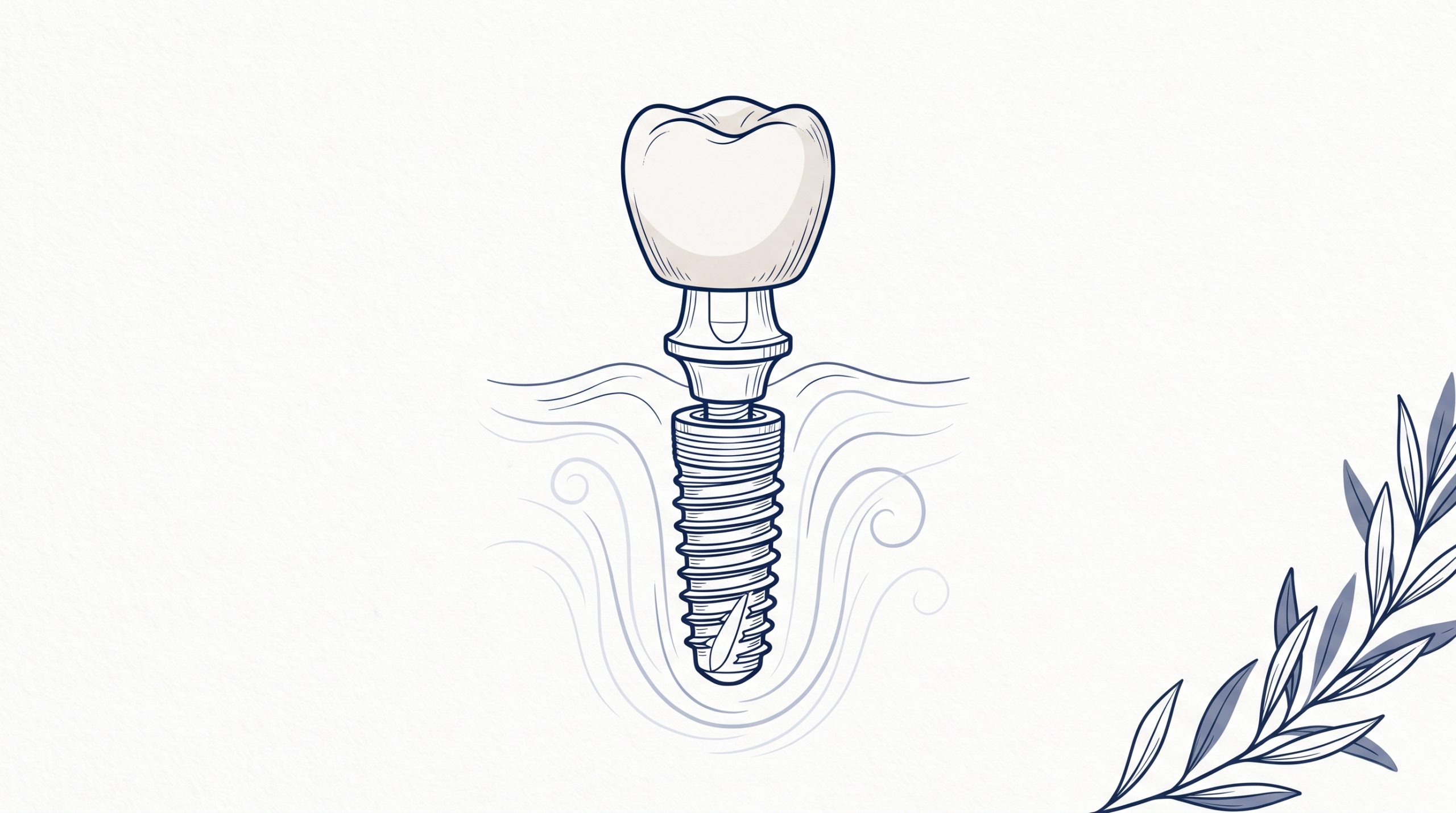
An implant is a fixture, usually made from titanium, placed in the jawbone. For a single missing tooth, it commonly supports a crown through a connector called an abutment. The crown is the visible replacement tooth.
Suitability depends on more than the size of the gap. Your dentist assesses the gums, available bone, neighbouring teeth and the forces created when you bite. They also review your medical history, medicines, smoking history and ability to maintain the area.
Active gum disease or tooth decay may need treatment first. Smoking and some health conditions can affect healing or complication risk. Medicines that influence bone healing also need careful consideration. These factors do not all rule treatment out, but they can change the recommendation or require further advice.
Implants are generally considered after jaw growth is complete. A younger person with a missing tooth may need an interim option instead.
As Healthdirect’s dental implant information explains, implants involve surgery and require assessment of the mouth and jaw. X-rays, and sometimes three-dimensional imaging when clinically indicated, help inform planning. Additional procedures such as bone grafting, which adds or rebuilds bone, may be discussed if support is insufficient.
Plan the order of treatment
When cosmetic dental implants form part of a broader plan, treatment order matters. The position of the replacement tooth needs to work with the intended final bite, tooth spacing and appearance, rather than being planned in isolation.
Tooth movement may come before implant placement
An implant becomes anchored in bone and cannot be moved with orthodontic treatment in the same way as a natural tooth. If teeth need straightening or a gap needs adjusting, those changes may need to happen before the implant is placed.
This is especially relevant when a missing tooth has left an uneven space or neighbouring teeth have tilted. The dentist may coordinate implant planning with orthodontic care rather than treating each issue separately. Our explanation of how clear aligners may fit into a smile treatment plan explores this sequencing in more detail.
Whitening and other restorations need coordination
Whitening changes the colour of natural teeth, but it does not whiten an implant crown. If whitening is appropriate and something you want, your dentist may recommend completing it before selecting the final crown shade, with time allowed for the colour to settle.
The shape and colour of nearby fillings, crowns or veneers also influence the result. Matching one replacement tooth involves considering the surrounding teeth and gum line, not simply choosing a lighter shade.
Healthy neighbouring teeth do not automatically need cosmetic treatment to match an implant. Ask which parts of a proposed plan address health or function and which are optional appearance-related choices.
Compare alternatives before committing
Choosing cosmetic dental implants should involve comparing reasonable alternatives, including their maintenance needs and limitations. Different options may suit different gaps, budgets and preferences.
| Option | How it may fit a plan | Important consideration |
|---|---|---|
| Implant-supported crown | Replaces an individual missing tooth without relying on neighbouring teeth for support | Requires surgery, suitable support and ongoing maintenance |
| Dental bridge | Uses adjacent teeth to support a replacement tooth | Depending on the design, supporting teeth may need preparation |
| Removable partial denture | Can replace one or several missing teeth | Is removed for cleaning and may take time to adapt to |
| Monitoring without replacement | May be reasonable for selected gaps | Requires assessment of chewing, tooth position and other individual factors |
A bridge may be worth discussing if neighbouring teeth already need crowns. A removable option may suit someone who does not want surgery. Neither example determines the right choice without an examination.
The comparison of implants and dental bridges can help you prepare questions, but your dentist should explain how each option applies to your mouth.
Allow time for healing and temporary teeth
A plan involving cosmetic dental implants usually includes assessment, any preparatory care, implant placement, healing and fitting the replacement tooth. The sequence and overall duration vary, particularly when extractions, orthodontics or bone grafting are involved. Treatment can extend over several months.
Some patients can receive a temporary tooth during part of this process. That does not mean the implant is ready for unrestricted chewing or that everyone is suitable for an immediate replacement. Ask what you will have in the gap at each stage and whether eating restrictions apply.
If you are organising a wedding or another major occasion, you may be coordinating photography, a venue or features such as champagne-pyramid event displays. Dental care needs a separate clinical timetable. Share important dates early, but avoid making a deadline the reason to rush surgery or healing.
A temporary option may help manage the gap while care progresses. Your dentist can explain what is feasible without promising a finished result by a particular date.
Understand the risks and maintenance commitment
The possible benefits of cosmetic dental implants include replacing a missing tooth, supporting chewing and creating a replacement that blends with surrounding teeth. Appearance and function depend on anatomy, planning, healing and ongoing care, so outcomes vary.
All dental procedures carry potential risks and benefits. Implant surgery can involve pain, swelling, bleeding or infection. Depending on the site, there can also be risks involving nearby nerves or the sinus, an air-filled space above some upper teeth. An implant may fail to integrate with bone or develop problems later.
Gum recession can change how the replacement looks. Crowns may chip and components may loosen or need replacement. Implants should not be described as maintenance-free or guaranteed to last for life.
Although an implant cannot develop tooth decay, the surrounding tissues can become inflamed. Peri-implantitis is inflammation with loss of supporting bone around an implant. Daily cleaning and dental reviews help monitor these tissues and the restoration.
Before proceeding, ask how to clean the area, how often reviews may be needed and what to do if you notice bleeding, persistent discomfort or movement of the replacement tooth.
Review the full cost and appointment plan
For cosmetic dental implants, a useful estimate covers the complete proposed treatment rather than just the implant fixture. Costs vary with the number of teeth being replaced, the restoration design and whether additional care is needed.
Ask whether the written estimate includes imaging, surgery, the abutment, the final crown and any temporary replacement. Check whether extractions, grafting, sedation or preparatory treatment are separate. Also ask about likely maintenance costs and what happens if the plan changes after further assessment.
Payment arrangements do not determine clinical suitability. Compare treatment options on their health implications, practical demands and overall costs before considering how to pay.
An assessment should also clarify how many appointments are expected and which involve recovery or changes to eating. If you are attending from elsewhere in Melbourne, that information can help you organise travel, work and support without relying on a fixed timetable before the assessment is complete.
Frequently asked questions
Are cosmetic dental implants different from ordinary dental implants? The phrase usually refers to implant-supported replacement teeth where appearance is part of planning. It does not identify a distinct implant type. Gum health, bite function and long-term maintenance still matter.
Can I have an implant before straightening my teeth? Sometimes, but an implant cannot be moved like a natural tooth. If orthodontic treatment will change the gap or bite, your dentist may recommend completing that movement first.
Will an implant crown look exactly like my other teeth? The crown can be designed with surrounding teeth in mind, but an exact match cannot be guaranteed. Gum contours, available space, materials and the colour of neighbouring teeth influence the appearance.
Does one missing tooth mean I need full-arch treatment? No. Full-arch approaches, including All-On-4, address very different circumstances from a single missing tooth. The number and condition of remaining teeth must be assessed, and maintainable teeth should not be assumed to need removal.
Discuss a plan suited to your circumstances
To discuss a missing tooth or how replacement might fit with other dental care, you can arrange an assessment with Creative Smiles in Armadale.
Bring your questions, medical information and any treatment priorities. Your dentist can explain the potential benefits, risks and alternatives, including whether replacing the tooth is appropriate and which parts of a broader plan are optional.