If you searched for "veneers what are they", you are probably looking for a clear explanation without too much dental jargon. Veneers are thin coverings placed over the front surface of selected teeth to change aspects of their appearance, such as colour, shape, size or minor unevenness. They do not replace the whole tooth. Instead, they are bonded to the visible surface after assessment, planning and, in some cases, careful tooth preparation.
Veneers are usually considered for front teeth that show when you smile or speak. They may be used for cosmetic concerns such as stains that do not respond well to whitening, small chips, worn edges, uneven tooth shapes or small spaces between teeth. Whether they are suitable depends on your oral health, bite, enamel, goals and individual circumstances.
Veneers: what are they in simple terms?
A dental veneer is a custom-made layer that covers the front of a tooth. Think of it as a carefully shaped outer surface that changes how the tooth looks while the natural tooth remains underneath.
There are two main categories you may hear about:
- Porcelain veneers: Thin ceramic shells made outside the mouth, usually in a dental laboratory or through a digital design and milling process. They are bonded to the tooth once the fit, shape and shade have been checked.
- Composite resin veneers: Veneers made from tooth-coloured resin, often applied and shaped directly on the tooth by the dentist. In some cases, composite veneers may also be made indirectly.
Both options have a place in cosmetic dentistry. They differ in material, preparation, appearance, repair options, stain resistance, maintenance and cost. A dentist can explain which options may be appropriate after examining your teeth and gums.
How do veneers work?
Veneers work by creating a new visible surface for the tooth. The veneer material is matched and shaped to suit the surrounding teeth, then bonded to the tooth with dental adhesive.
For porcelain veneers, the process generally involves planning the size, shape and shade, preparing the tooth if needed, taking records such as impressions or digital scans, then bonding the completed veneer at a later appointment. Porcelain itself is a hard ceramic material. It can be made very thin, but it still needs enough support from the underlying tooth.
For composite resin veneers, the dentist usually applies layers of tooth-coloured resin directly to the tooth, shapes the material, then hardens it with a curing light. The surface is then refined and polished. This approach may involve less laboratory work, although the exact process depends on the case.
The bond between the veneer and tooth is important. It relies on correct tooth preparation, moisture control, material handling and bite assessment. Veneers are not simply glued on like a false nail. They are dental restorations that need careful planning to function comfortably with the rest of your bite.
What concerns can veneers help address?
Veneers may be considered when a person wants to change the appearance of teeth that are otherwise suitable for this type of restoration. Common reasons include:
- Teeth with deep discolouration that may not improve enough with whitening
- Small chips or worn edges
- Mild unevenness in tooth shape or length
- Small gaps between front teeth
- Teeth that appear narrow, short or irregular compared with neighbouring teeth
- Older cosmetic restorations that no longer match surrounding teeth
It is important to keep expectations realistic. Veneers change the visible surface of selected teeth, but they do not treat gum disease, active tooth decay or significant bite problems. If these are present, your dentist may recommend addressing them before considering cosmetic treatment.
In some situations, orthodontic treatment such as clear aligners may be more appropriate before veneers, especially when tooth position is the main concern. In other cases, bonding, whitening, crowns or no treatment may be more suitable. The aim of an assessment is not to push one option, but to understand what is clinically appropriate for your teeth.
Porcelain veneers and composite veneers compared
The right option depends on your teeth, priorities, budget and how much change is being considered. The table below gives a general comparison, but it should not replace personal advice from a dentist.
| Feature | Porcelain veneers | Composite resin veneers |
|---|---|---|
| Material | Thin ceramic shell | Tooth-coloured resin material |
| How they are made | Usually made outside the mouth, then bonded | Often shaped directly on the tooth |
| Tooth preparation | May require enamel adjustment | May require little or no preparation, depending on the case |
| Stain resistance | Generally more stain-resistant than composite | More likely to stain over time than porcelain |
| Repair | May need replacement if fractured | Often easier to repair or modify |
| Cost factors | Usually higher due to material and laboratory steps | Often lower than porcelain, depending on complexity |
| Suitability | Often considered for more durable cosmetic changes | Often considered for smaller changes or conservative cases |
If you are deciding between these materials, Creative Smiles has a separate guide on the difference between veneers and bonding that explains how composite bonding compares with porcelain veneers in more detail.
What happens during the veneer process?
The exact steps vary between patients and between porcelain and composite veneers. However, the process usually starts with a consultation and examination rather than treatment on the same day.
Your dentist will assess your teeth, gums, bite, existing fillings or restorations, enamel thickness and oral habits such as teeth grinding. They may also ask about what you would like to change and whether you have had previous cosmetic dental treatment.
For porcelain veneers, the process may include:
- Assessment and discussion: Your dentist checks whether veneers may be suitable and explains alternatives, risks and limitations.
- Planning: Photos, scans, impressions or digital records may be used to plan shape, proportions and shade.
- Tooth preparation: A small amount of enamel may be adjusted if needed. The amount depends on the tooth position, material choice and desired result.
- Temporary stage: Temporary veneers may be used in some cases while the final veneers are being made.
- Try-in and bonding: The veneers are checked for fit, shade and appearance before being bonded to the teeth.
- Review and maintenance: Your dentist checks your bite, comfort and cleaning access after placement.
For composite veneers, the process may be shorter, but planning is still important. The dentist shapes and polishes the resin so it blends with the surrounding teeth as much as possible. Follow-up may be recommended to review the bite and surface finish.
For a broader outline of what can happen during planning and placement, you may find this veneers treatment guide useful.
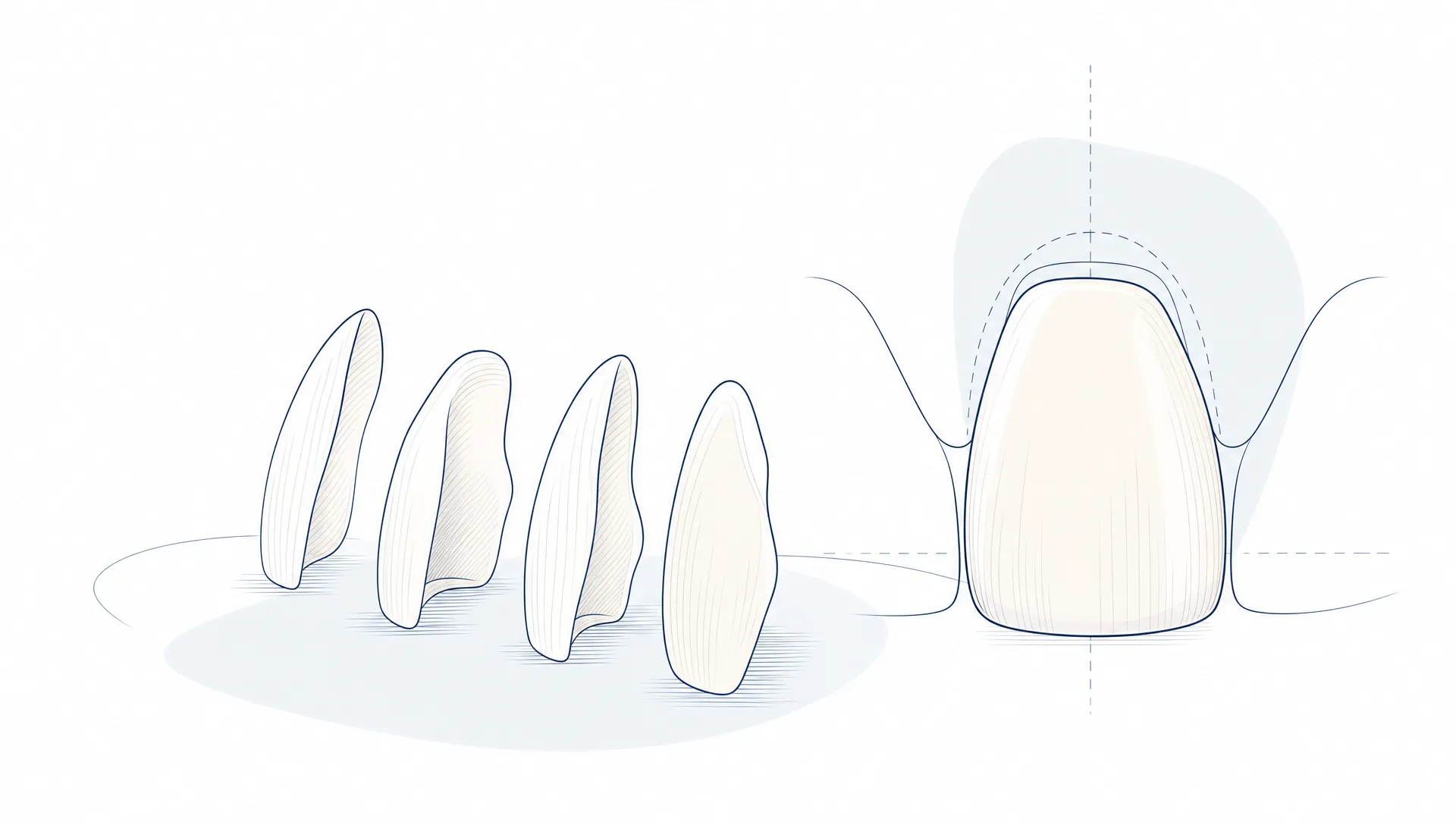
Do veneers require tooth shaving?
Some veneers require enamel preparation, but the amount varies. Enamel is the hard outer layer of the tooth. If enamel is removed, that change cannot usually be reversed, which is why planning and informed consent are important.
In some cases, very minimal preparation may be possible. In other cases, more adjustment may be needed to avoid bulky-looking veneers, correct uneven tooth edges or create enough space for the material. Teeth that are already set back or small may need less preparation than teeth that are crowded, protrusive or heavily restored.
A dentist should explain why preparation is or is not recommended, what the alternatives are and how it may affect future dental care.
Are veneers suitable for everyone?
Veneers are not suitable for every person or every tooth. A clinical assessment is needed because veneers rely on healthy supporting tooth structure and stable gums.
Veneers may not be recommended, or may need to be delayed, if there is active decay, untreated gum disease, insufficient enamel, significant tooth wear, an unstable bite, heavy grinding, large existing fillings or symptoms that need diagnosis first. If you have jaw pain, toothache, swelling, bleeding gums, loose teeth or sensitivity, those concerns should be assessed before cosmetic treatment is planned.
Medical history can also matter. Some conditions, medications or oral health factors may affect healing, gum health, saliva flow or the risk of decay. Your dentist can consider these factors when discussing treatment options.
Benefits, limitations and risks to understand
Veneers may help improve the appearance of selected teeth when used appropriately. They can be designed to adjust colour, shape, visible length and proportions. Porcelain veneers may provide good colour stability, while composite veneers may allow more conservative adjustments in selected cases.
However, all dental procedures carry potential risks and limitations. Veneers can chip, crack, stain, debond or require replacement. Teeth can still develop decay around veneer margins if plaque builds up. Some people experience temporary or longer-lasting sensitivity after preparation. Gum irritation, shade mismatch or changes to the bite may also occur.
Veneers do not make teeth stronger in every situation. If a tooth is heavily weakened, cracked or has a large filling, a crown or another restorative option may be more appropriate. If tooth position is the main issue, orthodontic treatment may be considered instead of, or before, veneers.
Treatment outcomes and experiences vary between patients. This is why a personalised assessment is essential before deciding.
How do you care for veneers?
Veneers need ongoing care, much like natural teeth. The tooth underneath and the gums around it still need regular cleaning and check-ups.
Good home care includes brushing twice daily with fluoride toothpaste, cleaning between teeth, and attending dental examinations at intervals recommended for your oral health needs. Healthdirect's oral health guidance also highlights the importance of daily brushing, flossing and regular dental care for maintaining oral health.
It is also sensible to avoid using veneered teeth to open packets, bite fingernails or chew very hard objects. If you grind or clench your teeth, your dentist may discuss a night guard or other management options. Grinding can increase stress on veneers and natural teeth.
Veneers are not permanent in the sense of lasting forever. They may need repair, polishing, maintenance or replacement over time. Factors such as oral hygiene, bite forces, material choice, preparation design and diet can all influence how they perform.
How much do veneers cost in Melbourne?
The cost of veneers varies because treatment is customised. Fees may depend on the material used, the number of teeth being treated, the complexity of planning, whether tooth preparation is required, whether gum or bite concerns need to be managed first, and whether temporary veneers or laboratory work are involved.
It is difficult to give a meaningful estimate without an examination. A written treatment plan should explain the proposed approach, fees, alternatives and any staged options where relevant.
If you are comparing costs, this guide to what affects the price of teeth veneers explains the main factors that can influence veneer pricing in Melbourne.
Veneers compared with other cosmetic dental options
Veneers are one option among several. Depending on your needs, your dentist may discuss alternatives such as whitening, composite bonding, clear aligners, crowns or simply monitoring the teeth.
Whitening may be suitable when the main concern is general tooth colour and the teeth are otherwise healthy. It does not change tooth shape, and it may not be effective for all types of internal discolouration.
Composite bonding may be considered for smaller chips, edges or gaps. It can be conservative, but it may stain or wear more easily than porcelain in some situations.
Clear aligners may be appropriate when tooth position is the main concern. They move teeth gradually rather than covering them.
Crowns cover more of the tooth than veneers and may be recommended when a tooth needs greater structural support. They usually involve more tooth preparation than veneers.
A balanced consultation should cover what each option can and cannot achieve, rather than assuming veneers are the right answer.
Questions to ask before choosing veneers
Before deciding on veneers, it can help to ask practical questions during your consultation. This can make the discussion clearer and support informed consent.
Useful questions include:
- What concerns are veneers intended to address in my case?
- Are my teeth and gums healthy enough for veneers?
- Would whitening, bonding, aligners or crowns be appropriate alternatives?
- Will any enamel need to be removed?
- What are the risks and limitations for my teeth?
- How many teeth are being considered, and why?
- What maintenance may be needed over time?
- What happens if a veneer chips, stains or needs replacement?
These questions are not about talking yourself into or out of treatment. They are about understanding what is reasonable for your mouth.
Frequently Asked Questions
Are veneers the same as crowns? No. A veneer usually covers the front surface of a tooth, while a crown covers more of the tooth structure. Crowns may be considered when a tooth needs more protection or support, but they generally involve more tooth preparation.
Can veneers be whitened later? Veneer materials do not whiten in the same way as natural enamel. If you are planning whitening, your dentist may recommend doing it before veneer shade selection so the veneer colour can be planned around your preferred natural tooth shade.
Do veneers feel bulky? Well-planned veneers should be designed to fit the tooth and bite comfortably, but they can feel different at first. If a veneer feels bulky, rough or affects your bite, your dentist should review it.
Can I get veneers if I grind my teeth? Teeth grinding does not always rule out veneers, but it can increase the risk of chips, cracks or debonding. Your dentist may assess your bite and discuss protective options before recommending treatment.
Are veneers reversible? If enamel has been removed, veneers are generally not considered reversible. Some very conservative cases may involve little or no preparation, but this depends on the teeth and treatment goals.
How many veneers do people usually get? The number varies. Some people consider one veneer for a single tooth, while others consider several teeth that show when smiling. More veneers are not automatically better. The decision should be based on your teeth, bite, goals and clinical suitability.
Discussing veneers in Armadale
If you are considering veneers, an individual assessment can help determine whether this treatment may be appropriate for your circumstances. Your dentist can examine your oral health, explain the possible benefits, risks and alternatives, and provide a treatment plan based on your needs.
To discuss your concerns, you can arrange an appointment with the team at Creative Smiles in Armadale. A consultation can help you understand whether veneers, bonding, whitening, aligners or another option may be suitable for your teeth.