If you’ve searched for teeth bleaching near me, you may be wondering whether bleaching is the same as whitening, whether one is stronger than the other and which option is appropriate for your teeth. In everyday conversation, the two terms are often used interchangeably. In dental language, teeth bleaching usually refers to peroxide-based treatment that lightens the colour within natural tooth structure, while whitening can mean anything from removing surface stains to using professional bleaching agents.
The difference matters because not every whitening product works the same way and not every type of discolouration responds in the same way. A dental assessment can help identify the cause of staining, check that your teeth and gums are healthy enough for treatment and explain the likely benefits, limitations and risks for your situation.
Teeth bleaching vs whitening: what is the difference?
Teeth bleaching is a type of teeth whitening, but whitening is the broader term.
Bleaching usually involves products containing hydrogen peroxide or carbamide peroxide. These active ingredients release oxygen molecules that interact with coloured compounds within the tooth, which may lighten the shade of natural enamel and dentine.
Whitening may refer to bleaching, but it may also refer to non-bleaching products or procedures that remove external stains from the tooth surface. This includes some whitening toothpastes, polishing during a dental clean or retail products that are marketed as stain removers.
| Term | What it usually means | Main purpose | Important limitation |
|---|---|---|---|
| Teeth bleaching | Peroxide-based treatment that lightens natural tooth structure | May lighten the internal shade of natural teeth | Does not whiten fillings, crowns, veneers or tartar |
| Teeth whitening | A broad term that may include bleaching or stain removal | May improve the appearance of tooth colour | The meaning varies between products and providers |
| Dental clean and polish | Removal of plaque, calculus and some surface stains | Supports oral health and may make teeth look cleaner | Does not bleach the internal colour of teeth |
This is why two products labelled as whitening can behave very differently. A whitening toothpaste may help reduce surface stains from coffee, tea or smoking, while a professionally supplied bleaching treatment is designed to act more deeply on natural tooth colour.
How teeth bleaching works
Natural teeth are made of several layers. The outer layer is enamel, which is hard and partly translucent. Underneath is dentine, which is naturally more yellow in tone. Tooth colour can be affected by enamel thickness, age, diet, smoking, trauma, dental materials and some developmental or medical factors.
Peroxide-based bleaching products work by breaking down some of the coloured molecules that contribute to discolouration. This process may lighten natural tooth structure, but the final result varies between patients. Some teeth respond more noticeably than others, and some types of staining are more difficult to change.
The Australian Dental Association’s patient resource, Teeth.org.au, provides patient information about teeth whitening options and possible side effects, including sensitivity and gum irritation. These effects are often temporary, but they should still be discussed before treatment, especially if you already have sensitive teeth, gum recession, cracks, decay or exposed dentine.
It is also worth clarifying that dental bleaching products are not household bleach. Household bleach should never be used in the mouth. Dental whitening products are specifically formulated for teeth and should be used according to professional advice or product instructions.
What teeth bleaching may change and what it cannot change
Teeth bleaching may be considered when a person wants to lighten the shade of their natural teeth. It may help with general yellowing or some stains absorbed into enamel and dentine. However, it is not a universal fix for every colour concern.
Bleaching usually does not change the colour of:
- Composite fillings or bonding
- Porcelain veneers
- Dental crowns or bridges
- Calculus, also called hardened plaque or tartar
- Stains caused by active decay
- Some single dark teeth affected by trauma or previous root canal treatment
This is one reason a dental check is useful before starting. If a front tooth has an old filling, for example, the surrounding natural tooth may lighten but the filling may stay the same shade. That can make the filling more noticeable. If crowns, veneers or bonding are present, your dentist can explain how bleaching may affect the overall appearance and whether any restorations may need to be reviewed.
A dental clean may also be recommended before whitening in some cases. Cleaning removes plaque, calculus and external stain, which can help your dentist assess the true underlying tooth shade. Creative Smiles has a separate guide on whether you should have a dental clean before teeth whitening if you would like a more detailed explanation.
Professional and at-home whitening options
Teeth whitening options vary in strength, supervision and suitability. The right approach depends on your oral health, the cause of discolouration, your preferences and whether you have restorations on visible teeth.
Common options include professional in-chair whitening, dentist-supplied take-home trays and retail whitening products. In-chair whitening is performed in a dental setting. Take-home trays are custom fitted by a dental team and used with whitening gel as instructed. Retail whitening products can include toothpastes, strips or kits, but their effect and suitability can vary.
Professional whitening has the advantage of being planned after an oral health assessment. Your dentist can check for decay, leaking restorations, gum inflammation, enamel wear and other factors that may affect safety or comfort. They can also discuss what type of shade change may be realistic for your teeth.
For a broader comparison, you can read Creative Smiles’ overview of professional teeth whitening options in Melbourne. That article covers in-chair treatment, custom trays and retail products in more detail.
Searching for teeth bleaching near me? What to check before booking
When you search for teeth bleaching near me, it can be tempting to compare options only by price or convenience. Those details matter, but they should not be the only considerations. Teeth whitening involves your teeth, gums and existing dental work, so the safest starting point is usually a proper dental assessment.
Local service quality can depend on communication, accountability and whether the provider understands the local context. That is true across many service industries, from dental care in Armadale to property management in Jacksonville and St. Augustine, where people often compare hands-on local support and clear reporting. For dental bleaching, the additional point is that whitening provided as part of dental care should involve a registered dental practitioner who can assess clinical suitability.
You can check whether a dental practitioner is registered through the Australian Health Practitioner Regulation Agency public register. This can be helpful if you are comparing providers or if you are unsure who will be supervising your treatment.
Before booking, consider asking:
- Will my teeth and gums be assessed before whitening is recommended?
- What type of whitening or bleaching product is being used?
- Who will supervise the treatment and answer clinical questions?
- What side effects should I be aware of, such as sensitivity or gum irritation?
- How will existing fillings, crowns, veneers or bonding affect the outcome?
- What fees are involved and what is included in the appointment or kit?
Be cautious with any service that promises a specific shade, guarantees an outcome or does not ask about your oral health history. Whitening results and treatment experiences vary, and no cosmetic dental treatment is suitable for everyone.
Who may need dental advice before bleaching?
It is sensible to speak with a dentist before using bleaching products if you have a history of sensitivity, gum recession, cracked teeth, untreated decay, enamel erosion or ongoing gum inflammation. Whitening gel can cause discomfort if it reaches exposed dentine or irritated soft tissues.
You should also seek advice if you have visible restorations such as fillings, crowns, veneers or bonding. These materials do not respond to bleaching in the same way natural teeth do. If you whiten your natural teeth first, older restorations may no longer match as closely.
A single dark tooth should be assessed rather than treated with general whitening products. A tooth can darken because of trauma, internal changes, previous dental treatment or other causes. Management may involve a different approach from standard whitening.
Whitening is usually an elective cosmetic treatment, so there is generally time to ask questions and consider the options. If you have pain, swelling, bleeding gums, a broken tooth or a suspected infection, those concerns should be assessed before cosmetic treatment is considered.
What happens at a teeth whitening dentist appointment?
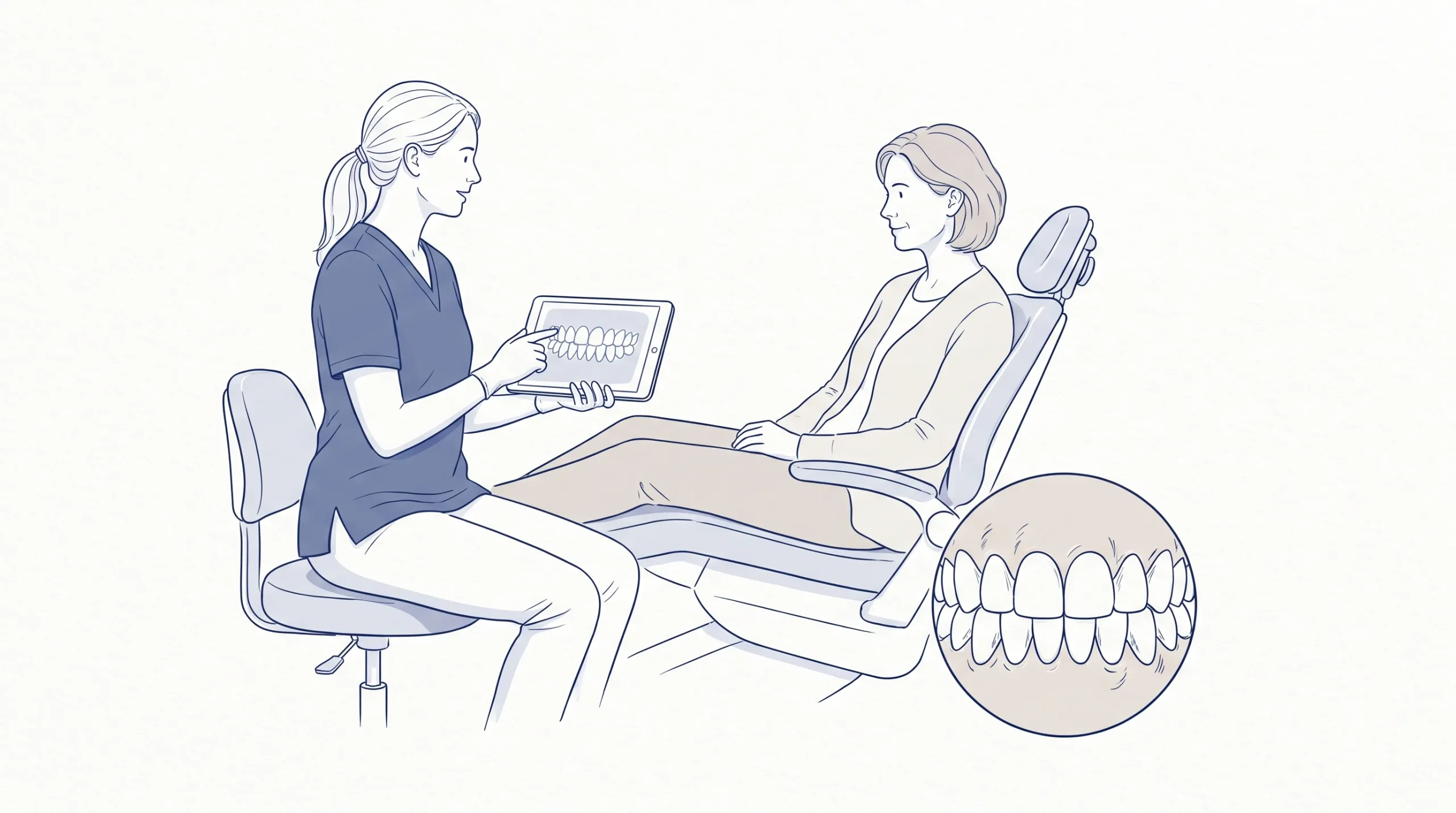
A whitening appointment generally starts with a conversation about what you have noticed and what you would like to understand or change. Your dentist may ask about previous whitening, sensitivity, oral hygiene, diet, smoking, medical history and any dental work on visible teeth.
They may then examine your teeth and gums to check for issues that could affect whitening. This can include looking for decay, cracks, gum recession, enamel wear, staining patterns and restorations. If whitening is suitable, your dentist can explain the available options, likely limitations, possible side effects and aftercare.
If whitening is not recommended straight away, that does not necessarily mean it is off the table. It may mean a clean, filling, gum care or another dental concern should be managed first. For more detail about the visit itself, Creative Smiles has a guide on what to expect from a teeth whitening dentist appointment in Melbourne.
Is bleaching better than whitening toothpaste?
They do different jobs.
Whitening toothpaste may help reduce surface stains, particularly when used as part of a consistent oral hygiene routine. It does not usually change the internal shade of the tooth in the same way as peroxide-based bleaching. Some whitening toothpastes are more abrasive than standard toothpaste, so it is worth asking your dentist which products are suitable if you have sensitivity, enamel wear or exposed roots.
Bleaching may create a more noticeable shade change for some natural teeth, but it also requires more care. The strength of the product, tray fit, gum protection, frequency of use and condition of the teeth all matter. More product or longer application is not necessarily better and may increase the risk of sensitivity or irritation.
When might alternatives be discussed?
If tooth colour is affected by restorations, enamel defects, trauma or deep intrinsic staining, bleaching may have limited effect. In those situations, your dentist may discuss other options such as replacing an old restoration, composite bonding, veneers or crowns. These options involve different levels of tooth preparation, maintenance, cost and risk, so they should only be considered after an individual assessment.
Veneers or crowns are not simply stronger whitening. They are restorative or cosmetic dental procedures that cover part or all of a tooth surface. They may be appropriate in selected cases, but they are not necessary for many people seeking a modest colour change. Your dentist can explain the differences and help you weigh the benefits, limitations and alternatives.
Frequently asked questions
Is teeth bleaching the same as teeth whitening? The terms are often used interchangeably, but bleaching usually means peroxide-based lightening of natural tooth structure. Whitening is broader and may include stain removal, whitening toothpaste or professional bleaching.
Is teeth bleaching safe? Teeth bleaching can be appropriate for some patients when used correctly and after oral health factors have been considered. Possible side effects include tooth sensitivity, gum irritation and uneven colour if restorations are present. Suitability depends on your teeth, gums, dental history and the product used.
Will bleaching whiten crowns, veneers or fillings? No. Bleaching products are designed to lighten natural tooth structure. Crowns, veneers, bridges, composite bonding and fillings usually do not change colour with whitening gel.
Should I have a dental clean before whitening? A clean may be recommended if plaque, calculus or surface stains are present. It can help reveal the underlying tooth shade and allow your dentist to check gum health before whitening is considered.
How long do teeth bleaching results last? This varies between patients. Diet, oral hygiene, smoking, enamel condition, the original cause of staining and the whitening method can all affect how tooth colour changes over time. Your dentist can explain maintenance options based on your circumstances.
Can I use whitening products if I have sensitive teeth? Possibly, but it is best to ask a dentist first. Sensitivity can be related to gum recession, enamel wear, cracks, decay or exposed dentine. These should be assessed before bleaching products are used.
Considering teeth bleaching in Melbourne?
If you are comparing bleaching and whitening options, a dental assessment can help clarify what is causing the discolouration and whether whitening may be suitable. It can also help you understand the likely limitations, possible side effects and alternatives before you decide.
To discuss teeth whitening or teeth bleaching options, you can arrange an appointment with Creative Smiles in Armadale. Your dentist can assess your oral health and explain which options may be appropriate for your individual needs.