If you are thinking about your teeth before veneers, it is worth looking beyond the visible surface. Veneers can change the colour, shape and proportions of selected teeth, but the underlying tooth structure, gums, bite and oral health all influence whether they may be appropriate and how they are planned.
A veneer is a thin layer of porcelain or composite resin placed over the front surface of a tooth. It may be considered for concerns such as worn edges, chips, uneven tooth shape, spacing, discolouration or minor alignment concerns. However, veneers are not suitable for every tooth or every person. A dental assessment is needed before any treatment recommendation can be made.
Why your teeth before veneers matter
Veneers are often discussed as a cosmetic treatment, but they still rely on healthy natural teeth. Your dentist needs to understand what is happening underneath and around the teeth before discussing materials, shape or shade.
Some people come in wanting to change the appearance of one or two teeth. Others are considering several veneers across the front teeth. In both cases, the first question is not simply “what will the veneers look like?” It is “are the teeth and gums healthy enough, and is this the most appropriate option?”
This matters because veneers are usually long term dental work. Some types require removal of a small amount of tooth surface, and once enamel has been altered, that change cannot simply be reversed. Veneers may also need maintenance or replacement in the future, depending on the material used, oral habits, bite forces and general dental health.
For a broader explanation of how veneer treatment is usually planned, Creative Smiles has a separate veneers treatment guide that covers the process in more detail.
What dentists assess in your teeth before veneers
A veneer consultation is not only about selecting a colour. Your dentist will usually assess several areas before discussing whether veneers, or another option, may be suitable.
Gum health and decay
Healthy gums provide the frame around the teeth. If the gums are inflamed, bleeding, receding or affected by gum disease, veneer planning may need to wait until those concerns are managed. Placing veneers around unhealthy gums can make cleaning more difficult and may affect how the final edges sit against the gumline.
Decay also needs to be addressed first. Veneers are bonded to tooth structure, so active decay, leaking old fillings or cracks may change the treatment plan. In some cases, a filling, crown or another restorative option may be more appropriate than a veneer.
Enamel thickness and tooth structure
Enamel is the hard outer layer of the tooth. Veneers are commonly bonded to enamel because it provides a reliable surface for dental bonding. If a tooth has thin enamel, exposed dentine, heavy wear, large fillings or previous dental work, your dentist may need to discuss the limitations of veneers.
This does not automatically mean veneers are not possible. It means the treatment needs to be planned carefully. For example, a tooth with a small chip and good enamel may be assessed differently from a tooth with a large filling, fracture line or extensive wear.
Existing fillings, crowns or root canal treatment
Veneers are designed to cover the front surface of a tooth. They are not intended to strengthen every type of damaged tooth. If a tooth has a very large filling, has had root canal treatment or has reduced remaining tooth structure, your dentist may discuss whether a crown is more suitable.
Crowns cover more of the tooth than veneers and may be considered when a tooth needs more protection. This is a clinical decision that depends on the amount of natural tooth remaining, bite forces, aesthetics and your long term maintenance needs.
Bite, alignment and tooth grinding
Your bite is the way your upper and lower teeth meet. If the bite places heavy pressure on the front teeth, veneers may be more likely to chip, wear or debond. Tooth grinding or clenching, also called bruxism, can also place extra force on veneers and natural teeth.
Your dentist may look for signs such as worn enamel, chipped edges, jaw muscle tenderness, cracked fillings or flattened tooth surfaces. Depending on the findings, options such as a night guard, orthodontic treatment or a different restorative plan may be discussed.
Alignment is also important. If teeth are crowded, rotated or tilted, placing veneers alone may require more tooth reduction to create an even appearance. In some cases, orthodontic treatment such as clear aligners may be considered before veneers, but this depends on your individual circumstances.
| Factor assessed before veneers | Why it matters | What may be discussed |
|---|---|---|
| Gum health | Inflamed or unstable gums can affect comfort, cleaning and veneer margins | Gum treatment, improved home care or delaying cosmetic work |
| Enamel and tooth structure | Veneers bond to tooth structure, and thin or damaged enamel may limit options | Porcelain veneers, composite bonding, crowns or no treatment |
| Bite and grinding | Heavy forces can increase the risk of chips, wear or debonding | Bite assessment, night guard, orthodontics or alternative planning |
| Existing dental work | Fillings, crowns or root canal treated teeth may need different care | Replacement fillings, crowns or restorative treatment first |
| Tooth colour | Veneers do not whiten like natural enamel | Whitening before shade selection, if suitable |
Colour, shape and expectations before veneers
Many people consider veneers because they want teeth that look more even or lighter. It is helpful to know that veneer colour is planned in relation to your natural teeth, skin tone, smile line and the number of teeth being treated.
If only one or two teeth are being treated, the veneer shade needs to blend with the surrounding teeth. If several front teeth are being treated, the shade can be planned more broadly, but it should still look appropriate for the individual. Very light shades may not suit every mouth or every treatment plan.
Teeth whitening is sometimes discussed before veneers because natural teeth can be whitened, while porcelain veneers and most dental restorations do not respond to whitening gels in the same way. If whitening is suitable, your dentist may recommend doing it before the final veneer shade is chosen. This helps avoid a situation where natural teeth are whitened later and no longer match the veneers.
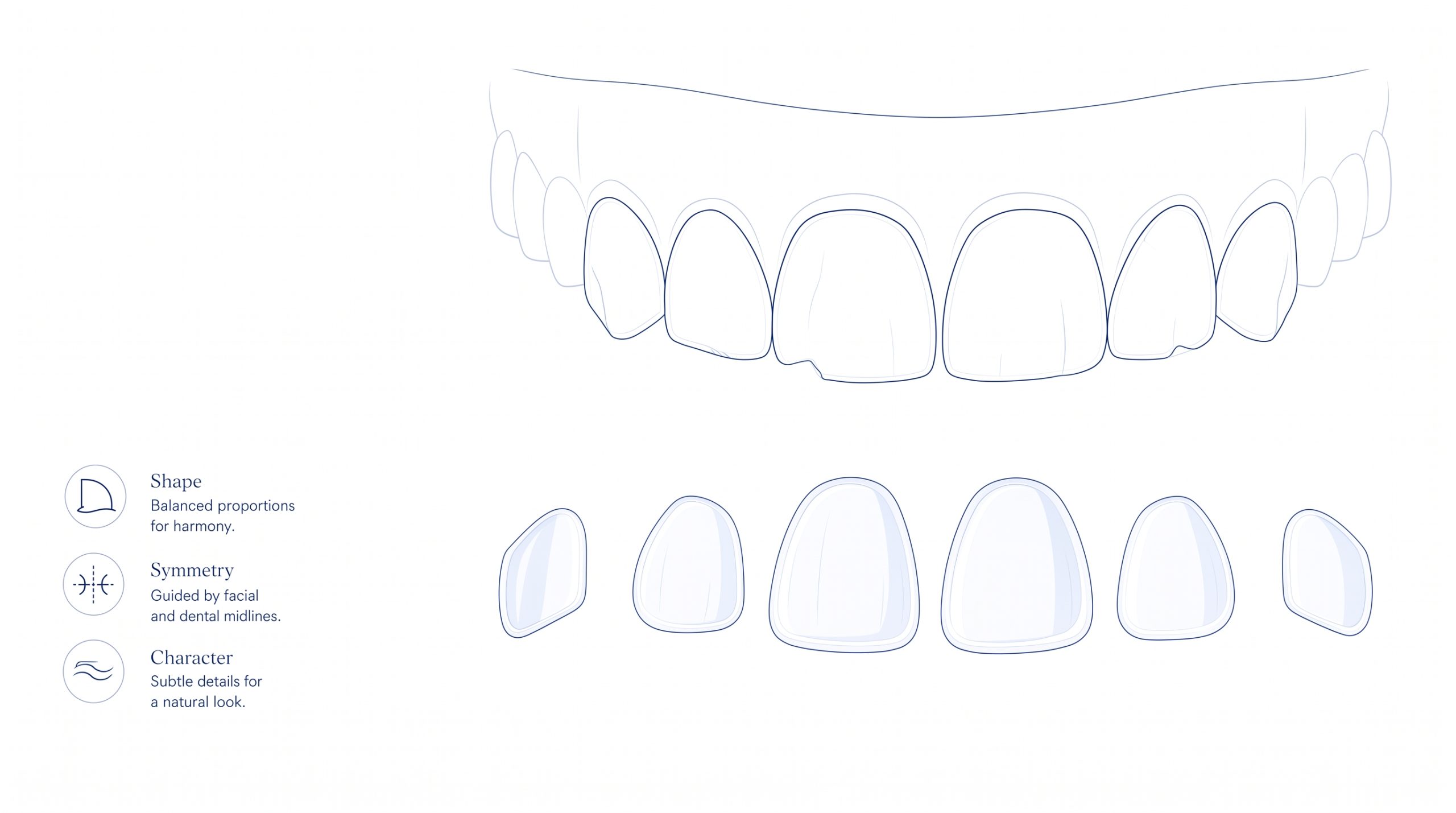
Shape is just as important as shade. Tooth length, edge position, symmetry, gum levels and facial proportions all affect the final appearance. Your dentist may use photographs, scans, trial designs or temporary mock-ups to help explain what may be possible. These planning tools are useful, but they are guides rather than guarantees.
Before-and-after photographs can also be helpful when you are trying to understand different veneer styles, materials and limitations. When viewing examples, it is important to remember that each person’s starting point is different. Our guide to veneers before and after examples explains what these images can and cannot tell you about your own likely outcome.
What a veneers consultation may involve
A veneers consultation is an opportunity to assess whether treatment may be appropriate, not an obligation to proceed. At Creative Smiles in Armadale, a cosmetic consultation may include a conversation about your concerns, dental history and what you would like to understand about your options.
Your dentist may examine your teeth, gums and bite. They may also recommend dental X-rays, photographs or digital scans where clinically appropriate. These records can help identify decay, old restorations, tooth position, gum levels and other factors that are not always obvious in the mirror.
You may be asked about habits and health factors that can affect treatment planning, such as:
- Tooth grinding or clenching
- Sensitivity to cold or brushing
- Past orthodontic treatment
- Previous whitening or cosmetic dental work
- Smoking or vaping
- Medical conditions or medications that may affect oral health
- How you clean between your teeth
After an assessment, your dentist can explain possible options. These might include veneers, composite bonding, whitening, orthodontic treatment, crowns, replacement fillings, gum treatment or choosing not to proceed with cosmetic treatment. In many cases, there is more than one possible pathway.
Alternatives to veneers may be worth considering
Veneers are one option, but they are not the only way to address cosmetic dental concerns. The most suitable option depends on what you would like to change and what your teeth can safely support.
Teeth whitening may be considered if your main concern is colour and your teeth and gums are healthy. It will not change tooth shape or position, and it may not work predictably on all types of staining.
Composite bonding may be considered for small chips, minor shape changes or small gaps. It generally involves adding tooth-coloured resin to the tooth. It may require less tooth preparation than some porcelain veneers, but it can stain or wear over time and may need maintenance.
Orthodontic treatment may be considered if tooth position is the main concern. Moving teeth before veneers can sometimes reduce the amount of tooth preparation required, but it takes time and is not necessary or appropriate for everyone.
Crowns may be considered when a tooth is heavily restored, cracked or weakened. Crowns involve more coverage of the tooth than veneers, so they are usually discussed for different clinical reasons.
If you are comparing cosmetic options, our article on veneers and bonding explains key differences between these two commonly discussed treatments.
Potential risks and limitations to understand
All dental procedures carry potential risks and benefits. Your dentist should explain these in the context of your own teeth, rather than presenting veneers as a one-size-fits-all solution.
Possible risks and limitations of veneers can include tooth sensitivity, chipping, debonding, changes to the bite, gum irritation, difficulty matching one tooth to nearby teeth, and the need for future repair or replacement. If tooth preparation is required, the removed enamel does not grow back.
Veneers also require ongoing care. They need regular brushing, cleaning between the teeth, dental examinations and professional cleans. If you grind or clench your teeth, your dentist may recommend protective strategies, such as a night guard, although no appliance can remove all risk.
Diet and habits can also affect veneers. Biting hard objects, using teeth to open packaging, nail biting and chewing ice can place unnecessary stress on veneers and natural teeth. These habits are worth discussing honestly during planning because they may influence material choice and expectations.
Cost is another practical consideration. Veneer fees can vary depending on the material, number of teeth, planning, tooth preparation, gum health, bite issues and whether other dental treatment is needed first. For a more detailed breakdown, you can read Creative Smiles’ guide on what affects the price of teeth veneers.
Questions to ask before deciding on veneers
A good veneer discussion should leave you with a clear understanding of your options, including the choice not to proceed. You may find it helpful to ask your dentist:
- Are my teeth and gums healthy enough for veneers at this stage?
- Would any dental treatment be needed before cosmetic treatment?
- How much tooth preparation may be required?
- Are porcelain veneers, composite bonding, crowns, whitening or orthodontics worth considering in my case?
- What are the main risks and maintenance requirements for my teeth?
- How will the veneer shade be chosen?
- What happens if a veneer chips, stains, debonds or needs replacement later?
These questions can help you understand the reasoning behind a treatment plan. They can also help you compare options in a calm and practical way.
Frequently asked questions
Do my teeth need to be healthy before veneers? Yes. Teeth and gums should be assessed before veneers are recommended. Decay, gum disease, failing fillings or bite problems may need to be managed first, depending on the findings.
Can veneers be placed over crooked teeth? Sometimes veneers can improve the appearance of mildly uneven teeth, but they are not a substitute for orthodontic treatment in every case. If teeth are significantly crowded, rotated or affecting the bite, your dentist may discuss alignment options first.
Will veneers damage my natural teeth? Some veneer treatments require removal of a small amount of enamel, which is irreversible. The amount varies depending on the material, tooth position and treatment goals. Your dentist can explain what preparation may be involved for your teeth.
Should I whiten my teeth before veneers? Whitening may be considered before veneers if you want a lighter overall shade and your dentist determines it is suitable. Veneers and restorations do not whiten like natural teeth, so shade planning is important.
Are veneers suitable if I grind my teeth? Tooth grinding can increase the risk of veneer chips, wear or debonding. Veneers may still be considered for some patients, but the bite, grinding pattern and protective options need to be assessed first.
How many veneers do I need? The number depends on which teeth show when you smile, your goals, the condition of each tooth and how the veneers need to blend with natural teeth. A dentist can assess this during a consultation.
Considering veneers in Armadale?
If you are thinking about veneers, an individual dental assessment can help clarify what is happening with your teeth before any treatment decision is made. Your dentist can assess your oral health, explain possible benefits and risks, and discuss alternatives that may suit your circumstances.
To discuss your options, you can arrange a consultation with the team at Creative Smiles in Armadale, Melbourne. A considered assessment is the right starting point for understanding whether veneers may be appropriate for your teeth.