Cosmetic dental treatment may be considered when you would like to change the appearance of your teeth, gums or smile in a way that is healthy, realistic and appropriate for your mouth. It is not something everyone needs, and it is not a substitute for general dental care. The right time to consider it is usually after your dentist has checked for issues such as tooth decay, gum disease, bite problems, tooth wear or old restorations that may affect the plan.
For people in Armadale, Melbourne and surrounding areas, the main question is often not “Which treatment should I choose?” but “Is cosmetic treatment suitable for my teeth, my goals and my oral health?” That answer depends on an individual dental assessment.
When cosmetic dental treatment may be considered
Cosmetic dental treatment is commonly discussed when a person has a concern about the colour, shape, position, size or proportion of their teeth. Sometimes the concern is mostly cosmetic. At other times, it overlaps with restorative dentistry, which focuses on repairing damaged or missing tooth structure.
A dentist may discuss cosmetic options if you are concerned about:
- Staining or discolouration that does not improve enough with routine cleaning
- Chipped, worn or uneven tooth edges
- Gaps or mild crowding that affect the appearance of the smile
- Teeth that look small, misshapen or out of proportion
- Old fillings, crowns or restorations that are visible or no longer blending well
- Missing teeth, where replacement may improve both function and appearance
- Tooth wear related to grinding, erosion or bite issues
These concerns do not automatically mean treatment is needed. Many natural differences in tooth shape, colour and alignment are normal. Cosmetic treatment is a personal choice, and your dentist should explain what is optional, what is clinically recommended and what the limitations may be.
Cosmetic treatment should usually start with oral health
Before changing the appearance of teeth, it is important to understand whether the teeth and gums are healthy enough for treatment. Cosmetic procedures may not be appropriate if there is active decay, untreated gum disease, unstable bite issues or ongoing tooth wear that has not been addressed.
A general dental examination may include checking your teeth, gums, jaw joints, bite and existing restorations. X-rays or digital scans may be recommended depending on the concern. This is not just a formality. It helps your dentist understand whether a cosmetic option may be safe, durable and suitable for your circumstances.
For example, whitening may not change the colour of crowns, veneers or fillings. Veneers may not be appropriate if there is not enough healthy enamel, significant grinding or active gum problems. Clear aligners may not suit every orthodontic concern. Dental implants require adequate bone, healthy gums and an assessment of medical factors.
General oral health guidance from healthdirect Australia also highlights the importance of regular dental care, good daily hygiene and seeking professional advice for dental symptoms.
Common reasons people ask about cosmetic dental options
Cosmetic treatment is often considered for one of three broad reasons: improving colour, changing tooth shape or improving alignment and spacing. Some people only need one option. Others may need a staged plan if several issues are involved.
| Concern | Cosmetic options that may be discussed | Important considerations |
|---|---|---|
| Tooth colour | Professional whitening, replacement of visible old restorations | Whitening does not work on existing crowns, veneers or fillings |
| Chipped or uneven edges | Composite bonding, veneers, crowns in selected cases | The cause of chipping or wear should be assessed first |
| Gaps or mild crowding | Clear aligners, bonding, veneers in selected cases | Tooth position, bite and gum health affect suitability |
| Worn teeth | Bonding, crowns, bite management, protective splints | Grinding or erosion may need to be managed before cosmetic work |
| Missing teeth | Dental implants, bridges, dentures or full-arch options | Suitability depends on bone, gums, health history and goals |
| Old dental work | Replacement fillings, crowns or veneers | Existing tooth structure and bite forces guide the plan |
If you are comparing several treatments at once, it can be useful to read about broader cosmetic dentistry smile makeover options and then discuss which parts, if any, may be relevant to your own situation.
Examples of cosmetic dental treatments that may be considered
Teeth whitening
Professional teeth whitening may be considered when natural teeth have become darker or stained over time. Common causes include age-related colour change, dietary staining, smoking history or previous trauma to a tooth.
Whitening is not suitable for all discolouration. It will not whiten fillings, crowns or veneers, and some internal stains may respond differently. Sensitivity can occur for some patients. Your dentist can assess whether whitening may be appropriate and explain what type of whitening system may be suitable.
Composite bonding
Composite bonding uses tooth-coloured resin to adjust small areas of tooth shape, repair minor chips or close small spaces. It is often more conservative than porcelain veneers because it may involve little or no tooth preparation, depending on the case.
Bonding can stain, chip or wear over time, particularly in people who grind their teeth or place heavy forces on the front teeth. It can be a useful option for selected cases, but maintenance and realistic expectations are important.
Porcelain veneers
Porcelain veneers are thin ceramic coverings placed over the front surface of teeth. They may be considered for concerns involving shape, colour, mild spacing or surface defects. Veneers usually require careful planning, and some tooth preparation may be needed.
They are not reversible in many cases once enamel has been removed. Veneers can also chip, debond or need replacement in the future. If you are weighing up different materials, this guide to the difference between veneers and bonding explains some of the practical trade-offs.
Clear aligners
Clear aligners, including Invisalign, may be considered when tooth position is part of the concern. They use a series of removable trays to gradually move teeth. Aligners may suit some mild to moderate alignment concerns, although not every bite or tooth movement can be treated this way.
Treatment depends on wearing the aligners as directed, maintaining good oral hygiene and attending reviews. You can read more about how Invisalign clear aligner treatment is planned and what patients generally need to consider.
Crowns, bridges and implants
Crowns, bridges and implants are often described as restorative treatments, but they can also affect the appearance of the smile. A crown may be considered when a tooth is heavily filled, cracked, weakened or has lost substantial structure. A bridge or implant may be discussed when one or more teeth are missing.
These treatments involve clinical, biological and maintenance considerations. For example, dental implants require surgery and healing time, and not all patients are suitable candidates. Crowns and bridges rely on the condition of the supporting teeth and bite. Your dentist should explain the potential benefits, limitations, risks and alternatives before treatment proceeds.
When cosmetic treatment may not be the right first step
Sometimes the best first step is not cosmetic treatment. Your dentist may recommend stabilising oral health before discussing aesthetic changes. This may feel less exciting than choosing a cosmetic option, but it can be important for safer and more predictable care.
Cosmetic treatment may need to be delayed or reconsidered if:
- You have untreated tooth decay or gum disease
- Your gums bleed regularly or teeth feel loose
- You have ongoing jaw pain, clenching or grinding that is not managed
- Teeth are actively wearing down from acid erosion or bite forces
- Your expectations cannot reasonably be achieved with dental treatment
- You are seeking a very specific result that may not suit your facial features, bite or tooth structure
- Your medical history or medications require further assessment before treatment
This does not mean cosmetic treatment is impossible. It means the plan may need to be adjusted, staged or focused on health first.
What an appointment may involve
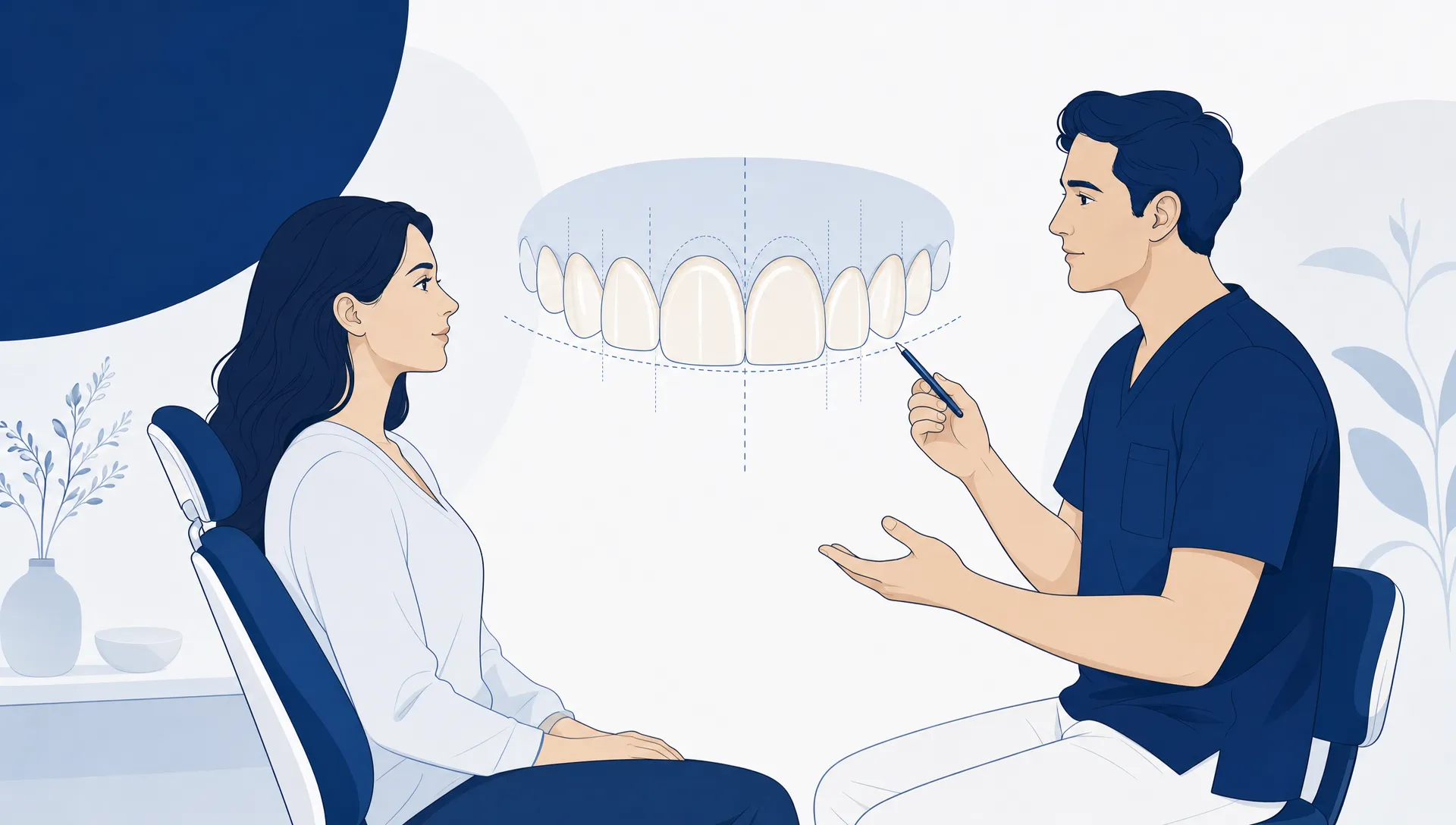
A cosmetic dental consultation should help you understand your options rather than pressure you into a decision. At Creative Smiles in Armadale, a cosmetic consultation may include a discussion about your concerns, an assessment of your teeth and gums, and an explanation of options that may be appropriate. Clinic-specific fees, timing and treatment plans should always be confirmed directly with the practice.
In general, an assessment may involve:
- Discussing what you would like to change and why
- Checking your teeth, gums, bite and existing dental work
- Taking photographs, scans or X-rays if clinically indicated
- Explaining which options may be suitable and which may not
- Discussing risks, limitations, maintenance and alternatives
- Providing an estimate or treatment plan if appropriate
Good treatment planning should include what happens if you choose not to proceed, or if a simpler option may be enough. Cosmetic treatment should be an informed choice, not a rushed decision.
Questions to ask before choosing cosmetic dental treatment
Before deciding on treatment, it can help to ask practical questions. These questions are not about challenging your dentist. They help you understand the reasoning behind the recommendation.
Consider asking:
- What is causing the issue I am concerned about?
- Are my teeth and gums healthy enough for this option?
- Are there simpler or more conservative alternatives?
- What are the potential risks and limitations?
- How much tooth structure may need to be changed or removed?
- How long might the treatment take, and what maintenance is involved?
- What costs are involved, including future maintenance or replacement?
- What happens if I choose not to have treatment now?
Costs can vary significantly depending on the treatment, materials, complexity and planning required. If cost is part of your decision-making, this Melbourne guide discusses why cosmetic dentistry can vary in price and what factors may influence fees.
If you are researching dental care across Melbourne, it can also be helpful to compare how different clinics explain their services, consultation process and treatment information, such as this East Melbourne dentist resource.
Benefits, limitations and risks to understand
Cosmetic dental treatment may help improve the appearance of teeth in selected cases. It may also help repair damaged tooth structure, replace missing teeth or improve the way teeth fit together when treatment has a restorative component.
However, all dental procedures carry potential risks and benefits. Experiences and outcomes vary between patients. Some treatments may involve sensitivity, gum irritation, bite changes, chipping, staining, debonding, replacement over time or the need for further dental work. Surgical treatments, such as implants, involve additional risks that your dentist or dental surgeon should discuss based on your health and anatomy.
It is also important to understand maintenance. Whitening may need topping up. Bonding may need polishing, repair or replacement. Veneers and crowns require ongoing care and do not make teeth immune to decay or gum disease. Aligners require retainer wear after treatment to help maintain tooth position.
How to know whether the timing is right
The right timing depends on your oral health, personal priorities and ability to maintain the treatment. It may be reasonable to consider cosmetic treatment when your teeth and gums are stable, you understand the available options, and you have had time to consider costs, risks and maintenance.
It may be better to wait if you are experiencing dental pain, active gum inflammation, major life or health changes, or uncertainty about what you want to achieve. It is also reasonable to seek a second opinion if you are unsure about a proposed treatment plan.
A balanced approach usually starts with a diagnosis, not a product or procedure. Once your dentist understands the cause of your concern, they can explain whether whitening, bonding, veneers, aligners, crowns, implants or no treatment may be appropriate.
Frequently Asked Questions
Is cosmetic dental treatment only about appearance? Not always. Some treatments are mainly cosmetic, such as whitening. Others overlap with restorative care, such as crowns, bridges or implants. Your dentist can explain whether a recommendation is cosmetic, functional, restorative or a combination.
Do I need cosmetic treatment if my teeth are healthy but uneven or stained? Not necessarily. Natural variation in tooth colour, shape and alignment is common. Cosmetic treatment is usually elective unless there is also a clinical concern. A dentist can assess your teeth and explain your options without assuming treatment is required.
Can cosmetic treatment be done if I have gum disease or decay? Active gum disease or decay should generally be addressed before cosmetic treatment is considered. Healthy gums and stable teeth are important for planning and maintaining most cosmetic dental procedures.
How do I choose between whitening, bonding, veneers and aligners? The right option depends on the cause of your concern. Whitening changes tooth colour, bonding and veneers can change shape or surface appearance, and aligners move teeth. Some concerns may require more than one approach, while others may be managed conservatively.
Are cosmetic dental results the same for everyone? No. Results vary depending on tooth structure, gum health, bite, existing restorations, habits, materials and treatment goals. Your dentist should explain what may be realistic for your circumstances.
Considering cosmetic dental treatment in Armadale?
If you are thinking about cosmetic dental treatment, an individual assessment can help determine whether it may be suitable for your teeth, gums and goals. The team at Creative Smiles in Armadale can discuss your concerns, explain potential options and outline the benefits, limitations, risks and alternatives relevant to your situation.
You can contact Creative Smiles to arrange an assessment and receive advice based on your oral health, rather than guessing which treatment might be right for you.