If you are comparing teeth whitening Melbourne options, the main choices are usually dentist-supervised in-chair whitening, custom take-home whitening trays or retail whitening products. The right option depends on the type of staining, your oral health, whether you have restorations such as crowns or veneers and how sensitive your teeth tend to be.
A dental assessment matters because whitening is not just a cosmetic product choice. Teeth and gums need to be checked first so that decay, gum inflammation, cracks, worn enamel or leaking fillings are not overlooked. Whitening may be suitable for many adults, but it is not appropriate for everyone.
Teeth whitening Melbourne options at a glance
Professional teeth whitening refers to whitening planned or supervised by a registered dental practitioner. In Melbourne, this commonly includes in-chair whitening at a dental clinic, custom take-home trays or a combination of both.
Retail whitening products can also be purchased from pharmacies, supermarkets or online. These may help with surface stains for some people, but they do not provide the same individual assessment, tray fit or monitoring as dentist-supervised treatment.
| Whitening option | What it usually involves | May suit | Main limitations |
|---|---|---|---|
| In-chair whitening | Whitening gel applied in the dental chair, with soft tissues protected and progress monitored | People wanting dentist-supervised treatment in a clinic setting | Sensitivity can occur, results vary and not all staining responds well |
| Custom take-home trays | Trays made to fit your teeth, used with whitening gel as directed by your dentist | People who prefer gradual whitening at home with dental guidance | Requires consistent use and careful handling of gel |
| Combination whitening | In-chair whitening followed by take-home trays, or trays used to maintain results | People who may benefit from both clinic and home components | Not needed for every patient and may not suit sensitive teeth |
| Retail whitening products | Whitening toothpastes, strips, pens or generic trays | Mild surface staining in some cases | Less personalised, may irritate gums or give uneven results if poorly fitted |
The Australian Dental Association’s patient information on teeth whitening explains that whitening products usually work through peroxide-based ingredients that lighten stains within the tooth. A dentist can explain what type of whitening agent is being used, how it should be applied and what side effects to watch for.
Why teeth become stained in the first place
Tooth colour is influenced by enamel, dentine and everyday habits. Enamel is the hard outer layer of the tooth. Dentine sits underneath and is naturally more yellow in tone. As enamel wears or becomes thinner over time, dentine may show through more.
External stains sit on the surface of teeth. These may be linked with coffee, tea, red wine, some foods, smoking or plaque build-up. A scale and clean may improve some surface staining before whitening is even considered.
Internal stains sit deeper within the tooth structure. These can be related to ageing, trauma, certain medications used during tooth development or previous dental treatment. Deeper discolouration may respond less predictably to whitening. In some cases, your dentist may discuss other options, such as bonding, veneers or crowns, depending on your oral health and goals.
Whitening also does not change the colour of existing fillings, crowns, veneers or bridges. This is one of the main reasons a dental assessment is useful before starting. If visible restorations are already present, your dentist can explain whether they may look different from your natural teeth after whitening.
In-chair teeth whitening
In-chair whitening is carried out at a dental practice. Your dentist will first assess your teeth and gums, discuss your medical and dental history and check for factors that may affect whitening suitability.
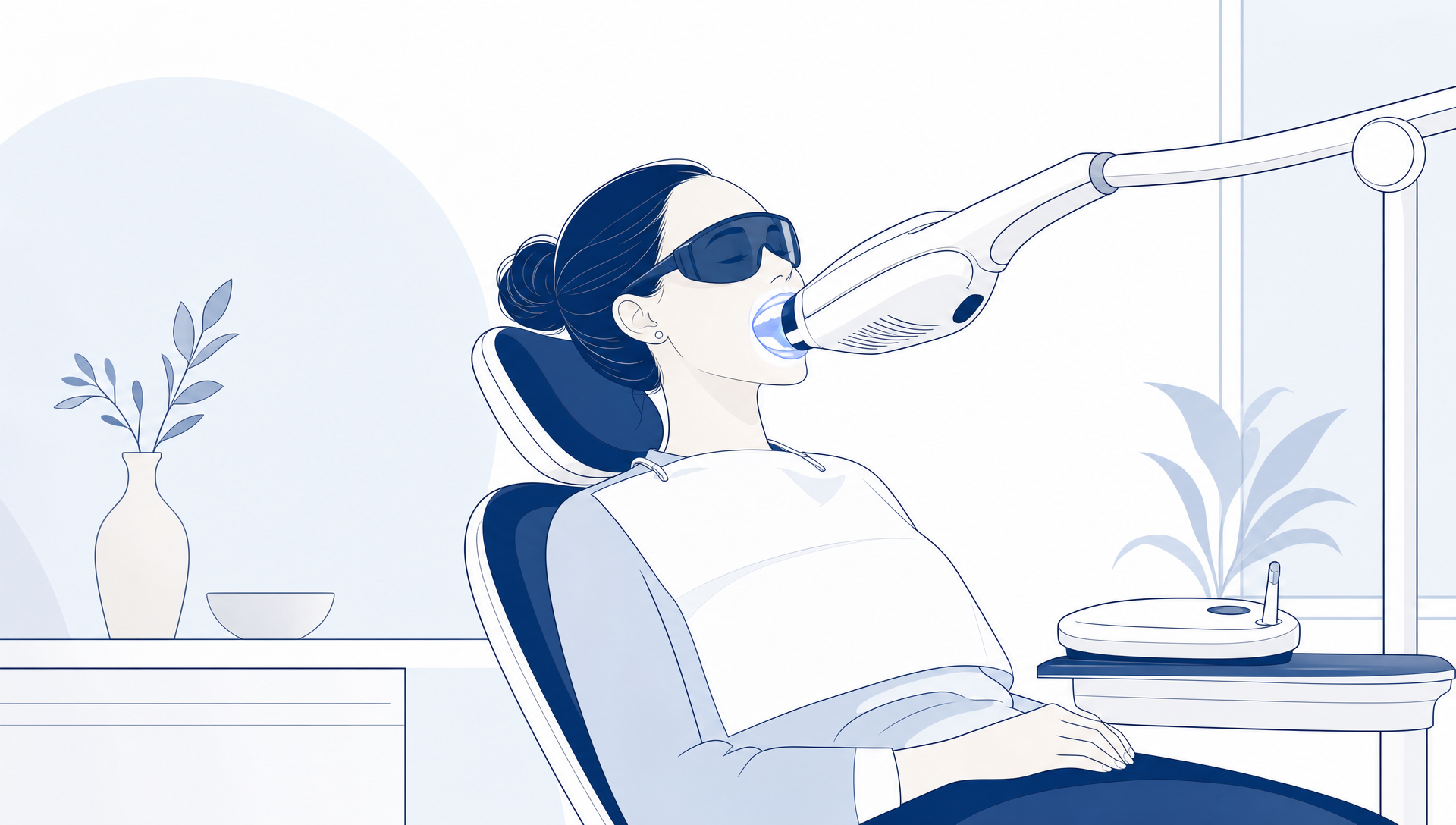
During treatment, the gums, lips and cheeks are protected before whitening gel is applied to the teeth. Some systems use a light, while others do not. The whitening process may involve one or more gel applications in the same appointment, depending on the system used and how your teeth respond.
Possible advantages of in-chair whitening include closer professional monitoring and a controlled clinical setting. It may be considered when someone prefers not to manage the first stage of whitening at home, or when they would like their dentist to supervise the process more directly.
The limitations are worth understanding. Teeth can feel sensitive during or after whitening, especially if you already have sensitivity, gum recession or enamel wear. Some stains do not respond strongly. Results also vary between patients, and your final tooth shade cannot be guaranteed.
If you want more detail about the appointment process, Creative Smiles has a separate guide on what to expect from a teeth whitening dentist appointment in Melbourne.
Custom take-home whitening trays
Custom take-home whitening uses trays made to fit your teeth. These trays are different from generic retail trays because they are designed to hold whitening gel in the right areas while reducing excess gel contact with the gums.
Your dentist will explain how much gel to use, when to wear the trays and how long to continue treatment. The schedule depends on the whitening product, your teeth, your sensitivity levels and the shade change being discussed.
This option may suit people who prefer a gradual approach. It also allows whitening to be paused if sensitivity occurs, after discussion with your dentist. Some patients use custom trays after in-chair whitening, while others use trays as their main whitening option.
The main disadvantage is that you need to follow the instructions carefully. Using too much gel, wearing trays longer than advised or using whitening products too often may increase irritation or sensitivity. More whitening is not always better.
Retail whitening products and whitening toothpastes
Retail products are widely available, including whitening toothpastes, strips, pens and generic tray kits. These products can be appealing because they are easy to buy and may cost less upfront than dentist-supervised whitening.
Whitening toothpastes usually focus on surface stains. They may contain mild abrasives or stain-lifting ingredients, but they generally do not change the deeper colour of the tooth in the same way peroxide-based whitening gels can. Some people also find abrasive products uncomfortable if they have sensitive teeth or exposed root surfaces.
Whitening strips and generic trays may contain whitening agents, but fit can be an issue. If the product does not sit evenly, whitening may be patchy or gel may irritate the gums. It is also easy to miss underlying dental problems if no dental assessment has been completed.
Retail products are not necessarily unsuitable for everyone, but they should be used carefully and according to the instructions. If you have active dental problems, sensitive teeth, restorations on front teeth or a history of gum issues, it is sensible to speak with a dentist before using them.
Who may not be suitable for teeth whitening?
Whitening suitability depends on more than tooth colour. A dentist may recommend delaying, modifying or avoiding whitening if there are oral health concerns that should be managed first.
Whitening may not be appropriate, or may need extra caution, if you have:
- Untreated tooth decay or leaking fillings
- Gum inflammation, periodontal disease or bleeding gums
- Significant tooth sensitivity or enamel wear
- Cracks, exposed root surfaces or recent dental trauma
- Crowns, veneers, bridges or fillings in highly visible areas
- Stains that are unlikely to respond well to whitening
- Pregnancy, breastfeeding or medical factors that require extra discussion before elective treatment
This does not mean whitening is ruled out permanently. It means the timing and approach should be discussed after your mouth has been assessed. In some situations, general dental care may need to come first.
If whitening is being considered as part of broader appearance-related dental care, it may be helpful to read about when cosmetic dental treatment may be considered and why oral health is usually assessed before planning cosmetic options.
Possible benefits, risks and side effects
Professional whitening may help lighten natural tooth structure and reduce some types of staining. For suitable patients, it can be a conservative cosmetic option because it does not usually involve changing tooth shape or removing tooth structure.
All dental procedures carry potential risks and benefits. With whitening, the most common side effects are temporary tooth sensitivity and gum irritation. Sensitivity can vary from mild to uncomfortable. Your dentist may suggest changes to the whitening schedule, desensitising products or a pause in treatment if needed.
Other limitations include uneven whitening, relapse of stains over time, limited response in some teeth and colour mismatch with existing restorations. Teeth naturally pick up stains again, especially with regular coffee, tea, wine or smoking. Maintenance needs vary from person to person.
A careful conversation before treatment should cover what whitening can and cannot do for your teeth. It should also include alternatives if whitening is unlikely to meet your goals.
How much does professional whitening cost in Melbourne?
Teeth whitening fees in Melbourne vary because clinics use different systems, products and appointment structures. The cost may also depend on whether you need a dental examination, professional cleaning, custom trays, replacement gel or treatment for existing oral health issues before whitening.
Rather than choosing purely by price, it is useful to ask what is included. For example, ask whether the fee includes an oral health assessment, custom trays, review appointments, aftercare instructions or replacement gel. A low advertised price may not include every part of care you need.
Creative Smiles in Armadale provides cosmetic dental care including teeth whitening, veneers, crowns and other treatment options. If cost is part of your decision, you can ask the clinic about current fees and payment plan options for eligible treatment. For a broader explanation of why cosmetic fees differ, see this guide to why cosmetic dentistry costs vary in Melbourne.
What to ask before booking whitening
A good whitening conversation should feel clear, balanced and specific to your teeth. You should not feel pressured to proceed, and you should have time to understand the potential benefits, limitations and alternatives.
Useful questions include:
- Is my staining likely to respond to whitening?
- Are my teeth and gums healthy enough to start?
- Which whitening option do you recommend and why?
- What side effects should I expect or watch for?
- Will my fillings, crowns or veneers look different after whitening?
- How should I manage sensitivity if it occurs?
- What is included in the quoted fee?
- How often, if at all, should whitening be repeated?
These questions are especially helpful if you are comparing several teeth whitening providers in Melbourne. They focus the discussion on suitability and safety rather than just shade charts or promotional claims.
Maintaining your result after whitening
Whitening does not permanently prevent future staining. After treatment, your dentist may suggest habits that help reduce surface stain build-up, such as regular brushing with fluoride toothpaste, flossing or interdental cleaning and routine dental check-ups.
It can also help to rinse with water after coffee, tea or red wine and avoid smoking. If you have custom trays, your dentist can explain whether occasional maintenance whitening may be appropriate and how often it should be considered. Maintenance should still be guided by your oral health and sensitivity levels.
Avoid using multiple whitening products at the same time unless your dentist has advised it. Combining products can increase irritation without necessarily improving the outcome.
Frequently asked questions
Is professional teeth whitening suitable for everyone? No. Suitability depends on your teeth, gums, restorations, sensitivity levels, staining type and medical history. A dental assessment is needed before a dentist can advise whether whitening may be appropriate.
Does teeth whitening damage enamel? When whitening is planned and supervised appropriately, many people tolerate it well. However, sensitivity and gum irritation can occur, and overuse or incorrect use may increase problems. Your dentist can explain the risks based on your teeth.
Will whitening work on crowns, veneers or fillings? Whitening does not change the colour of porcelain, ceramic or composite restorations. If these are visible when you smile, your dentist can explain whether whitening may create a colour mismatch.
How long do whitening results last? This varies between patients. Diet, oral hygiene, smoking, enamel condition and maintenance habits can all affect how quickly stains return. Your dentist can discuss realistic expectations for your circumstances.
Should I have my teeth cleaned before whitening? Often, a professional clean is recommended before whitening because plaque, tartar and surface stains can affect how teeth look and how whitening is planned. Your dentist can advise what is needed after examining your mouth.
Considering teeth whitening in Armadale?
If you are looking into professional teeth whitening in Melbourne, an individual assessment is the safest starting point. It allows your dentist to check your oral health, explain suitable options and discuss possible risks, costs and alternatives.
To discuss your concerns, you can arrange an appointment with the team at Creative Smiles in Armadale. Your dentist can assess whether whitening may be appropriate for your circumstances and help you make an informed decision.