If you have been searching for cosmetic braces near me, you are probably looking for a discreet way to improve tooth alignment as an adult. In dental conversations, “cosmetic braces” usually refers to orthodontic options that are less noticeable than traditional metal braces, such as clear aligners or tooth-coloured ceramic braces.
These treatments may be considered when tooth position affects the way your smile looks, how your teeth meet or how easy your teeth are to clean. They are not suitable for every situation, and a dentist needs to assess your teeth, gums, bite and general oral health before recommending an option.
What “cosmetic braces near me” usually means for adults
Cosmetic braces are orthodontic appliances designed to move teeth while being more discreet in appearance. The word “cosmetic” can be a little misleading because orthodontic treatment is not only about appearance. Tooth movement can also affect your bite, chewing function, gum health and long-term maintenance.
For adults in Melbourne, common options discussed under this term may include clear aligners, ceramic braces and other less visible orthodontic approaches. Creative Smiles in Armadale offers Invisalign consultations, although the most appropriate option depends on your individual assessment.
If you are comparing aligner systems, this guide on whether Invisalign may be the best clear aligner option explains why suitability depends on factors such as your bite, oral health and treatment goals.
When cosmetic braces may be considered for adults
Cosmetic braces may be discussed when an adult wants to explore orthodontic treatment but prefers a more subtle appearance during treatment. A dentist may consider this type of treatment for concerns such as:
- Mild to moderate crowding where teeth overlap or are difficult to clean
- Small gaps between teeth
- Teeth that have shifted after previous orthodontic treatment
- Rotated or tilted teeth that may be suitable for planned movement
- Bite concerns where the upper and lower teeth do not meet evenly
- Tooth alignment before other cosmetic or restorative dental work is planned
In some cases, aligning teeth before veneers, crowns or bonding may help reduce the amount of tooth preparation required. This depends on the condition of the teeth and the overall treatment plan. If you are weighing orthodontics against other cosmetic options, Creative Smiles has a separate overview of when cosmetic dental treatment may be considered.
When cosmetic braces may not be the right starting point
Cosmetic braces are not automatically suitable just because teeth appear uneven. Before any tooth movement is planned, your dentist will usually check for conditions that may need attention first.
Treatment may need to be delayed, modified or referred to another dental practitioner if you have untreated tooth decay, active gum disease, significant bone loss, complex bite concerns, impacted teeth or jaw-related issues. Missing teeth, existing implants, crowns or bridges can also affect what tooth movement is possible.
Clear aligners require consistent wear, usually for most of the day and night, except when eating, drinking anything other than water or cleaning your teeth. If wearing removable aligners consistently is likely to be difficult, a fixed option may be discussed instead.
All orthodontic treatment carries potential benefits and risks. These may include temporary discomfort, changes in speech, gum irritation, tooth sensitivity, root shortening, gum recession, decay if cleaning is poor or teeth moving again after treatment if retainers are not worn as advised. Your dentist can explain which risks are most relevant to your circumstances.
Common cosmetic orthodontic options adults ask about
The right option depends on your teeth, bite, gum health, preferences and the type of movement required. The table below summarises common adult orthodontic options in general terms.
| Option | What it involves | Why adults may ask about it | Important limitations |
|---|---|---|---|
| Clear aligners | A series of removable clear trays that gradually move teeth | They are removable and usually less noticeable than metal braces | They require consistent wear and may not suit all tooth movements |
| Ceramic braces | Fixed brackets that are tooth-coloured or clear, attached to the front of teeth | They work like braces but are less visually obvious than metal brackets | They are still visible and need careful cleaning around brackets |
| Lingual braces | Fixed braces placed behind the teeth | They are hidden from the front in many cases | They may affect speech or tongue comfort and are not offered by every provider |
| Traditional metal braces | Fixed metal brackets and wires | They may be suitable for a wide range of orthodontic needs | They are more visible, though sometimes still the most appropriate option |
A dentist may also discuss whether referral to an orthodontist is appropriate. Orthodontists are dental specialists who have completed additional training in diagnosing, preventing and treating problems with tooth and jaw alignment.
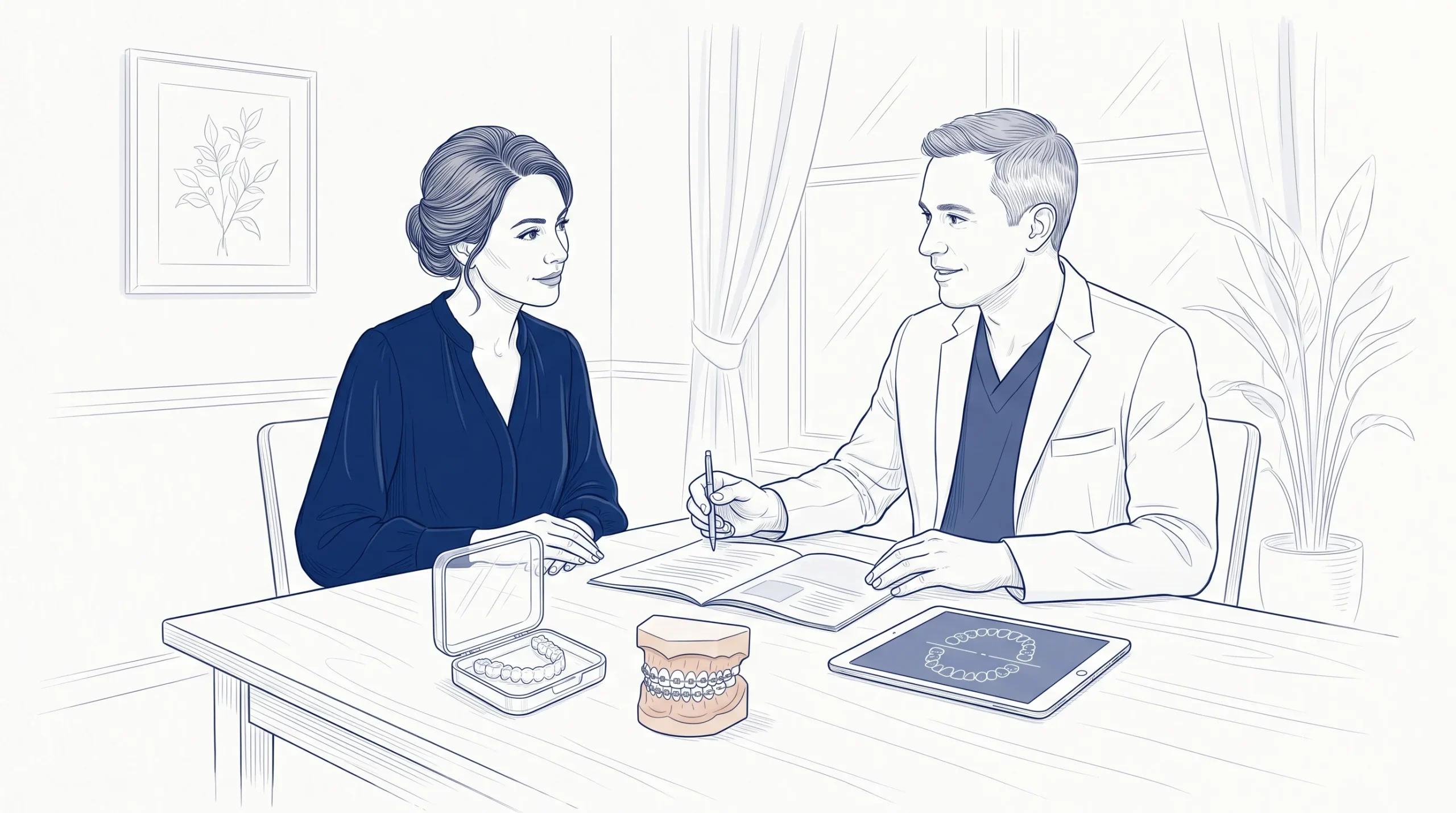
Oral health should come before cosmetic tooth movement
It is understandable to focus on appearance when searching for cosmetic braces. However, moving teeth when gums are inflamed or teeth are weakened by decay can create avoidable problems.
A dental assessment usually starts with the basics: gum health, tooth decay, existing restorations, jaw comfort, bite function and oral hygiene. Your dentist may also ask about grinding, clenching, previous orthodontic treatment and any medical conditions or medications that could affect dental care.
For general oral health information, the Australian Dental Association’s patient website Teeth.org.au is a useful resource for understanding dental conditions and preventive care. Personal advice still needs to come from a dentist who has examined your mouth.
What an appointment may involve
An initial consultation for adult cosmetic braces is usually a discussion and assessment rather than a commitment to treatment. At Creative Smiles in Armadale, cosmetic consultations are available, and your dentist can explain what records or further appointments may be needed before a treatment plan is finalised.
A typical appointment may include:
- A discussion about your concerns and goals: Your dentist may ask what you would like to change, whether appearance, cleaning, bite comfort or previous tooth movement is your main concern.
- A review of dental and medical history: Previous braces, gum treatment, tooth wear, grinding, injuries, medications and general health can all affect planning.
- An examination of teeth, gums and bite: This helps determine whether orthodontic movement may be appropriate or whether other care should come first.
- Photos, scans or X-rays if needed: These records can help assess tooth position, root position and bone support.
- A discussion of options, risks and alternatives: Your dentist may explain clear aligners, fixed braces, restorative options or referral pathways, depending on your needs.
If you would like a clearer idea of what this type of visit can include, Creative Smiles explains what happens at a free cosmetic dental consultation in more detail.
Questions to ask before starting adult orthodontic treatment
A careful conversation before treatment can help you understand what is involved and avoid assumptions. Good questions include whether your gums and teeth are healthy enough for tooth movement, what records are needed, which options may be suitable, what the limitations are and whether referral to an orthodontist should be considered.
You may also want to ask about retainers. Retainers are appliances used after orthodontic treatment to help reduce the chance of teeth shifting back. Long-term retainer wear is commonly recommended after braces or aligners, but the type of retainer and wearing schedule varies between patients.
Cost is another practical consideration. Fees can vary depending on the complexity of treatment, the number of appointments, the records required and whether other dental care is needed first. If you are considering treatment in Victoria, this article on questions to ask about cosmetic dentistry may help you prepare for a consultation.
Local considerations when comparing cosmetic braces in Melbourne
When searching locally, it can be helpful to look beyond whether a clinic offers a particular product. Adult orthodontic treatment involves planning, monitoring and maintenance, so the quality of the assessment and communication matters.
Before choosing a dental clinic, consider whether the dentist explains your oral health first, discusses more than one option where appropriate, outlines risks and limitations, provides written information about fees and confirms what follow-up may be required. You can also check that a practitioner is registered through the Dental Board of Australia or the Australian Health Practitioner Regulation Agency.
If you split time between states or are moving during treatment, ask how records, aligner reviews or follow-up care would be managed. For example, someone relocating between Victoria and Queensland may need to coordinate care between a Melbourne dental clinic and a Gold Coast dentist so treatment information remains consistent.
Are cosmetic braces the same as cosmetic dentistry?
Not exactly. Cosmetic dentistry is a broad term that may include whitening, bonding, veneers, crowns, implants and orthodontic options. Cosmetic braces focus on moving teeth into different positions. Treatments such as veneers or bonding change the appearance of the visible tooth surface but do not move the underlying tooth or root in the same way.
For some adults, orthodontic treatment may be considered before other cosmetic treatment. For others, a restorative or preventive approach may be more appropriate. A dentist can explain the differences after examining your teeth and discussing your goals.
Frequently Asked Questions
Are cosmetic braces only for adults? No. Discreet orthodontic options may be discussed with teenagers or adults, depending on suitability. This article focuses on adults because adult treatment often involves additional considerations such as previous dental work, gum health and long-term tooth wear.
Are clear aligners considered cosmetic braces? Many patients use the term “cosmetic braces” to describe clear aligners because they are less noticeable than metal braces. Technically, aligners are not braces, but both are orthodontic appliances used to move teeth.
Can cosmetic braces fix all alignment concerns? No. Some tooth movements are more complex and may need fixed braces, specialist orthodontic care or a different treatment approach. A clinical assessment is needed to understand what may be possible.
Is adult orthodontic treatment uncomfortable? Some pressure, tenderness or irritation can occur when teeth begin to move or when appliances are adjusted. Experiences vary. Your dentist can explain what is expected for the option being considered.
How long do cosmetic braces take? Treatment time varies depending on the complexity of the tooth movement, the appliance used and how your teeth respond. Your dentist can give a more relevant estimate after reviewing your teeth, bite and treatment records.
Can I have teeth whitening or veneers instead of braces? Whitening and veneers address different concerns. Whitening changes tooth shade, and veneers cover the front surface of teeth. Braces or aligners move teeth. Your dentist can explain which options may be suitable, including whether orthodontic treatment should be considered before cosmetic dental work.
Discussing cosmetic braces in Armadale
If you are considering discreet orthodontic treatment as an adult, an individual assessment is the appropriate first step. A dentist can examine your teeth and gums, discuss your goals, explain possible benefits and limitations and outline alternatives that may be relevant.
To discuss cosmetic braces or clear aligner options, you can arrange an appointment with Creative Smiles in Armadale. Treatment suitability, outcomes and experiences vary between patients, and any recommendation should be based on your oral health, bite, medical history and personal circumstances.