If you are searching for teeth filling near me because an old filling feels rough, sensitive, cracked or loose, it is reasonable to arrange a dental assessment. A filling may need repair or replacement when the seal around it changes, the tooth develops new decay, the filling chips or the bite no longer feels comfortable. Only a dentist can confirm what is happening after examining the tooth.
A dental filling is used to restore part of a tooth that has been damaged by decay, wear or a small fracture. It helps rebuild shape and function, but it still sits within a natural tooth that continues to experience chewing forces, temperature changes and plaque exposure.
What a dental filling does, and why it can change over time
Fillings are not separate from the rest of the tooth. They rely on the remaining tooth structure, the way your teeth meet when you bite and the health of the edges around the restoration. Over time, small gaps, chips or worn areas can develop.
This does not always mean something has gone wrong. Dental materials can wear gradually, and teeth can shift or crack with age, grinding or repeated pressure. A filling that has lasted for years may simply need review because the tooth around it has changed.
Your dentist may check whether the filling is still sealing the tooth properly. If bacteria can enter around the edge, decay may develop underneath or beside the filling. That is one reason regular check-ups can be useful even when there is no pain.
Searching for teeth filling near me? Signs a filling may need attention
Common signs that a filling may need repair or replacement include a rough edge, food catching between teeth, floss shredding, sensitivity to cold or sweet foods, discomfort when biting or a visible crack in the filling.
Some people notice a dark line around an older filling. This may be staining, but it may also suggest a gap or decay at the margin, which is the edge where the filling meets the tooth. A dental examination can help tell the difference.
| What you notice | What it may suggest | Suggested next step |
|---|---|---|
| Sharp or rough edge | Chipped filling or tooth edge | Book a dental appointment for assessment |
| Pain when biting | High filling, crack or deeper tooth issue | Arrange assessment, especially if persistent |
| Food trapping | Open contact or gap around the filling | Have the area checked and cleaned professionally |
| Sudden loss of a filling | Exposed tooth surface or decay underneath | Avoid chewing on that side and contact a dentist |
| Sensitivity that lingers | Irritated nerve or deeper decay | Seek dental advice rather than waiting |
When a damaged filling may be more urgent
If your search for teeth filling near me started after sudden pain, swelling or a filling falling out, timing matters. Not every damaged filling is an emergency, but some symptoms should be assessed promptly.
Contact a dentist as soon as practical if you have increasing pain, swelling in the gum or face, pus, fever, bleeding after trauma or difficulty opening your mouth. If you have trouble breathing or swallowing, seek urgent medical care. Healthdirect's toothache advice is a useful Australian health resource for understanding when symptoms may need prompt attention.
If part of the tooth has broken rather than only the filling, the approach may differ. Our guide on when to see a dentist in Armadale for a broken tooth explains warning signs that can help you decide whether to book urgently or arrange a routine visit.
What happens at a dental appointment for a filling concern
For someone looking for teeth filling near me in Armadale, the appointment usually begins with a conversation about what you have noticed, when it started and whether anything makes it better or worse. Your dentist may ask about sensitivity, grinding, recent trauma and previous dental treatment.
They will then examine the tooth, the filling edges, the gums and your bite. Dental X-rays may be recommended if decay under the filling, a crack or a deeper tooth problem is suspected. X-rays are not always needed, but they can show areas that are difficult to see directly.
If the filling only has a small chip and the tooth is otherwise sound, repair may be possible. If there is decay underneath, a poor seal or a larger fracture, removing and replacing the filling may be more appropriate. Your dentist should explain the potential benefits, risks, limitations and alternatives before treatment proceeds.
Repair, replacement or another treatment option?
A filling can sometimes be repaired by adding material to a small defect. In other situations, replacing the whole filling gives the dentist better access to clean the area and rebuild the tooth. Suitability depends on the size of the existing filling, the amount of healthy tooth remaining and whether the tooth has symptoms.
When comparing teeth filling near me options, it can help to understand that a filling is not the only possible recommendation. If the tooth has a large fracture, heavy wear or a weakened wall, an inlay, onlay or crown may be discussed. If decay has reached the nerve inside the tooth, root canal treatment or extraction may need to be considered.
| Possible option | When it may be considered | Important limitation |
|---|---|---|
| Filling repair | Small chip or rough edge with sound tooth structure | Not suitable if decay is present underneath |
| Replacement filling | Worn, leaking or decayed old filling | May not be enough for a heavily weakened tooth |
| Inlay or onlay | Larger chewing surface damage | Requires careful assessment and planning |
| Crown | Tooth has limited remaining structure | More tooth preparation may be involved |
| Root canal treatment | Nerve has become inflamed or infected | Further restoration is usually needed afterwards |
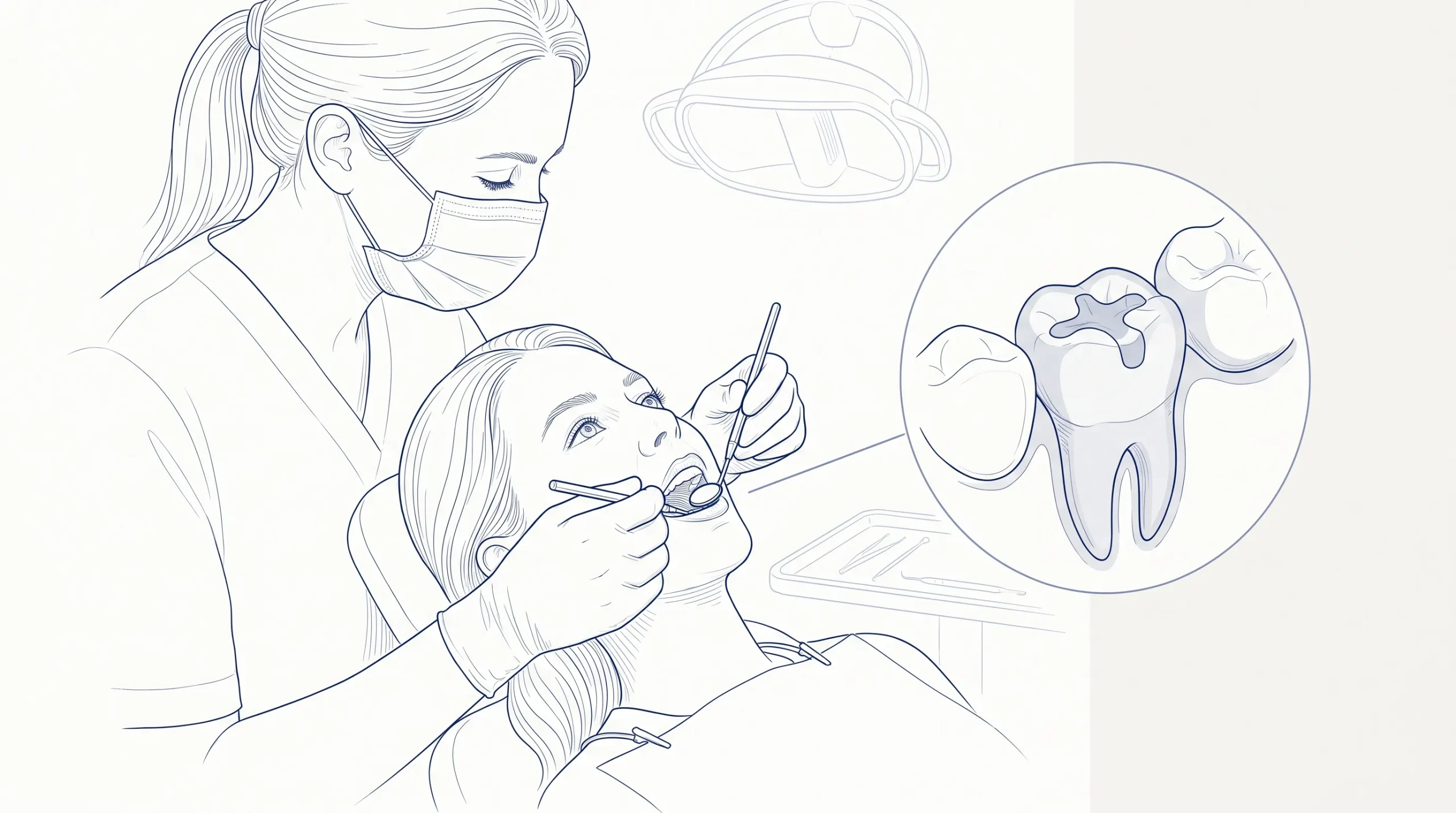
Why an old filling might fail
Fillings can fail for several reasons. Plaque can collect around the edges, especially if the contact between teeth is difficult to clean. Grinding or clenching can place extra pressure on fillings and natural teeth. A large filling may also leave less natural tooth structure to absorb chewing forces.
Diet and oral hygiene can contribute too. Frequent sugary foods or drinks may increase the chance of decay around the filling edge. Dry mouth, which may be linked with some medicines or health conditions, can also affect decay risk because saliva helps protect teeth.
It is also possible for a filling to feel different after other dental work or orthodontic changes because the bite has shifted slightly. If a filling feels high or uncomfortable when you bite, it is worth having it checked rather than trying to adjust your chewing around it.
A local search is only the first step
Searching online can help you find a nearby clinic, but the most useful choice depends on the service. Local searches vary widely, from comparing manufactured homes in San Antonio where location, finance and floor plans matter, to choosing dental care where clinical assessment, infection control, communication and treatment options are more relevant.
For dental fillings, proximity is helpful, especially if a filling has come loose or the tooth is sensitive. It should not be the only factor. Look for clear information about appointments, fees, treatment options and how the practice explains risks and alternatives.
Creative Smiles is located in Armadale, Melbourne and provides general and cosmetic dental care. If you have an existing filling that feels different, an examination can help determine whether monitoring, repair, replacement or another option may be suitable for your circumstances.
How to care for a tooth while waiting for your appointment
If a filling has chipped or fallen out, keep the area clean with gentle brushing and flossing if you can do so without pain. Avoid chewing hard foods on that side until the tooth is assessed. Do not use household glue or attempt to bond the filling back into place.
If the tooth is sensitive, try avoiding very cold, hot or sweet foods and drinks. Over-the-counter pain relief may be appropriate for some people, but follow the packet directions and seek advice from a pharmacist, GP or dentist if you are unsure, pregnant, taking other medicines or have a medical condition.
If the concern is mostly a small chip or cosmetic edge rather than decay, a different approach may sometimes be discussed. This article on when composite bonding may be considered for teeth explains one option for selected minor chips, gaps or uneven edges.
Frequently Asked Questions
How do I know if my filling needs replacing? You may notice sensitivity, a rough edge, food catching, floss tearing, pain when biting or a visible crack. Some failing fillings cause no obvious symptoms, so a dental examination is needed to confirm whether repair or replacement is appropriate.
Is it safe to wait if a filling falls out? It depends on the tooth and your symptoms. If there is pain, swelling, a sharp edge, bleeding or the tooth has broken, arrange dental advice promptly. If there is no pain, it is still sensible to book an appointment because the exposed tooth may be more vulnerable to decay or fracture.
Can a dentist repair part of a filling instead of replacing it? Sometimes. A small chip or rough edge may be repairable if the rest of the filling and tooth are sound. If there is decay, leakage or a larger fracture, replacement or another treatment may be more suitable.
Will I need an X-ray for a filling problem? Not always. Your dentist may recommend an X-ray if they need to check for decay under the filling, a crack, infection or the health of the surrounding tooth structure. The reason for any X-ray should be explained to you.
What should I ask when searching for teeth filling near me? Ask whether the dentist can assess the tooth, explain the cause of the problem, discuss repair and replacement options, outline fees before treatment and talk through possible risks and alternatives. This helps you make a more informed decision.
Arranging an assessment in Armadale
A damaged or uncomfortable filling does not automatically mean you need major treatment, but it is worth having the tooth assessed before the problem becomes harder to manage. Your dentist can check the filling, the surrounding tooth and your bite, then explain which options may be appropriate for your oral health and preferences.
To discuss a filling concern, you can arrange an appointment with the team at Creative Smiles in Armadale. Treatment recommendations depend on an individual assessment, and outcomes and experiences vary between patients.