A broken tooth is worth having assessed by a dentist, even if it does not hurt. If you are searching for a dentist Armadale patients can contact after a chip, crack or broken filling, the right timing depends on pain, bleeding, swelling, how much tooth is missing and whether the injury followed a knock to the mouth.
Severe symptoms may need same-day dental care. A small chip with no pain may not be an emergency, but it should still be checked so your dentist can assess the tooth structure, smooth sharp edges and discuss suitable repair options.
First, decide whether it needs urgent care
A broken tooth can be anything from a small enamel chip to a crack that reaches deeper layers of the tooth. Enamel is the hard outer surface. Beneath it is dentine, which can feel sensitive when exposed. Deeper still is the dental pulp, which contains nerves and blood vessels.
You do not need to diagnose the problem yourself. The main question is whether there are warning signs that make prompt care more appropriate.
Seek urgent dental advice if you have:
- Severe or worsening pain
- Swelling in the face, gum or jaw
- Bleeding that does not settle with gentle pressure
- A tooth that feels loose after trauma
- A large piece of tooth missing
- Sensitivity that is sharp, lingering or triggered by air
- A broken tooth with visible pink, red or dark tissue inside
- A broken crown, filling or veneer that leaves the tooth painful or sharp
- Injury after a fall, accident or blow to the mouth
If swelling is spreading, you have fever, feel generally unwell, or have trouble swallowing or breathing, seek urgent medical care or call 000. These symptoms may indicate a serious infection or trauma that needs immediate assessment.
For a broader first-aid overview across toothache, swelling, knocked-out teeth and broken teeth, this guide on what to do for urgent dental problems may be helpful.
When a dentist in Armadale should assess a broken tooth quickly
The table below gives a general guide. It is not a substitute for dental advice, but it can help you decide how quickly to contact a dentist.
| What you notice | Why it matters | Suggested timing |
|---|---|---|
| Severe pain, swelling, fever or feeling unwell | Possible infection or significant injury | Same day, or emergency medical care if symptoms are severe |
| Tooth knocked loose or partly displaced | The supporting structures may be injured | Same day |
| Large break, visible inner tooth layer or bleeding from the tooth | Deeper tooth structure may be exposed | Same day |
| Broken tooth after facial trauma | There may be damage to teeth, gums, lips or jaw | Same day or urgent medical care depending on the injury |
| Sharp edge cutting the tongue or cheek | Soft tissues can become irritated or injured | Prompt dental assessment |
| Mild chip with no pain | Often less urgent, but still needs checking | Book a dental appointment in the next few days |
| Broken filling, crown or veneer | The tooth underneath may be exposed or vulnerable | Prompt assessment, especially if painful or loose |
If you are unsure, it is reasonable to call the dental practice, explain what happened and describe your symptoms. The team can advise whether you may need a sooner appointment.
What to do before your appointment
Simple first-aid steps can reduce irritation and help protect the tooth until you are seen.
- Rinse your mouth gently with warm water to clear debris.
- If there is bleeding, apply gentle pressure with clean gauze or a clean cloth.
- Use a cold compress on the outside of the cheek if there is swelling after trauma.
- Avoid chewing on the broken tooth.
- Keep any broken tooth fragment and bring it to the appointment.
- Cover a sharp edge with orthodontic wax from a pharmacy if it is rubbing the cheek or tongue.
- Take over-the-counter pain relief only as directed by the packet, your doctor or pharmacist.
- Do not place aspirin, alcohol or strong chemicals directly on the tooth or gum.
If an adult tooth has been completely knocked out, treat this as urgent. Hold it by the crown, not the root. If it is dirty, rinse it briefly with milk or saline if available, do not scrub it, then seek urgent dental advice. For a baby tooth that has been knocked out, do not try to put it back in the socket, as this can affect the developing adult tooth.
Why a broken tooth may not hurt at first
Pain is not a reliable measure of how serious a break is. A tooth can chip without discomfort if only enamel is affected. A deeper crack may also be quiet at first, then become painful when chewing or when the tooth is exposed to cold, heat or sweetness.
Some cracks are hard to see because they run through the tooth rather than across the surface. Your dentist may need to check your bite, test sensitivity and take an X-ray if clinically appropriate. Even then, some cracks are difficult to confirm at the first visit, especially if symptoms are mild or intermittent.
That is why it is sensible to have a broken tooth assessed rather than waiting for pain to become the deciding factor.
What a broken tooth appointment may involve
At an appointment for a broken tooth, your dentist will usually start by asking what happened, when it happened and whether symptoms have changed. They may ask about pain when biting, cold sensitivity, previous fillings, grinding habits, medical history and any recent injuries.
A clinical assessment may include checking the tooth, surrounding gums, soft tissues and bite. An X-ray may be recommended if your dentist needs to assess the root, bone level, existing restorations or possible infection. Not every chipped tooth needs an X-ray.
The first priority is usually to make the tooth comfortable and reduce the risk of further damage. Depending on the tooth and symptoms, this might involve smoothing a sharp edge, placing a temporary dressing, repairing the tooth, adjusting the bite or arranging further treatment. Your dentist can explain the potential benefits, risks, limitations and alternatives before you decide what to do next.
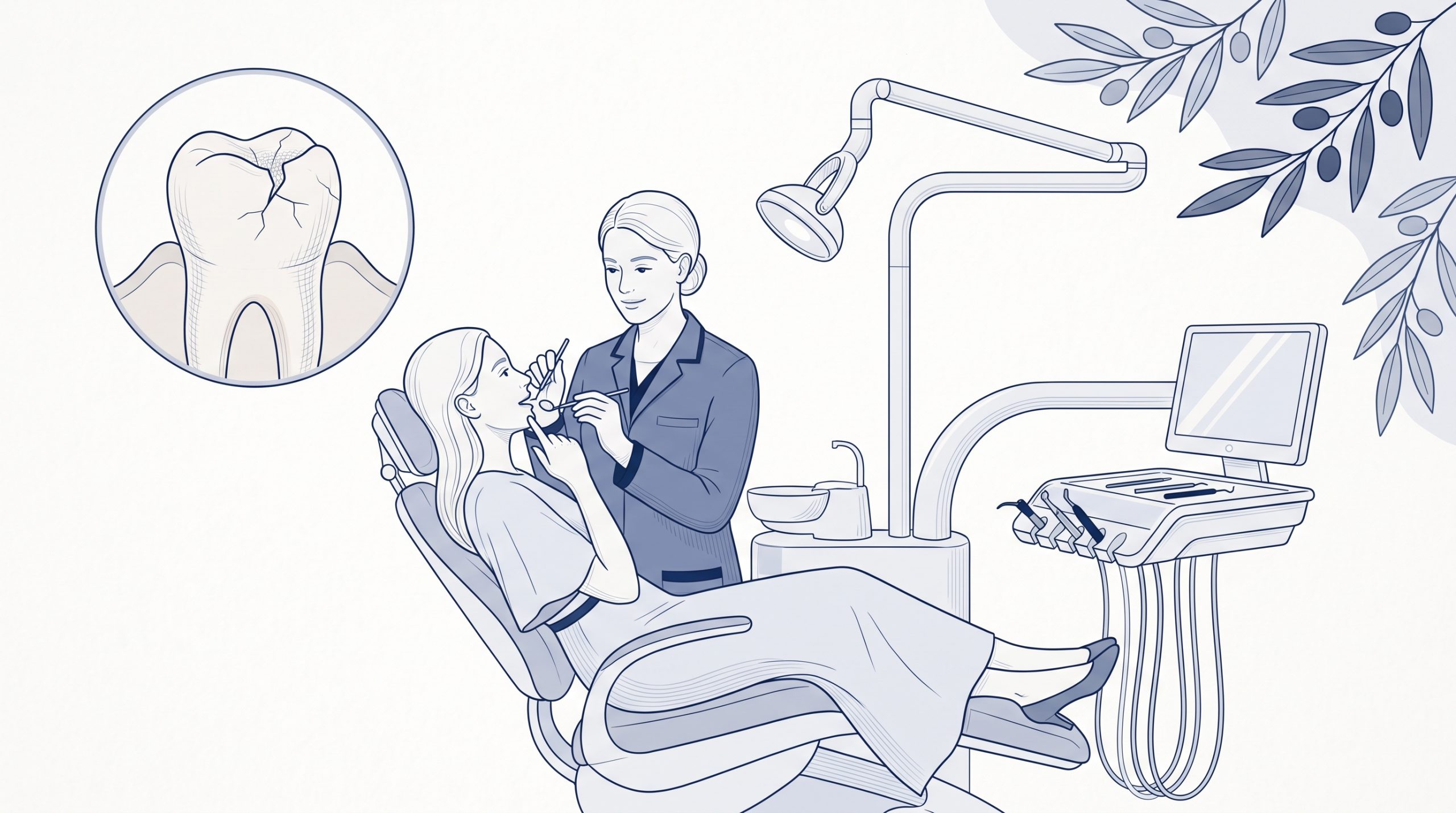
Possible treatment options for a broken tooth
The right treatment depends on the size and position of the break, how much healthy tooth remains, whether the nerve is affected, your bite and your overall oral health. A clinical assessment is needed before any specific recommendation can be made.
For a small chip, your dentist may smooth the edge or restore the area with composite resin, which is a tooth-coloured filling material. This can be suitable for some minor front tooth chips, although composite can stain, wear or chip over time.
For a larger break, a filling, onlay or crown may be considered. A crown is a covering placed over a prepared tooth to help restore shape and function. Crowns require removal of some tooth structure and are not suitable in every situation.
If the crack or break extends into the dental pulp, root canal treatment may be discussed. This treatment removes inflamed or infected pulp tissue from inside the tooth. It is often followed by a restoration such as a crown, depending on the tooth and how much structure remains.
If a tooth is too badly damaged to restore predictably, removal may be discussed. Replacement options might include a dental implant, bridge or denture, depending on your oral health, bone, budget, preferences and medical history. Each option has its own benefits, limitations and risks.
If the main issue is a visible chip once the urgent concern has been stabilised, you may find it useful to read about cosmetic dentistry options for a chipped tooth. For broader context, Creative Smiles has also discussed when cosmetic dental treatment may be considered, including why oral health is assessed first.
Broken tooth, cracked tooth or broken filling?
Patients often use these terms in similar ways, but they can mean different things clinically.
A chipped tooth usually means a piece of the outer tooth has broken away. A cracked tooth may have a line running through the tooth structure, sometimes below the gumline. A broken filling means the filling material has fractured, fallen out or left part of the tooth unsupported.
The distinction matters because the repair options can differ. A small enamel chip may need minimal treatment. A cracked molar that hurts when biting may need a more detailed assessment. A broken filling may need replacement, but your dentist also needs to check whether the tooth around it is cracked or decayed.
Can you wait if the broken tooth does not hurt?
If there is no pain, swelling, bleeding or trauma, a small chip may not need same-day treatment. Still, it is sensible to arrange a dental appointment within a reasonable timeframe.
Waiting too long can make everyday chewing uncomfortable if the edge is sharp or if the tooth is weakened. Food can also pack around rough areas, making cleaning more difficult. This does not mean every small chip will become a major problem, but an assessment can help you understand what has happened and whether treatment is needed.
If symptoms change before your appointment, call the practice again. New pain, swelling, looseness, discharge or fever should be treated more urgently.
What about broken teeth in children?
Children can chip or break teeth during sport, playground injuries or falls. If a child has facial trauma, bleeding, a loose tooth, swelling, ongoing pain or a tooth that has moved position, seek prompt dental advice.
Baby teeth and adult teeth are managed differently. A knocked-out baby tooth is not usually replanted because of the risk to the adult tooth developing underneath. A knocked-out adult tooth needs urgent dental attention. If you are unsure whether the tooth is baby or adult, call a dentist for advice and describe the child’s age, what happened and what the tooth looks like.
How to reduce the chance of another broken tooth
Not all broken teeth can be prevented. Accidents happen, and some teeth are more vulnerable because of old fillings, decay, grinding or previous trauma. Your dentist can look for contributing factors and discuss practical prevention where appropriate.
This may include a custom mouthguard for contact sport, managing tooth grinding, replacing weakened restorations, treating decay early or adjusting bite forces if one tooth is taking too much pressure. Good daily cleaning and regular dental examinations can also help identify cracks, failing fillings or tooth wear before they become more difficult to manage.
Frequently asked questions
Is a broken tooth a dental emergency? It can be. Severe pain, swelling, bleeding, a loose tooth, a large break or trauma to the mouth should be assessed promptly. A small chip with no pain may be less urgent, but it should still be checked.
Can a broken tooth heal by itself? Enamel does not grow back after it breaks. Small chips may not worsen, but the tooth structure will not repair itself in the way skin can. A dentist can assess whether smoothing, monitoring or restoration may be appropriate.
Should I keep the broken piece of tooth? Yes, if you can find it. Place it in a clean container and bring it to your appointment. Your dentist can decide whether it is useful for assessment or repair.
Will I need a crown for a broken tooth? Not always. Some broken teeth can be repaired with smoothing or composite resin, while others may need a filling, onlay, crown, root canal treatment or removal. The suitable option depends on the tooth and the extent of the damage.
Can I eat with a broken tooth? Avoid chewing on the broken tooth until it has been assessed. Choose softer foods and avoid hard, sticky or crunchy foods that could worsen the break or irritate the area.
Arrange an assessment in Armadale
A dental examination can help determine how serious a broken tooth is and which options may be appropriate for your circumstances. If you have pain, swelling, trauma or a large break, contact a dentist promptly for advice.
To discuss a broken tooth, you can arrange an appointment with Creative Smiles in Armadale. Your dentist can assess your oral health, explain the potential benefits and risks of suitable options and help you make an informed decision.