Yes, dental implants and veneers can sometimes be used together, but they do different jobs. A dental implant replaces a missing tooth root and supports a crown, while a veneer is a thin layer placed on the front surface of an existing natural tooth. If you have been searching for dental implants and veneers near me, the most useful first step is understanding which teeth need replacing, which teeth may be improved cosmetically and whether your oral health is suitable for either treatment.
Combining treatments is not about doing more dentistry than necessary. It is about planning carefully when different teeth have different needs. For example, one missing front tooth may need an implant-supported crown, while neighbouring natural teeth may be suitable for veneers to adjust colour, shape or minor surface concerns. In other cases, another option may be more appropriate.
How dental implants and veneers differ
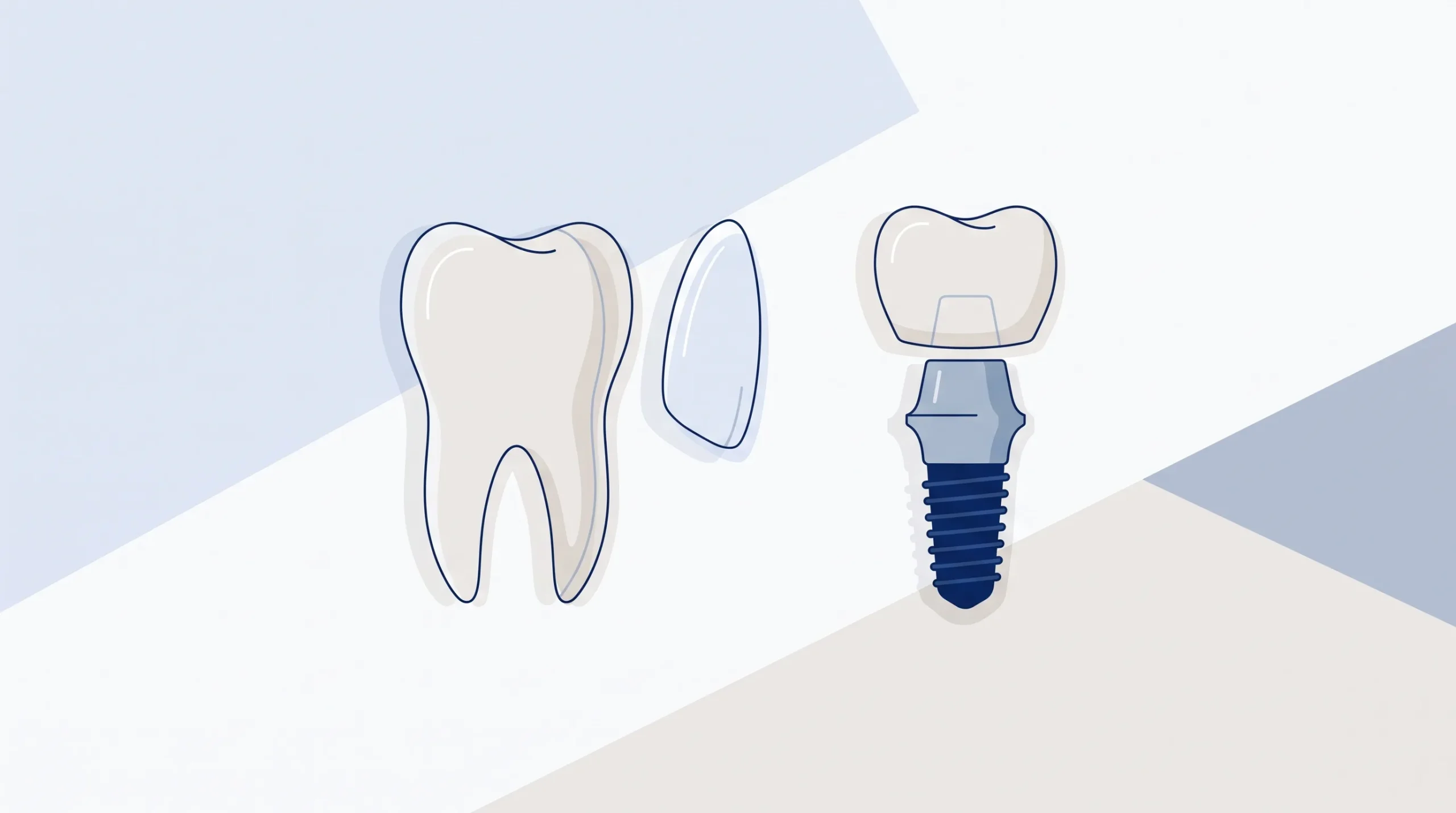
A dental implant is a small fixture, commonly made from titanium, that is placed in the jawbone to support a replacement tooth. Once the implant has integrated with the bone and the surrounding gums are ready, a crown is attached to it. The visible tooth is the crown, not the implant itself.
A veneer is different. It is a thin restoration bonded to the front of a natural tooth. Veneers are usually considered for teeth that are present and generally healthy but have concerns such as chips, staining that does not respond well to whitening, minor shape differences or small gaps. Veneers do not replace missing teeth.
| Treatment | Main purpose | Where it is used | Important limitation |
|---|---|---|---|
| Dental implant with crown | Replaces a missing tooth | In the jaw where a tooth is missing | Requires suitable bone, gum health and medical suitability |
| Veneer | Changes the front surface of a natural tooth | On an existing tooth, usually in the visible smile area | Does not replace a missing tooth and may involve enamel preparation |
| Crown on a natural tooth | Covers and protects more of a natural tooth | On a weakened, heavily restored or damaged tooth | Requires more tooth coverage than a veneer |
For a deeper overview of veneer types, preparation and planning, Creative Smiles has a separate veneers treatment guide that explains the process in more detail.
When implants and veneers may be planned together
Dental implants and veneers may be considered together when a person has a mix of missing teeth and cosmetic concerns affecting natural teeth. This is more common in the front of the mouth, where colour, shape, gum line and proportions all need to be considered together.
Common situations where both may be discussed include:
- A missing front tooth that may be replaced with an implant crown, with veneers considered for neighbouring teeth if their shape or colour is a concern.
- An older missing tooth space where the surrounding teeth have shifted, worn or been restored over time.
- A broader cosmetic treatment plan where some teeth are healthy enough for veneers, while another tooth cannot be saved or is already missing.
- A replacement of an existing tooth replacement, where the dentist also needs to consider how the nearby natural teeth look and function.
This does not mean every patient with a missing tooth should have veneers, or that every person considering veneers should also consider implants. Suitability depends on your gums, teeth, bite, bone levels, medical history, preferences and treatment goals.
Can veneers be placed on dental implants?
Usually, no. A veneer is designed to bond to the front surface of a natural tooth. A dental implant is restored with an implant crown, which is made to attach to the implant system through an abutment, the connector between the implant and crown.
If an existing implant crown does not match nearby veneers or natural teeth, the usual discussion is about whether the crown can be adjusted, repaired or replaced. In some cases, minor repair with composite resin may be possible, but this depends on the crown material, the amount of change needed and the condition of the implant restoration.
This distinction matters because the final colour and shape need to be planned from the beginning. Ceramic veneers, natural enamel and implant crowns can reflect light differently, so a dentist will consider how they sit together rather than choosing each restoration in isolation.
Dental implants and veneers near me in Melbourne: what an assessment should cover
If you are looking for dental implants and veneers near me in Armadale or elsewhere in Melbourne, a combined consultation should look at the whole mouth, not just the teeth you notice in the mirror. Cosmetic planning without checking gum health, decay, bite and missing tooth spaces can lead to a treatment plan that is incomplete or unsuitable.
An assessment may include discussion of:
- Your dental and medical history, including medications and past dental work.
- Gum health, decay risk and any active dental disease that should be managed first.
- The number and position of missing teeth.
- Bone and gum support around a possible implant site.
- How your upper and lower teeth meet when you bite.
- Signs of clenching, grinding or tooth wear.
- Whether whitening, orthodontic treatment, bonding, crowns or monitoring may be alternatives.
- Your preferences around timing, maintenance, costs and the amount of tooth preparation involved.
Healthdirect provides general information on oral health, including why looking after teeth and gums is important before and after dental treatment. For implant planning, your dentist may also recommend dental imaging where clinically appropriate.
Why sequencing matters
When implants and veneers are used in the same treatment plan, the order of care is important. The final restorations need to work together in colour, shape, bite and gum contour.
A typical sequence may involve:
- Stabilising oral health first: Decay, gum inflammation, infection or other active concerns are usually addressed before cosmetic or implant treatment is finalised.
- Planning tooth position and colour: Whitening or orthodontic options may be discussed before veneers or crowns are made, because ceramic restorations do not whiten in the same way natural teeth can.
- Implant planning and placement where suitable: If an implant is appropriate, the gum and bone need time to heal before the final crown is fitted.
- Temporary or provisional restorations if needed: These may help assess shape, comfort and appearance during a staged plan.
- Final shade and shape matching: Veneers and the implant crown may be planned together so the materials, contours and bite are coordinated.
The exact order varies. Some patients need only one or two steps, while others need more staged care. Treatment timeframes also vary depending on healing, complexity and individual circumstances.
Benefits, limitations and risks to understand
Combining dental implants and veneers may help address different concerns within one coordinated plan. The possible benefit is that the replacement tooth and natural teeth can be considered together rather than treated at separate times with separate goals.
However, all dental procedures carry potential benefits and risks. Results, recovery and treatment experiences vary between patients, and no restoration lasts forever.
| Consideration | Why it matters | What your dentist may discuss |
|---|---|---|
| Gum health | Implants and veneers both need healthy surrounding tissues | Cleaning, gum treatment or maintenance before proceeding |
| Bite forces | Heavy bite pressure or grinding can affect restorations | Bite assessment, material choice or a night guard if appropriate |
| Colour matching | Natural teeth, veneers and implant crowns can reflect light differently | Whitening before treatment, shade selection and ceramic options |
| Tooth preparation | Veneers may require removal of a small amount of enamel | Whether veneers, bonding or no treatment is more conservative |
| Surgical suitability | Implants involve surgery and healing | Medical history, bone volume, imaging and alternative options |
| Long-term maintenance | Restorations need ongoing care | Check-ups, cleaning habits and review of any chips, loosening or gum changes |
Potential implant risks can include infection, bleeding, swelling, discomfort, implant failure or effects on nearby structures, depending on the implant site and individual anatomy. Veneer risks can include sensitivity, chipping, debonding, changes at the gum margin or the need for repair or replacement later. Your dentist should explain risks that are relevant to your situation before you decide.
Alternatives that may be worth discussing
Implants and veneers are not the only options. In some cases, a simpler or more conservative approach may suit your needs better.
Alternatives may include composite bonding, teeth whitening, orthodontic treatment such as clear aligners, crowns, dental bridges, removable dentures or choosing not to have cosmetic treatment. If your main concern is a missing tooth, you may find it useful to compare implants and dental bridges before speaking with your dentist.
If your main concern is the appearance of natural teeth, it may also be helpful to understand what dentists assess before veneers, including enamel thickness, gum health, decay, bite and existing fillings.
Questions to ask before combining treatment
Before deciding on any combined treatment plan, it is reasonable to ask clear questions. A good discussion should help you understand the purpose of each treatment, the alternatives and the maintenance involved.
Useful questions include:
- Which teeth are being replaced, restored or left untreated?
- Is an implant suitable for the missing tooth space, or are there other options?
- Are veneers necessary for my goals, or could bonding, whitening or orthodontics be considered?
- Will the implant crown and veneers be made at the same time or in stages?
- What are the possible risks and limitations in my case?
- How will colour matching be handled if I also want whitening?
- What maintenance will I need after treatment?
- What costs are involved, and can I receive a written treatment estimate?
These questions can make the appointment more practical and reduce the chance of misunderstanding what each treatment is intended to achieve.
What to expect from a combined treatment discussion in Armadale
For people in Armadale and Melbourne who are considering both tooth replacement and cosmetic dentistry, a consultation is usually a planning conversation first. It should not assume that implants or veneers are automatically the right choice.
At Creative Smiles, the dental team can assess your oral health, discuss your concerns and explain options that may be suitable for your circumstances. Depending on your needs, this may include dental implants, veneers, crowns, whitening or other general and cosmetic dental options available at the clinic.
A written plan can be useful when treatment is staged, because it helps clarify which teeth are involved, what order treatment may occur in and what alternatives have been discussed. If payment options are important to you, ask the clinic team what may be available before making a decision.
Frequently Asked Questions
Can I get veneers before a dental implant? Sometimes, but the sequence needs careful planning. In many combined plans, the final implant crown and veneers are planned together so colour, shape and bite can be coordinated. Your dentist can advise which order may be appropriate after assessing your mouth.
Can a dental implant crown match veneers? It may be possible to achieve a close match, but different materials can reflect light differently. Shade selection, gum contour, ceramic material and the position of the teeth all influence the final appearance.
Do veneers damage dental implants? Veneers are placed on natural teeth, not implants. However, the bite relationship between veneers, natural teeth and implant crowns is important because excessive force can affect restorations.
Are implants and veneers suitable if I grind my teeth? Grinding or clenching does not automatically rule out treatment, but it can increase stress on teeth and restorations. Your dentist may discuss bite management, material choices or a protective night guard where appropriate.
Is a veneer a cheaper alternative to a dental implant? Not when a tooth is missing. A veneer needs a natural tooth to bond to, so it cannot replace a missing tooth. If a tooth is missing, options may include an implant, bridge, denture or no replacement, depending on your circumstances.
Will I need all my front teeth treated to make them match? Not necessarily. Some patients only need one replacement tooth or one veneer, while others may need a broader plan. A conservative approach considers what is necessary, what can be left alone and what risks each option carries.
Discussing your options with Creative Smiles
If you are considering dental implants and veneers in Melbourne, an individual assessment can help determine whether these treatments, or another option, may be appropriate for your circumstances. To discuss your concerns, you can arrange an appointment with Creative Smiles in Armadale. Your dentist can assess your oral health and explain the potential benefits, risks and alternatives before you decide what feels right for you.