Worn, missing or chipped teeth can affect the way you chew, speak and feel about your oral health. The right dental solutions depend on what has happened to the tooth, how much healthy structure remains and whether there are underlying issues such as grinding, decay, gum disease or bite problems.
For many patients, the first step is not choosing a treatment. It is understanding the cause. A small chip from biting something hard is different from tooth wear caused by years of clenching, and a single missing tooth is different from several missing teeth affecting the bite. A dental examination helps identify what is happening so the options can be explained clearly.
Common dental solutions for worn, missing or chipped teeth
A dentist may consider several approaches, from simple smoothing and bonding through to crowns, bridges, dentures or implants. In practice, dental solutions should balance function, appearance, tooth preservation, comfort, cost, maintenance and your long-term oral health.
Not every tooth needs major treatment. Some minor chips can be monitored or gently reshaped if there is no pain, sharp edge or structural weakness. Other concerns need more protection, especially if the tooth is cracked, heavily worn, painful or has lost a large amount of enamel.
Why teeth become worn, chipped or missing
Teeth can wear, chip or be lost for many reasons. Common causes include grinding or clenching, untreated decay, older fillings breaking down, dental trauma, acid erosion, gum disease and natural ageing of restorations. Sometimes more than one factor is involved.
For worn teeth, dental solutions often need to address the reason for the wear before rebuilding tooth shape. If grinding continues after treatment, new restorations may be placed under extra pressure and may need repair or replacement earlier than expected.
Your dentist may check your bite, jaw movement, existing fillings, enamel thickness, gum health and X-rays before discussing options. This helps reduce the chance of treating the visible problem while missing the underlying cause.
Options for worn teeth
Tooth wear can range from mild flattening at the edges to significant loss of enamel and dentine, which is the softer layer beneath enamel. Some people notice shorter-looking teeth, sensitivity, rough edges or changes in how their teeth meet.
Treatment may include monitoring, fluoride support, a custom night guard for grinding, composite resin bonding, porcelain veneers, crowns or a combination of approaches. Orthodontic treatment may also be discussed if tooth position is contributing to uneven pressure.
The most conservative option that can reasonably meet your needs is often considered first. Composite resin may be suitable for smaller areas of wear, while crowns may be considered when a tooth needs more coverage and support. Porcelain veneers may be discussed for selected front teeth, but they require careful assessment because some enamel is usually removed.
Options for a chipped tooth
A chipped tooth can be cosmetic, functional or urgent, depending on the size and depth of the chip. If the chip is small and there is no pain, your dentist may smooth the edge or use composite resin to rebuild the missing area.
For a deeper chip, dental solutions may include a filling, onlay, veneer or crown. If the nerve inside the tooth has been affected, root canal treatment may be needed before the tooth is restored. This is why it is worth arranging an assessment if the tooth is painful, sensitive to temperature, bleeding or visibly cracked.
For a more detailed look at repair options, Creative Smiles has a patient guide on cosmetic dentistry options for a chipped tooth, including bonding, veneers, crowns and onlays.
Options for missing teeth
Missing teeth can affect more than the visible gap. Nearby teeth may gradually shift, the bite may change and chewing can become less comfortable. The most suitable option depends on the number of missing teeth, bone levels, gum health, medical history, budget and personal preference.
When a tooth is missing, dental solutions may include a dental bridge, removable denture, dental implant or full-arch implant-supported option such as All-On-4, depending on the case. Each option has benefits and limitations.
A bridge can fill a gap by using neighbouring teeth for support, but those teeth usually need preparation. A removable denture may be more accessible for some patients and can replace one or more teeth, though it may feel different to fixed teeth. A dental implant replaces the tooth root with a small titanium fixture placed in the jaw, followed by a crown after healing, if suitable.
You can compare the broader choices in Creative Smiles’ guide to the best ways to replace teeth, which explains implants, bridges, dentures and full-arch options in more detail.
Comparing common treatment pathways
The table below gives a general overview. It is not a substitute for a clinical assessment, because the condition of the tooth, gums, jaw and bite can change what is appropriate.
| Concern | Options that may be discussed | Factors your dentist may assess |
|---|---|---|
| Minor chip | Smoothing, composite bonding, small filling | Sharp edges, enamel loss, sensitivity, bite pressure |
| Larger chip or cracked tooth | Onlay, crown, root canal treatment if the nerve is affected | Crack depth, remaining tooth structure, symptoms, X-rays |
| Mild to moderate tooth wear | Monitoring, night guard, bonding, bite adjustment where appropriate | Grinding, acid erosion, enamel thickness, jaw symptoms |
| Heavily worn teeth | Crowns, veneers in selected cases, staged bite rehabilitation | Tooth height, bite stability, gum health, long-term protection |
| One missing tooth | Implant, bridge, partial denture | Bone volume, neighbouring teeth, gum health, medical history |
| Several missing teeth | Denture, multiple implants, implant-supported bridge | Number and position of gaps, bite forces, hygiene access |
Comparing dental solutions can feel easier when the process is broken into structure, function and appearance. Some patients find it useful to think of it like planning a careful renovation, where the foundations and materials are assessed before the visible finishes are chosen. The same staged thinking used in home renovation planning can be helpful as a simple analogy, although dental treatment decisions should always be made with a registered dental practitioner.
What an appointment may involve
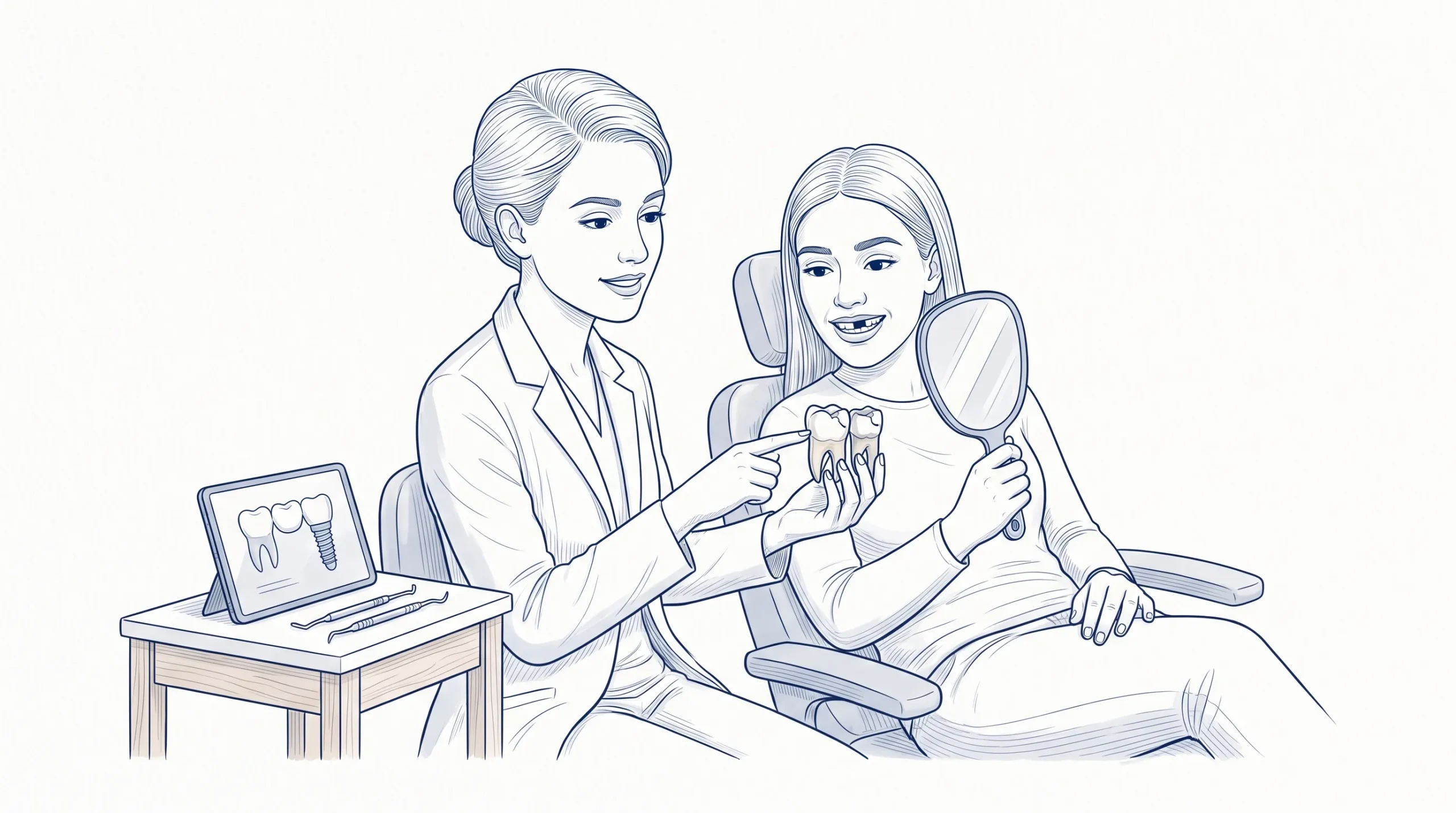
At an appointment, your dentist will usually ask about your symptoms, dental history and what you would like to understand or improve. They may examine your teeth and gums, check how your teeth meet, take photographs or X-rays where clinically appropriate and discuss any relevant medical history.
Dental solutions are usually discussed after this information has been reviewed. Your dentist may explain several options, including doing nothing immediately if monitoring is reasonable. They should also explain likely steps, limitations, maintenance needs, possible risks and any alternatives.
For larger cases, treatment may be staged. For example, gum health or decay may need attention before cosmetic or restorative work begins. If missing teeth are being replaced, planning may include assessing bone levels, gum condition and the position of nearby teeth.
Benefits, limitations and risks to understand
Possible benefits of treatment may include improved chewing comfort, smoother tooth edges, protection of weakened teeth or replacement of missing teeth. Appearance may also improve, depending on the treatment and the individual case.
No dental solutions are free from limitations. Composite resin can chip or stain over time. Porcelain restorations can fracture or require replacement. Bridges rely on supporting teeth. Dentures may need adjustment. Implants require sufficient bone and healthy surrounding tissues, and they also need ongoing professional and home care.
All dental procedures carry potential risks and benefits. These vary according to your oral health, anatomy, medical history and the treatment being considered. A dentist can explain what is relevant to your circumstances before you decide whether to proceed.
When to seek prompt dental care
Some dental problems should be assessed promptly, especially if there is pain, swelling, bleeding, fever, facial swelling, a knocked-out adult tooth or difficulty opening the mouth. A cracked tooth with sharp pain when biting also needs attention, as delaying care may reduce the options available.
Better Health Channel has general information about dental emergencies, including situations where urgent care may be needed. If symptoms are severe or affecting breathing or swallowing, seek emergency medical care.
If you are unsure whether your issue is urgent, a dental practice can advise whether an appointment should be arranged sooner.
Questions to ask before choosing a treatment
Choosing between dental solutions is easier when you know what to ask. Useful questions include:
- What caused the wear, chip or missing tooth?
- Is treatment needed now, or can the tooth be monitored?
- What are the conservative options?
- What are the possible risks and limitations?
- How much healthy tooth structure would be removed?
- How will this option affect nearby teeth and gums?
- What maintenance or future replacement may be needed?
- Are there staged options if I am not ready for comprehensive treatment?
These questions can help you compare treatment in a practical way rather than focusing only on how the teeth may look.
Dental solutions in Armadale, Melbourne
Creative Smiles in Armadale provides general and cosmetic dentistry for patients who want to understand their options for worn, missing or chipped teeth. Depending on your needs, the team may discuss treatments such as composite bonding, crowns, veneers, teeth whitening, Invisalign, dental implants or All-On-4.
If you are considering implant treatment, the Creative Smiles dental implants guide explains what implants involve and the factors that can affect suitability.
A consultation can help clarify whether treatment may be appropriate, what alternatives exist and what to expect before making a decision.
Frequently Asked Questions
Can a chipped tooth be left untreated? A very small chip may sometimes be smoothed or monitored, but a dentist should assess the tooth if there is pain, sensitivity, a sharp edge, a visible crack or a large piece missing.
What are the most conservative dental solutions for worn teeth? Conservative options may include monitoring, fluoride support, a custom night guard or composite resin bonding. Suitability depends on the cause and amount of tooth wear.
Is an implant always the right option for a missing tooth? No. An implant may be suitable for some patients, but bridges, dentures or other approaches may be more appropriate depending on gum health, bone levels, medical history, budget and preferences.
Will a crown stop a tooth from breaking? A crown can help protect a weakened tooth by covering it, but it cannot guarantee the tooth will never fracture or need further treatment. Your dentist can explain the risks for your specific tooth.
How do I know which option suits me? A dental examination is needed to assess the tooth, gums, bite, X-rays and your goals. Your dentist can then explain suitable options, including risks, benefits and alternatives.
Considering your options
If you have worn, missing or chipped teeth, an assessment can help identify the cause and outline options that may suit your oral health and circumstances. To discuss your concerns, you can arrange an appointment with the team at Creative Smiles in Armadale and ask about the potential benefits, risks and alternatives before deciding on treatment.