If you are searching for cosmetic dentistry veneers, you are probably trying to understand whether veneers can address concerns such as staining, chips, small gaps or uneven tooth shape. In simple terms, veneers are thin coverings placed over the front surface of selected teeth to change their visible colour, shape or proportions. They may be suitable for some people, but they are not the right option for every tooth or every concern.
A dentist needs to assess your oral health, enamel, gums, bite and treatment goals before recommending veneers. This matters because a cosmetic concern can sometimes be linked to tooth decay, gum disease, grinding, tooth wear or alignment issues that should be managed first.
How cosmetic dentistry veneers may help with common concerns
Veneers are usually considered for teeth that are visible when you smile or speak, most often the front teeth. They do not replace healthy dental foundations. Instead, they sit on prepared tooth surfaces and are designed to blend with the surrounding teeth in a natural way.
The main purpose is to improve the appearance of selected teeth while keeping the treatment plan clinically appropriate. For some patients, that may involve only one or two teeth. For others, several teeth may need to be planned together so the shape, shade and bite are considered as a whole.
Staining or discolouration that whitening may not change
Tooth whitening can be helpful for many surface or age-related stains, but it does not change the colour of fillings, crowns or veneers. Some deeper discolouration may also respond less predictably to whitening.
In these situations, veneers may be considered to cover the visible front surface of a tooth. This can be relevant where a tooth has intrinsic staining, old visible restorations or colour differences that cannot be managed with whitening alone. Your dentist may still discuss whitening first if the surrounding teeth are also darker, as this can influence the final shade selection.
Small chips, worn edges and uneven outlines
Minor chips or uneven incisal edges, the biting edges of front teeth, can sometimes be addressed with bonding or contouring. Veneers may be considered when a broader change to tooth shape, surface or symmetry is needed.
For example, a veneer can cover a chipped front surface and rebuild the outline of a tooth. However, if the chip is caused by an active grinding habit or a heavy bite, the cause needs attention as well. Otherwise, the same forces may affect the veneer or other teeth over time.
For patients wanting a broader explanation of the material and process, Creative Smiles has a separate guide on what dental veneers are and how they work.
Concerns veneers can address, and where they may not be enough
Cosmetic dentistry veneers can be useful in carefully selected cases, but they have limits. A veneer changes the visible outer surface of a tooth. It does not move teeth through bone, treat gum disease, replace missing teeth or strengthen a tooth that has lost too much structure.
| Common concern | How veneers may be used | When another option may be needed |
|---|---|---|
| Stained front teeth | Cover the visible tooth surface with a chosen shade | Whitening, replacement of old fillings or treatment of decay may be needed first |
| Small chips | Restore the visible edge or surface shape | Larger fractures may require a crown or other restorative care |
| Minor gaps | Adjust the width or contour of selected teeth | Orthodontic treatment may be more suitable for larger spacing or bite issues |
| Uneven tooth shape | Create a more consistent outline between teeth | Gum treatment, orthodontics or enamel reshaping may be discussed first |
| Worn edges | Rebuild some visible tooth length or contour | Grinding, erosion or bite problems should be assessed before cosmetic work |
This is why a consultation is more than choosing a shade. Your dentist will usually look at the reasons behind the concern, not just the appearance of the tooth.
Porcelain and composite veneers explained
There are two main types of veneers used in general cosmetic dental care: porcelain veneers and composite resin veneers. The better option depends on the tooth, the concern, your oral health, your preferences and the amount of change being planned.
Porcelain veneers are custom-made outside the mouth and bonded to the teeth. They are often selected where a patient is seeking changes to colour, shape or surface texture across one or more front teeth. Porcelain usually requires some preparation of the tooth surface, which means the decision should be considered carefully.
Composite veneers are made from tooth-coloured resin, often applied directly to the tooth. They may involve less tooth preparation in some cases and can be useful for smaller changes, repairs or reshaping. Composite can stain or wear over time and may need maintenance, polishing or replacement.
When discussing cosmetic dentistry veneers, your dentist should explain the differences between these options in plain language, including what each material can and cannot achieve for your particular teeth.
What happens before a dentist recommends veneers
A veneer plan should start with an examination. This helps the dentist understand whether the teeth and gums are healthy enough for cosmetic treatment and whether veneers would be stable in the long term.
An assessment may include:
- Checking for decay, cracks, gum inflammation and existing restorations
- Looking at enamel thickness and whether there is enough healthy tooth structure
- Assessing your bite, tooth wear and any signs of grinding or clenching
- Discussing your medical and dental history, including sensitivity or previous trauma
- Taking photographs, scans or X-rays where clinically appropriate
- Explaining alternatives such as whitening, bonding, orthodontics or crowns
This process helps avoid treating the visible concern without addressing an underlying problem. For a deeper look at this planning stage, you may find it useful to read Creative Smiles’ article on what to know about your teeth before veneers.
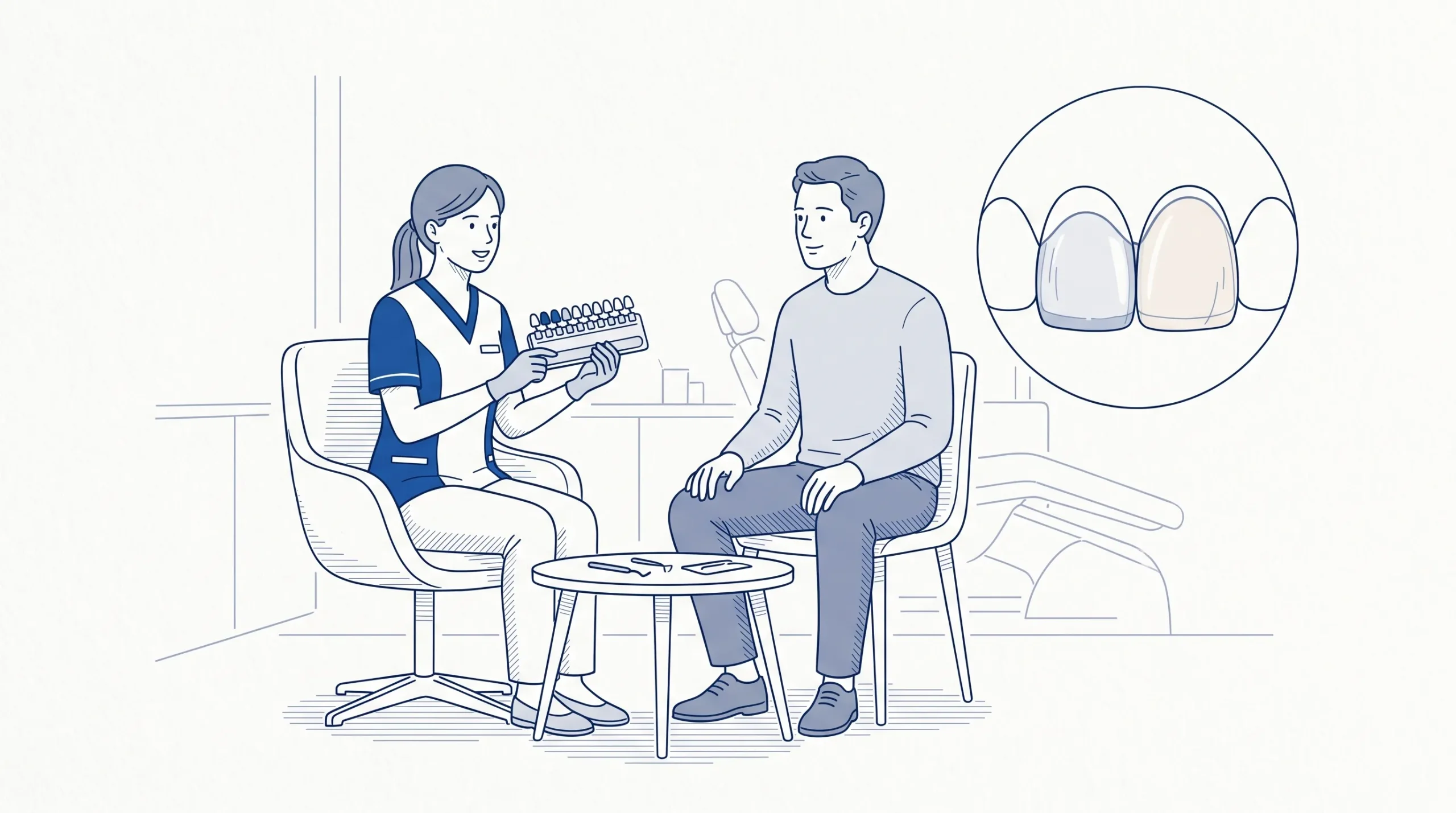
Planning the shape, shade and overall look
Before cosmetic dentistry veneers are made or placed, the dentist needs to plan how they will relate to your surrounding teeth, lips, gums and bite. This does not mean every tooth has to look identical. Natural teeth have small variations, and the aim is usually to create a result that suits the individual rather than a one-size-fits-all appearance.
Shade selection is often more nuanced than simply choosing “white”. A shade that looks balanced in one mouth may look too bright or too flat in another. The dentist may consider your existing tooth colour, the number of teeth being treated and whether whitening is planned before veneer treatment.
Digital records, photographs and scans may support planning and communication. Technology can be useful, but it does not replace clinical judgement or an in-person dental assessment. Beyond dentistry, many organisations are also reviewing how digital systems can support smoother workflows, and services such as AI audits and custom solutions sit within that broader business technology space.
Potential risks, limitations and maintenance
All dental procedures carry potential risks and benefits. Veneers can be conservative in some cases, but they still involve dental treatment and need long-term care.
Possible limitations or risks may include tooth sensitivity, chipping, debonding, changes at the gum margin, colour mismatch over time, the need for future repair or replacement and the possibility that tooth preparation is not reversible. If you grind or clench your teeth, your dentist may discuss a night guard or other management options.
Long-term success with cosmetic dentistry veneers also depends on oral hygiene, regular dental visits and avoiding habits that place excessive force on the teeth. Biting fingernails, opening packaging with teeth or regularly chewing hard objects can increase the risk of damage to natural teeth and restorations.
It is also important to know that veneers do not protect against decay at the edges of the restoration. Brushing, flossing and routine dental care remain important after treatment.
When another cosmetic or restorative option may be more suitable
Veneers are only one option within cosmetic and restorative dentistry. Depending on the cause of your concern, your dentist may recommend a different approach or a staged plan.
Whitening may be considered if the main concern is general tooth colour and the teeth are otherwise healthy. Composite bonding may suit a small chip or localised shape concern. Clear aligners, such as Invisalign, may be more appropriate where tooth position or bite is the main issue. Crowns may be needed where a tooth has extensive structural damage, although they involve more coverage of the tooth than veneers.
If a tooth is missing, veneers are not used to replace it. Options such as a bridge, implant or denture may be discussed depending on your oral health, bone support, medical history and preferences.
The most suitable option depends on diagnosis, not appearance alone. A balanced discussion should include possible benefits, limitations, risks, alternatives and expected maintenance.
Choosing a dentist for veneers in Melbourne
If you are considering veneers in Armadale or elsewhere in Melbourne, look for a dentist who takes time to assess your oral health before discussing cosmetic changes. A rushed treatment plan based only on appearance may miss factors that affect comfort, function and durability.
A good consultation for cosmetic dentistry veneers should include clear explanations, realistic expectations and the chance to ask questions. You should feel comfortable discussing concerns such as tooth sensitivity, budget, maintenance, dental anxiety and whether you prefer a subtle or more noticeable change.
It can also be useful to ask how the dentist plans cases, what materials may be suitable, what preparation may be required and what alternatives are available. Creative Smiles has a patient-focused guide on how to choose a cosmetic dentist in Melbourne if you would like a broader checklist.
Frequently Asked Questions
Are veneers suitable for stained teeth? Veneers may be considered for some types of staining, particularly when whitening is unlikely to achieve the desired change or when old restorations affect the visible tooth surface. A dentist needs to assess the cause of the discolouration before recommending treatment.
Can veneers close gaps between teeth? Veneers may help with small spaces between selected teeth by changing tooth width or contour. Larger gaps, crowding or bite concerns may be better managed with orthodontic treatment or another approach.
Do veneers damage teeth? Some veneers require tooth preparation, which may involve removing a small amount of enamel. The amount varies by case and material. Your dentist should explain whether preparation is needed and what that means for future maintenance.
How do I know whether porcelain or composite veneers are better for me? The choice depends on your teeth, goals, oral health, bite, budget and maintenance expectations. Porcelain and composite each have advantages and limitations, so the decision should be made after an individual assessment.
Are cosmetic dentistry veneers only for front teeth? Veneers are most commonly used on teeth that are visible when smiling or speaking. They are not usually used to replace missing teeth or restore teeth with major structural damage.
Discussing veneers with Creative Smiles in Armadale
If you are considering veneers, an individual dental assessment is the safest starting point. Your dentist can examine your teeth and gums, discuss your concerns and explain whether veneers or another option may be appropriate for your circumstances.
To discuss your options, you can arrange an appointment with Creative Smiles in Armadale. The team can explain the potential benefits, risks, alternatives and maintenance involved so you can make an informed decision about your dental care.